A nation's map is sometimes drawn not only on paper, but in the willingness of its people to live together. When Alberta prepares to hold a nonbinding referendum on whether to remain in Canada, the question stops being a matter for constitutional scholars and becomes a small, heavy mark that millions will leave on a ballot.
What makes this referendum unusual is that it was not triggered directly by a citizen petition. Alberta Premier Danielle Smith announced in May that her government would add a separation question to the ballot. Her words at the time were: "It's time to have a vote, to find out what Albertans want, and then move forward." That decision followed months of pressure from a small but vocal separatist movement. Its members argue that Alberta's energy wealth is subsidizing poorer regions, and that Ottawa's bureaucracy is strangling the province's economic vitality.
Yet opinion polls have repeatedly shown that roughly seven in ten Albertans want to stay in Canada, with support for independence hovering around one in four. Smith herself has said she chose to keep Alberta in Canada when she cast her advance ballot. A leader taking a position different from the referendum she launched is unusual in political history, and yet it reflects the delicate nature of this vote—it looks more like a release of emotion than a genuine approach to a cliff's edge.
The legal architecture is equally complex. The tenth question on the ballot asks whether Alberta should begin "the legal process to leave Canada," which would trigger a future binding referendum. That means even if the option wins majority support, separation would not happen immediately. Canada's Clarity Act, passed by Parliament in 2000, requires a "clear majority" before分裂 negotiations could begin, and the specific threshold is not defined. Provinces and territories also do not hold a unilateral right to leave the federation; any separation would require constitutional amendment negotiations.
The voices of Indigenous groups add another dimension to the debate. Several First Nations organizations have pointed out that their treaties with the Crown predate Alberta's entry into Confederation, and that any separation could infringe on treaty rights. In May, a judge on the Alberta Court of King's Bench ruled that the province's chief electoral officer was wrong to allow separatists to collect signatures, because the process should have triggered consultation over Indigenous rights that could be affected by separation. The provincial government has appealed that ruling.
Prime Minister Mark Carney's role in this debate has been delicate. He grew up in Alberta, yet on Thanksgiving Day he released a video emphasizing that national unity matters greatly when facing external threats. "Alberta's best place is inside Canada," he said. The sentence is both a plea to a province and a gentle reminder about a larger question: the cohesion of a federation of ten provinces and three territories has never been a given.
On Monday night, polling stations will close, and Elections Alberta will begin counting the ballots on the separation question first. Whatever the result, this referendum has already done something difficult to reverse—it has turned a question that long lived quietly in the hearts of some Albertans, rarely placed formally on the table, into something that must be recorded, counted, and answered. And a nation's borders are reexamined precisely at moments like this.
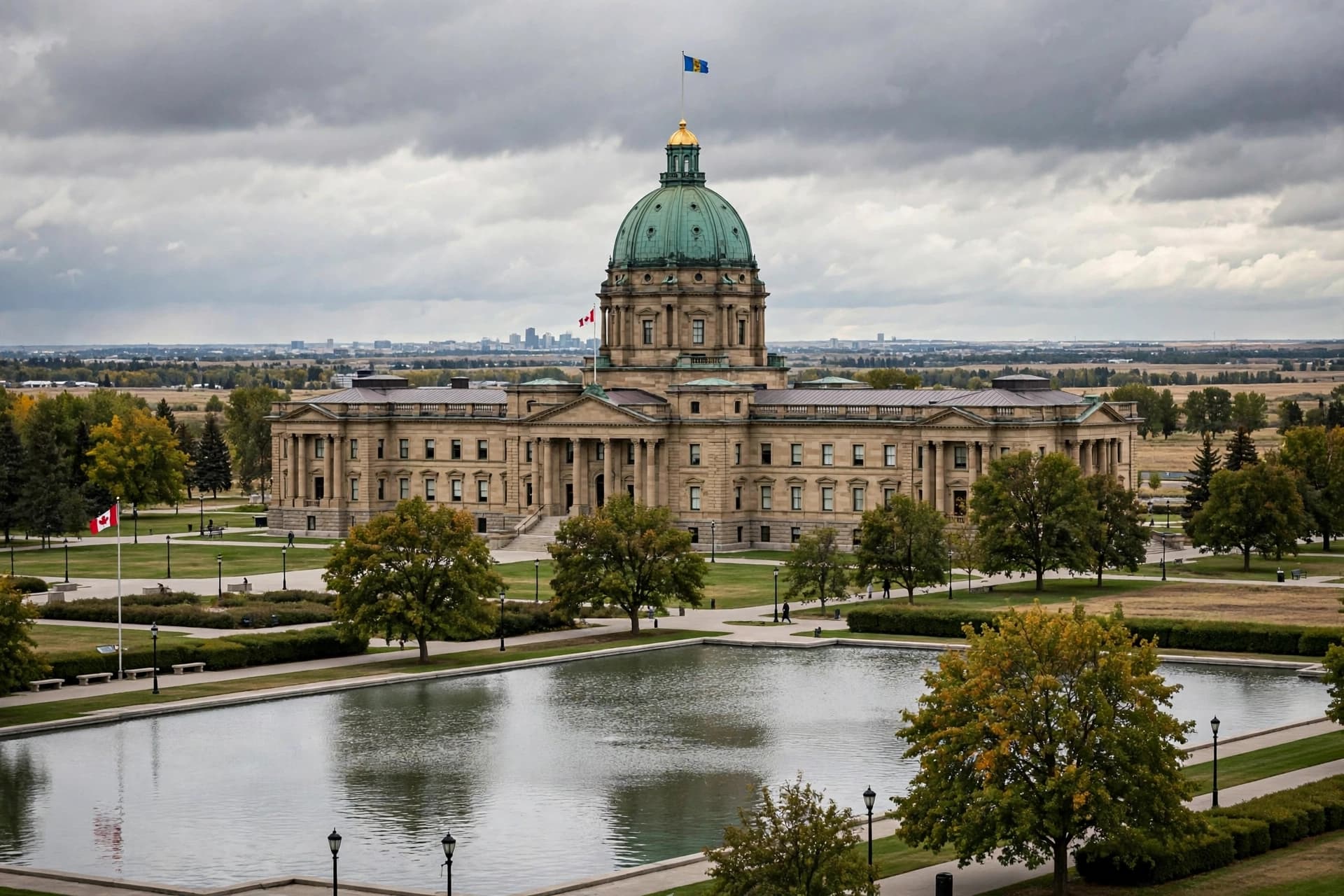
AI Image Disclaimer: Visual content accompanying this article is generated by artificial intelligence for illustrative purposes.
Sources: Reuters, U.S. News & World Report, AFP/BSS, CBC News, ABlawg
Published by Banx Network. This article is part of the Banx decentralized media programme, powered by the BXE token on the XRP Ledger.