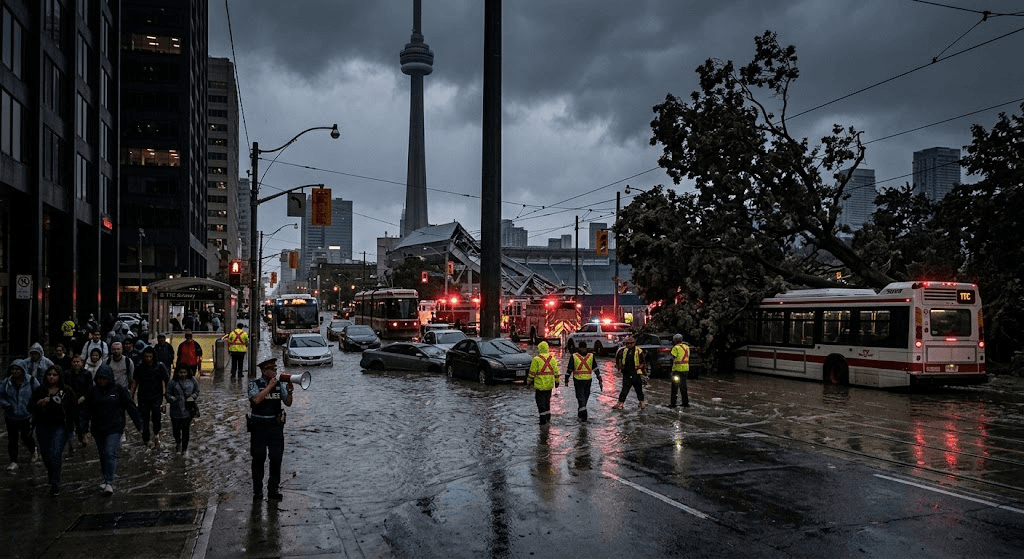
TORONTO — A violent late-afternoon severe thunderstorm tore across the Greater Toronto Area on Wednesday, September 2, 2026 plunging tens of thousands of homes into darkness, submerging major roadways, and disrupting transit infrastructure. The sudden, aggressive weather system brought torrential downpours, hurricane-force wind gusts, and large hail, darkening skies across the city to near-nighttime levels during the evening rush hour.
As damaging winds swept through the region, trees and utility poles were ripped down, causing sparking power lines and fires. Toronto Hydro reported that approximately 65,000 customers were left without electricity at the height of the storm. Utility crews scrambled across the city to isolate hazardous live wires and clear debris; though officials warned full power restoration would take extended time due to the widespread damage.
Outside the city's residential neighborhoods, the storm wreaked havoc on infrastructure. Live Nation Canada reported that Rogers Stadium, a major 50,000-capacity venue in North York, sustained "significant damage," with collapsed framing and torn outer coverings. Neighboring municipalities also reported structural damage, including blown-off roofs in Brampton.
The intense rainfall quickly overwhelmed city drainage networks, sparking flash flooding on primary transit corridors. Emergency services cordoned off multiple downtown underpasses where drivers were forced to abandon cars submerged in several feet of rising water. Extreme flooding and fallen trees blocked major arterial routes, including long stretches of Yonge Street and the Don Valley Parkway.
Public transit was similarly hit hard, with the Toronto Transit Commission (TTC) forced to suspend subway operations along key sections of Line 1 due to station flooding. Meanwhile, dozens of flights out of Toronto Pearson International Airport were delayed or canceled as ground crews paused operations during the storm.
Toronto Mayor Olivia Chow confirmed the activation of the city’s Emergency Operations Centre as police, fire, and paramedic crews responded to hundreds of calls ranging from fallen trees to flooded basements and medical emergencies. In the city’s East End, Michael Garron Hospital suffered localized flooding inside its emergency department, though medical staff managed to keep services operational.
While Environment Canada lifted the majority of tornado warnings and severe weather alerts by Wednesday evening, cleanup and infrastructure repairs are expected to stretch across the days ahead. City officials have advised motorists to treat non-functioning traffic lights as four-way stops and exercise extreme caution near downed wires.
Published by Banx Network. This article is part of the Banx decentralized media programme, powered by the BXE token on the XRP Ledger.