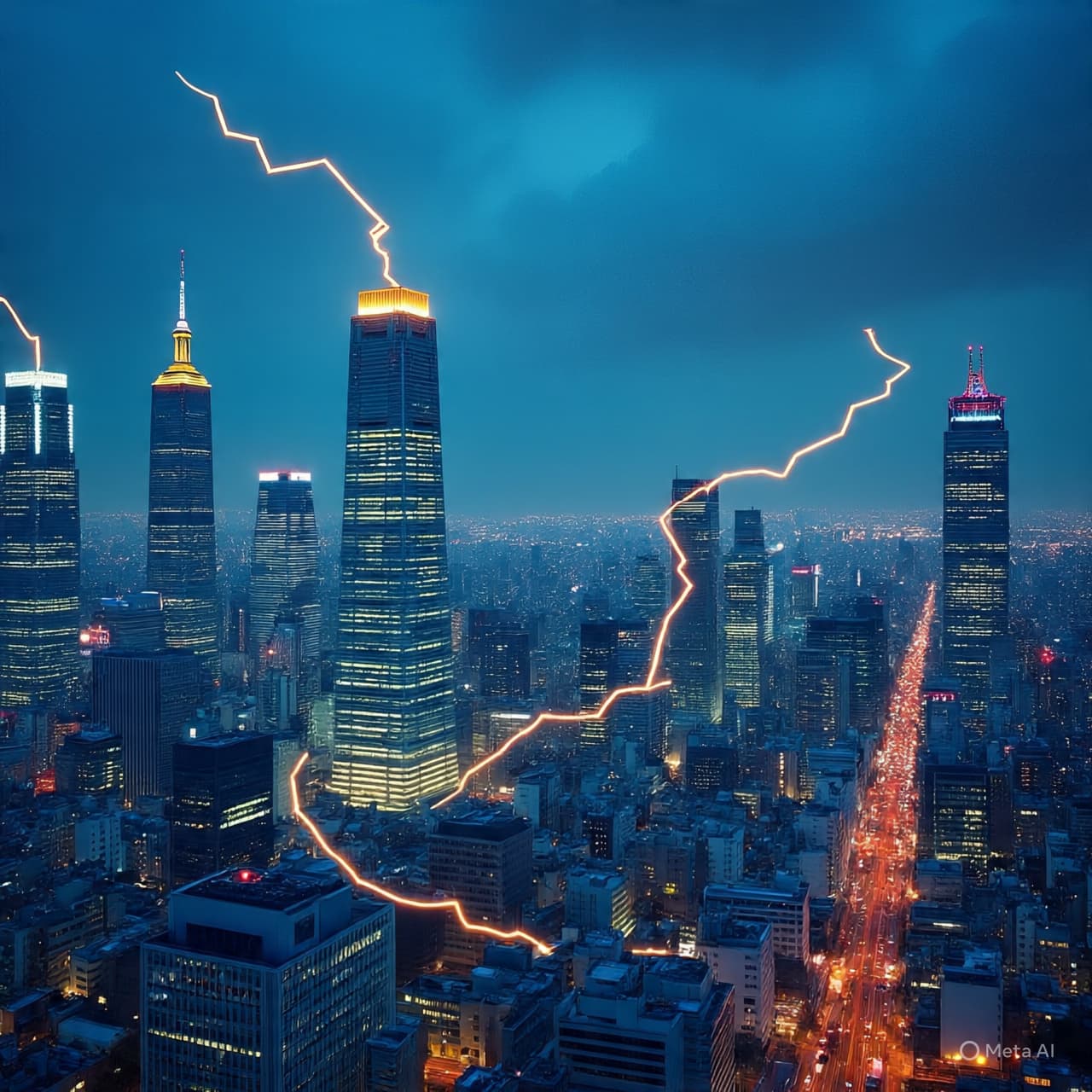
Tokyo’s skyline is a familiar sight — steel and glass rising toward the horizon, the rhythm of commuter life pulsing through its arteries. But beneath that everyday bustle lies an ancient tension, one measured not in hours or days, but in decades and centuries. Japan’s capital sits at the juncture of tectonic plates, a position that brings both economic vitality and an enduring specter of seismic disruption. Recent assessments by Japanese authorities have sharpened focus on what many long expected: a significant earthquake could strike beneath Tokyo within the lifetimes of millions.
According to a government draft estimate, there is roughly a 70 percent chance that a magnitude 7.3 earthquake will rupture beneath the Tokyo metropolitan area in the coming decades. This projection anchors itself in Japan’s history of seismic activity and the broader geology of the Pacific Ring of Fire — a horsehoe-shaped zone of volcanic and earthquake intensity that encircles much of the Pacific basin and defines much of Japan’s natural hazard landscape.
What sets the latest forecast apart is not simply its probability figure, but its implications for people and infrastructure. In the scenario examined by authorities, as many as 400,000 buildings could be destroyed, and millions of residents could find themselves stranded or facing difficulty returning home after such a quake. The human toll could be stark: current estimates suggest up to 18,000 lives lost, followed by additional deaths related to health deterioration during post-quake sheltering and other disaster conditions. These figures are sobering reminders of how urban density intersects with natural threat.
Compared with projections made a decade earlier, the expected death toll has been revised downward — from around 23,000 to the current estimate — reflecting progress in strengthening building codes, improving fire resistance, and advancing disaster preparedness. Yet even as mortality projections have edged lower, the economic stakes remain high, with estimated losses reaching into the hundreds of billions of U.S. dollars. This underscores that even moderated seismic impacts impose profound societal costs, particularly for a metropolis that anchors global finance and commerce.
For Tokyo’s residents and planners alike, such assessments are not merely statistics but a call to vigilance. Japan’s culture of preparedness — visible in ubiquitous earthquake drills, resilient infrastructure design, and community education — grows out of a deep national memory of past disasters. The most devastating of these, the 2011 earthquake and tsunami that struck the northeastern region, claimed nearly 18,000 lives and reshaped national thinking about hazard readiness.
In Tokyo today, risk is measured not to invite fear but to inform action. Each revision in forecasting — whether up or down — feeds into evolving strategies for mitigation, emergency response, and long-term urban planning. The hope is that even as the ground beneath may one day shift dramatically, human systems will be better aligned to withstand it.
Published by Banx Network. This article is part of the Banx decentralized media programme, powered by the BXE token on the XRP Ledger.

.jpg&w=3840&q=75 "Russia and Iran Deepen Weapons Partnership Amid Wars in Ukraine and the Middle East")