There is a quiet, relentless war being waged in hospitals and laboratories around the world—a war not against a visible enemy, but against organisms so small they evade the naked eye, yet so adaptable they have learned to survive the very weapons designed to destroy them. Antimicrobial resistance has been called a silent pandemic, and the numbers are sobering: millions of deaths annually, a figure projected to climb to ten million a year by 2050 if current trends continue . But within this grim arithmetic lies a more hopeful story, one told not in statistics but in molecular structures, in the intricate machinery of bacterial cells, and in the vulnerabilities that scientists are only now learning to exploit.
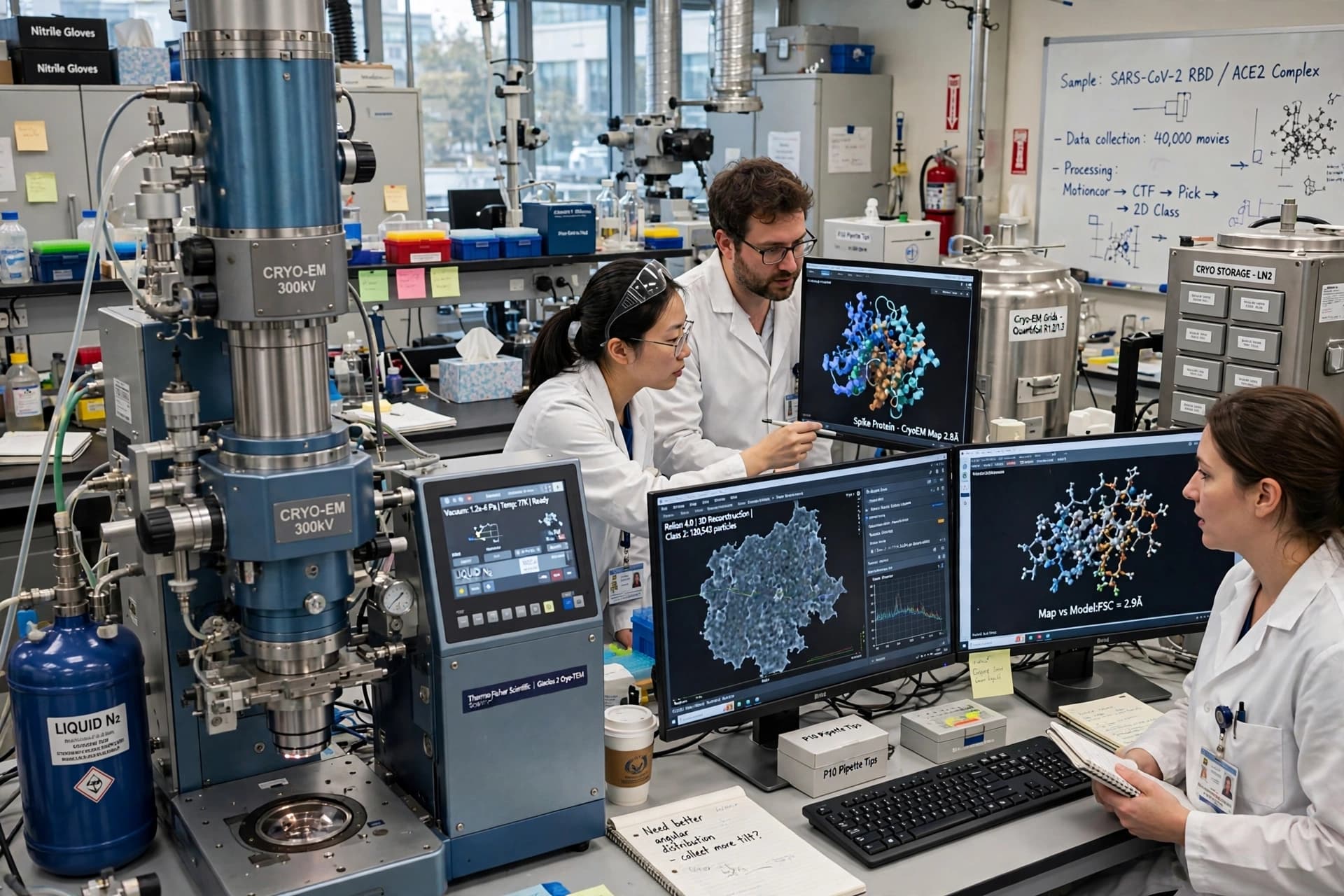
Researchers at Nanyang Technological University in Singapore have identified three distinct points of attack against these resilient pathogens, each targeting a different aspect of bacterial survival. The first focuses on energy itself—the very currency of life. A team led by Professor Gerhard Grüber has developed a compound that inhibits a crucial enzyme in the electron transport chain of Mycobacterium abscessus, a bacterium that causes severe lung disease in patients with cystic fibrosis and is intrinsically resistant to many common antibiotics . Using cryo-electron microscopy, the scientists identified a pocket in the cytochrome b subunit of the cytochrome bcc oxidase enzyme, then designed a molecule that fits precisely into it. Because the enzyme's structure is unique to M. abscessus, the compound targets only the bacterium, leaving human cells unharmed. When used alongside clofazimine, an antibiotic already used against mycobacterial infections, it reduced bacterial populations by a factor of one hundred in just four days .
The second vulnerability lies in the bacterium's defenses against viruses. Bacteriophages—viruses that infect and destroy bacteria—have long been explored as an alternative to antibiotics, but M. abscessus has shown an ability to resist them. A separate NTU study, published in the Proceedings of the National Academy of Sciences, uncovered the mechanism behind this resistance . The bacterium exists in two forms: a "smooth" variant coated with lipids called glycopeptidolipids, and a "rough" variant that lacks them and causes more severe disease. When researchers treated smooth strains with phages, rough variants emerged—mutations had disrupted the genes responsible for producing and transporting those protective lipids. The loss of the lipid coating appears to prevent phages from binding to the bacterial surface, offering a clue for optimizing phage therapies .
The third line of inquiry examines the weapons bacteria use against one another and against human cells. A team from NTU and Imperial College London investigated the molecular structure of the toxin-loading apparatus that resistant bacteria employ to fire toxins into rival bacteria and host cells . By understanding how this "weapon" is assembled and loaded, researchers may find ways to disarm it—not by killing the bacterium outright, but by stripping away its ability to cause harm. This approach, known as anti-virulence therapy, could reduce the evolutionary pressure that drives resistance, since bacteria would not be killed but merely rendered harmless.
These findings arrive at a moment of urgent need. The World Health Organization has identified antimicrobial resistance as one of the top public health threats, and the pipeline of new antibiotics has slowed even as resistance spreads . The NTU research offers not a single solution but a strategy: understand the bacterium's weaknesses—its energy supply, its viral defenses, its arsenal of toxins—and design interventions that exploit them. A patent has been filed for the energy-blocking compound, and the researchers are working with a U.S. pharmaceutical company to license it . The battle is far from over, but the targets are becoming clearer, one molecular vulnerability at a time.
AI Image Disclaimer: The images accompanying this article were generated by artificial intelligence and are for illustrative purposes only.
Sources: Phys.org, Nature Communications, Proceedings of the National Academy of Sciences
Published by Banx Network. This article is part of the Banx decentralized media programme, powered by the BXE token on the XRP Ledger.