
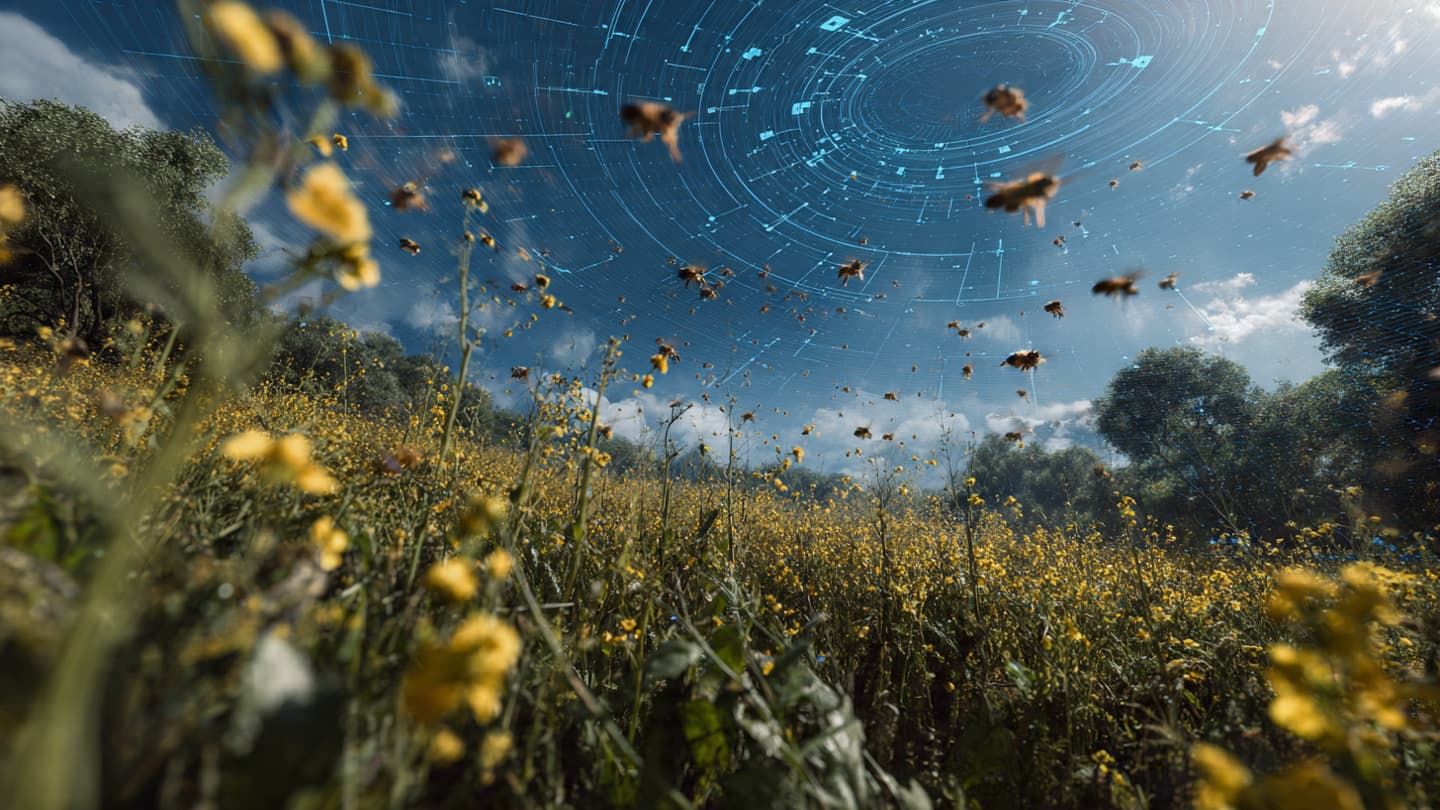
In gardens, forests, and farmland alike, pollinators move with a quiet persistence that often escapes notice. Bees drift from flower to flower like small custodians of continuity, carrying the invisible threads that sustain ecosystems and food supplies. Yet despite their importance, scientists have long struggled to monitor these tiny travelers in detail. A new radar-based technology may now offer a clearer way to observe and identify pollinators as they move through the landscape.
Researchers developing the system say the technology could improve tracking of bees and other flying pollinators without relying solely on traditional visual observation methods. By using radar signatures and advanced analytical tools, scientists hope to distinguish different insect species in flight and better understand how they interact with changing environments.
Pollinators play a central role in agriculture and biodiversity. Crops including fruits, vegetables, and nuts depend heavily on insect pollination, while wild plants rely on pollinators to reproduce and maintain ecological balance. Declines in bee populations linked to habitat loss, pesticides, disease, and climate change have therefore become a growing concern worldwide.
Traditional monitoring methods often require manual surveys, traps, or direct observation, processes that can be time-consuming and geographically limited. Radar technology offers the possibility of observing insect movement over larger areas and across longer periods while minimizing disruption to natural behavior.
Scientists say the system works by analyzing subtle differences in flight patterns and wingbeat frequencies. Much like radar can distinguish weather formations or aircraft movement, researchers believe it may eventually classify insects based on their unique aerial characteristics. Artificial intelligence and machine learning tools may further improve identification accuracy over time.
The technology could also help researchers better understand pollinator migration routes, feeding behavior, and responses to environmental stress. Such information may support conservation planning, especially in agricultural regions where pollinator health directly influences crop productivity.
While still under development, the approach reflects a broader trend toward combining ecological science with advanced sensing technologies. Conservation research increasingly relies on data systems capable of tracking subtle environmental changes that would otherwise remain difficult to measure.
There is something fitting in using modern radar to follow creatures so small and delicate. Pollinators often move unnoticed through daily life, yet their labor quietly supports entire ecosystems. Technology, in this sense, becomes less about control and more about learning to pay closer attention.
Researchers say additional testing will determine how effectively the radar system performs across different habitats and insect species. If successful, the technology may become an important tool for pollinator conservation and agricultural research.
AI Image Disclaimer: Some accompanying visuals are AI-generated illustrations created to represent emerging environmental monitoring technology.
Sources: Nature, ScienceDaily, BBC Science Focus, Reuters, The Guardian
Published by Banx Network. This article is part of the Banx decentralized media programme, powered by the BXE token on the XRP Ledger.



