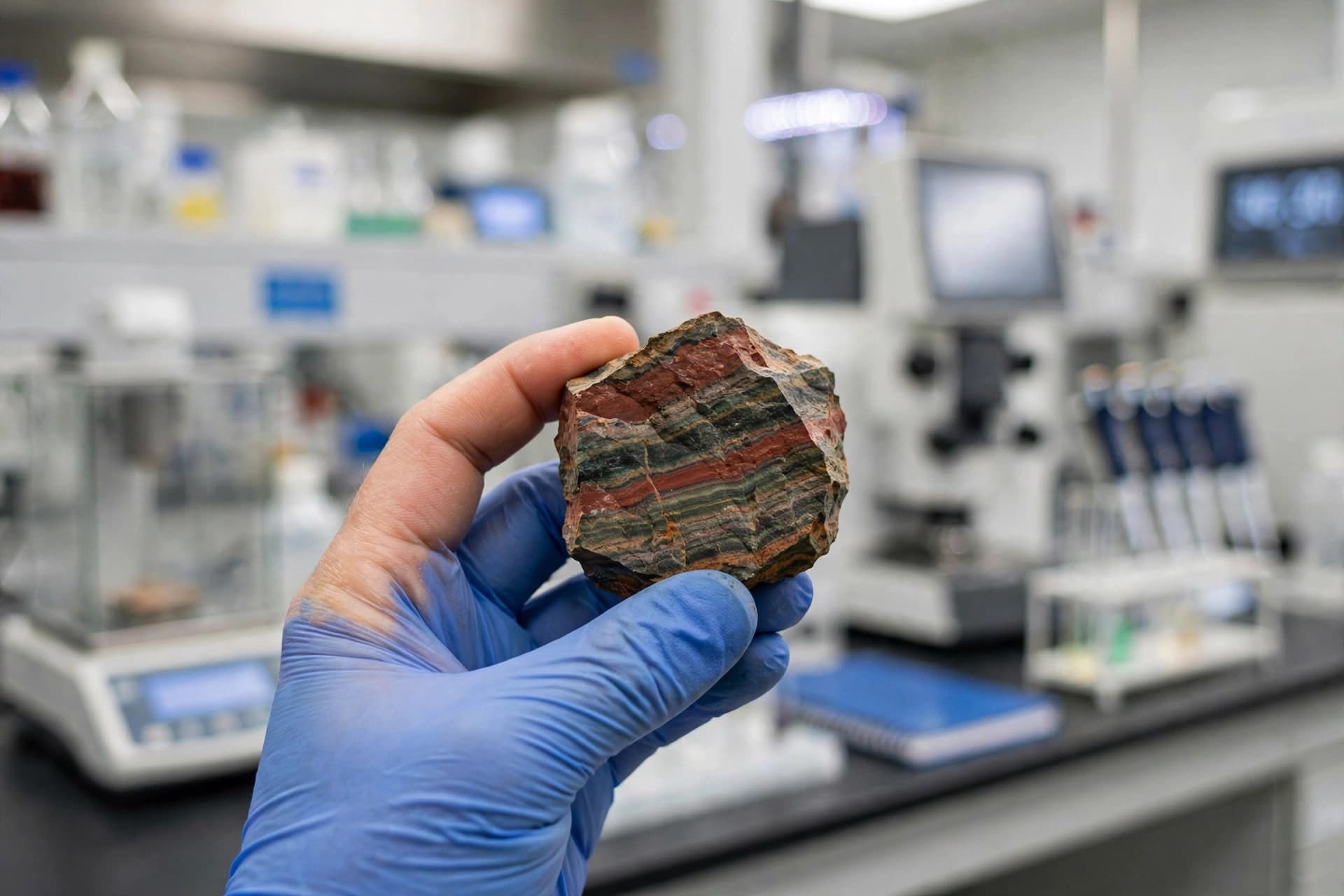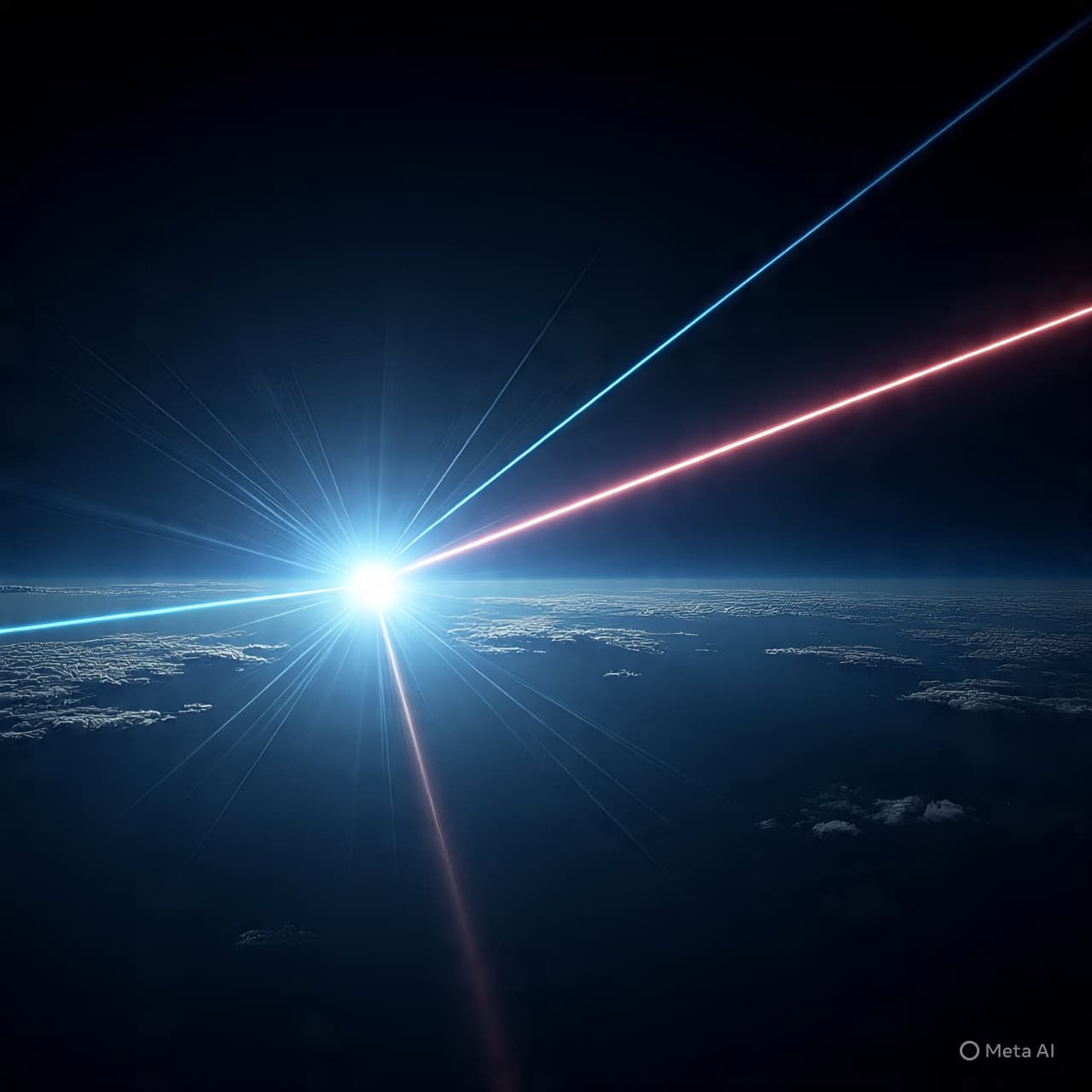
There are interactions in the natural world that leave no trace to the eye, unfolding in spaces too subtle for direct observation. A beam of light passes through air and seems unchanged, its path straight, its presence momentary. Yet within that passage, something more intricate is taking place—an exchange between energy and atmosphere, shaped by particles, حرارة, and motion that remain largely unseen.
To understand this interaction has required not only observation, but imagination guided by mathematics. Over time, scientists have worked to describe how laser light behaves as it travels through the atmosphere, how it bends, scatters, and shifts under the influence of turbulence, temperature gradients, and particulate matter. These efforts form what is now known as laser–atmosphere modeling, a field that exists at the intersection of physics, engineering, and environmental science.
Its development has not been entirely organic. Like many technical disciplines, it has been shaped by moments of focused attention—periods when resources, urgency, and institutional interest align. Among these influences, funding from the United States Air Force has played a significant role, particularly during the latter half of the twentieth century.
The motivations were varied. Accurate modeling of laser propagation held relevance for communication systems, remote sensing, and defense technologies. Understanding how a beam might degrade over distance, how it might be distorted by atmospheric conditions, or how its energy might disperse became questions of both scientific and practical importance.
With sustained support, research in this area expanded. Laboratories refined their experiments, computational models grew more sophisticated, and collaborations formed across institutions. The atmosphere, once treated as a simple medium, came to be understood as a dynamic environment—one that could alter light in ways both predictable and complex.
Key challenges emerged from the nature of the atmosphere itself. Turbulence, driven by temperature differences and wind, creates constantly shifting variations in air density. These variations affect how light travels, causing scattering, phase distortion, and fluctuations in intensity. To model such behavior requires not only equations, but the ability to simulate randomness within structured systems.
Over time, advances in computing allowed these models to become more detailed. Simulations could incorporate real-world data, capturing the variability of atmospheric conditions across different environments. What began as simplified approximations evolved into tools capable of informing practical applications, from satellite communication to ground-based optical systems.
Yet the influence of funding is not only seen in outcomes, but in direction. The questions that are asked, the problems that are prioritized, and the methods that are developed often reflect the interests of those who support the work. In this case, the involvement of the Air Force helped to shape the trajectory of laser–atmosphere modeling, emphasizing aspects relevant to long-distance propagation and system reliability.
At the same time, the knowledge produced has extended beyond its original context. Techniques developed for defense-related purposes have found applications in civilian fields, including climate research, astronomy, and telecommunications. The movement of ideas across these boundaries reflects the fluid nature of scientific progress, where tools and insights migrate over time.
There is a certain quietness in this history. The interaction between light and air remains invisible in everyday experience, even as it is described with increasing precision. The models that capture it exist largely within equations and simulations, their presence felt through the technologies they support rather than through direct perception.
Research into laser–atmosphere modeling has been significantly influenced by funding from the United States Air Force, particularly in advancing the understanding of how laser light propagates through turbulent air. These developments have contributed to both defense and civilian applications, supported by improvements in computational modeling and experimental methods.
AI Image Disclaimer
The illustrations are AI-generated and intended to conceptually represent scientific ideas, not real experimental images.
Source Check Nature Science IEEE Spectrum Physics Today The New York Times
Published by Banx Network. This article is part of the Banx decentralized media programme, powered by the BXE token on the XRP Ledger.