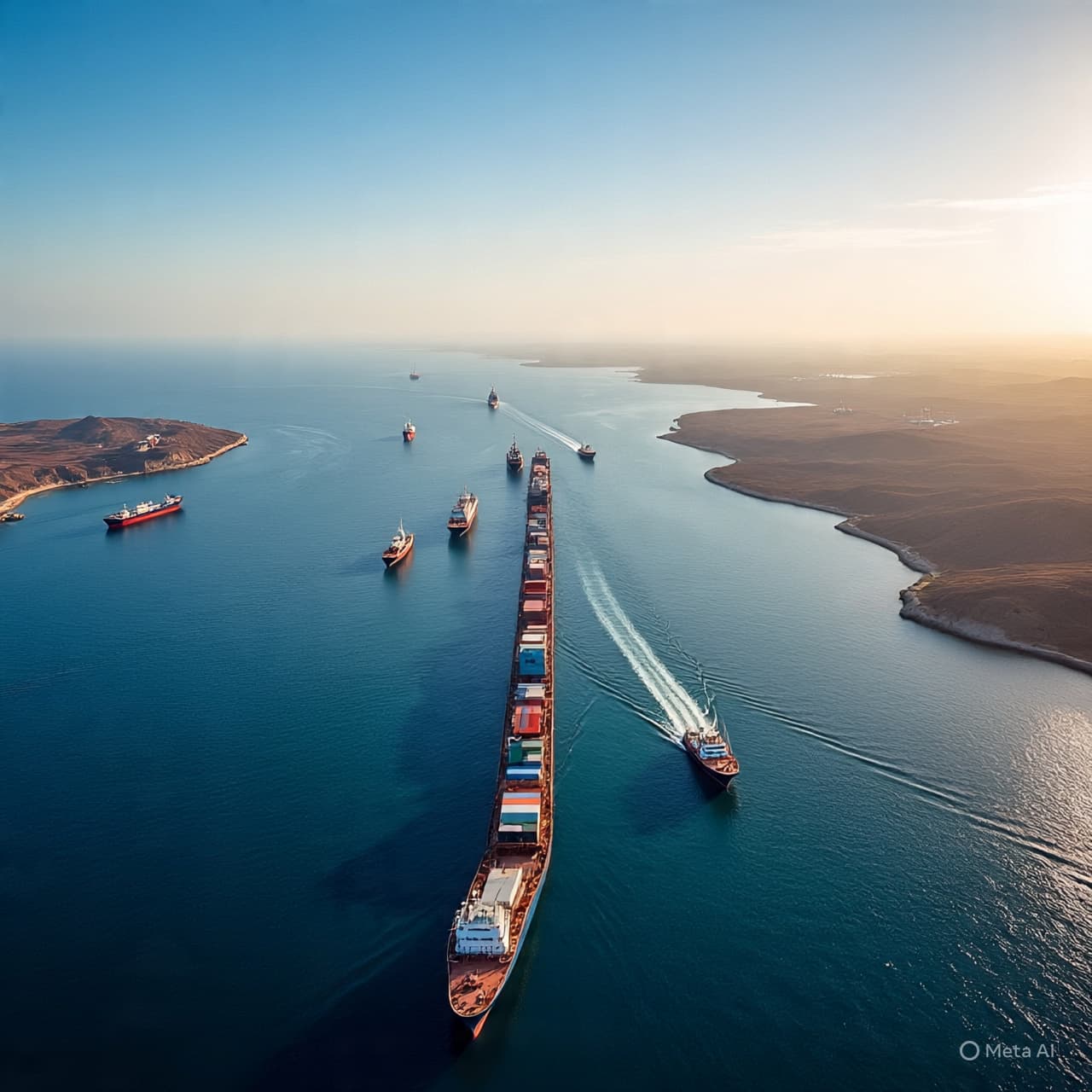
Morning light often reaches the Strait of Hormuz quietly, stretching across a narrow band of sea where tankers usually pass like slow-moving shadows between continents. The passage is small on a map, just a slender thread between Iran and the Arabian Peninsula, yet it carries the weight of a restless world. Nearly a fifth of the planet’s oil has long flowed through this corridor, moving with the rhythm of tides and commerce, a maritime heartbeat connecting distant economies.
In recent days, that rhythm has faltered.
Amid escalating tensions surrounding the ongoing confrontation with Iran, U.S. officials have begun speaking more openly about the fragile task of protecting shipping through the strait. U.S. Treasury Secretary Scott Bessent said in an interview with Sky News that the U.S. Navy may escort oil tankers through the waterway when it becomes “militarily possible.” The phrase carries a deliberate caution—less a promise of immediate action than a recognition of the complexity unfolding in the Gulf.
The strait itself is deceptively narrow, a passage watched closely from nearby shores and vulnerable to missiles, drones, and naval mines. Military planners have suggested that escort operations could begin only after conditions allow greater control of the skies and after Iran’s missile capabilities are weakened. Until then, the waterway remains a place of uneasy calculation, where commercial captains weigh the risks of passage against the costs of waiting offshore.
The uncertainty has already begun to ripple through global markets. Oil prices have surged above $100 per barrel as traders react to the possibility that shipments through the Gulf could stall or slow dramatically. Markets, like the sea lanes themselves, respond quickly to the perception of danger, even when the physical routes remain partially open.
Despite the rising tension, the strait has not fully closed. Some tankers—among them vessels flying Iranian and Chinese flags—have continued to pass through the channel, suggesting that Iran has not mined the waterway. Yet shipping traffic remains far below normal levels, with many vessels anchored nearby as companies wait for clearer security guarantees.
For naval strategists, escorting commercial ships through such waters recalls earlier moments in history when warships formed protective corridors for merchant fleets. But the geography of Hormuz, hemmed in by hostile coastlines and modern weapons systems, presents a challenge far more intricate than the convoy routes of previous conflicts. Even a small swarm of drones or fast boats could threaten a slow-moving tanker under escort, turning a narrow sea into a testing ground of modern naval power.
And so the strait waits—its waters calm on the surface, yet surrounded by the quiet tension of fleets, surveillance aircraft, and markets watching from afar.
In the coming weeks, Washington and its allies may attempt to assemble a naval coalition capable of escorting vessels through the passage, a step meant to reassure global energy markets and reopen the world’s most sensitive shipping lane. Whether that effort arrives soon enough to restore the steady rhythm of oil tankers moving through Hormuz remains uncertain.
For now, the narrow channel between mountains and sea continues to hold its breath, carrying not only cargo but the fragile balance of global trade.
AI Image Disclaimer Illustrations were created using AI tools and are not real photographs.
Sources Reuters Sky News USNI News CNBC International Energy Agency
Published by Banx Network. This article is part of the Banx decentralized media programme, powered by the BXE token on the XRP Ledger.