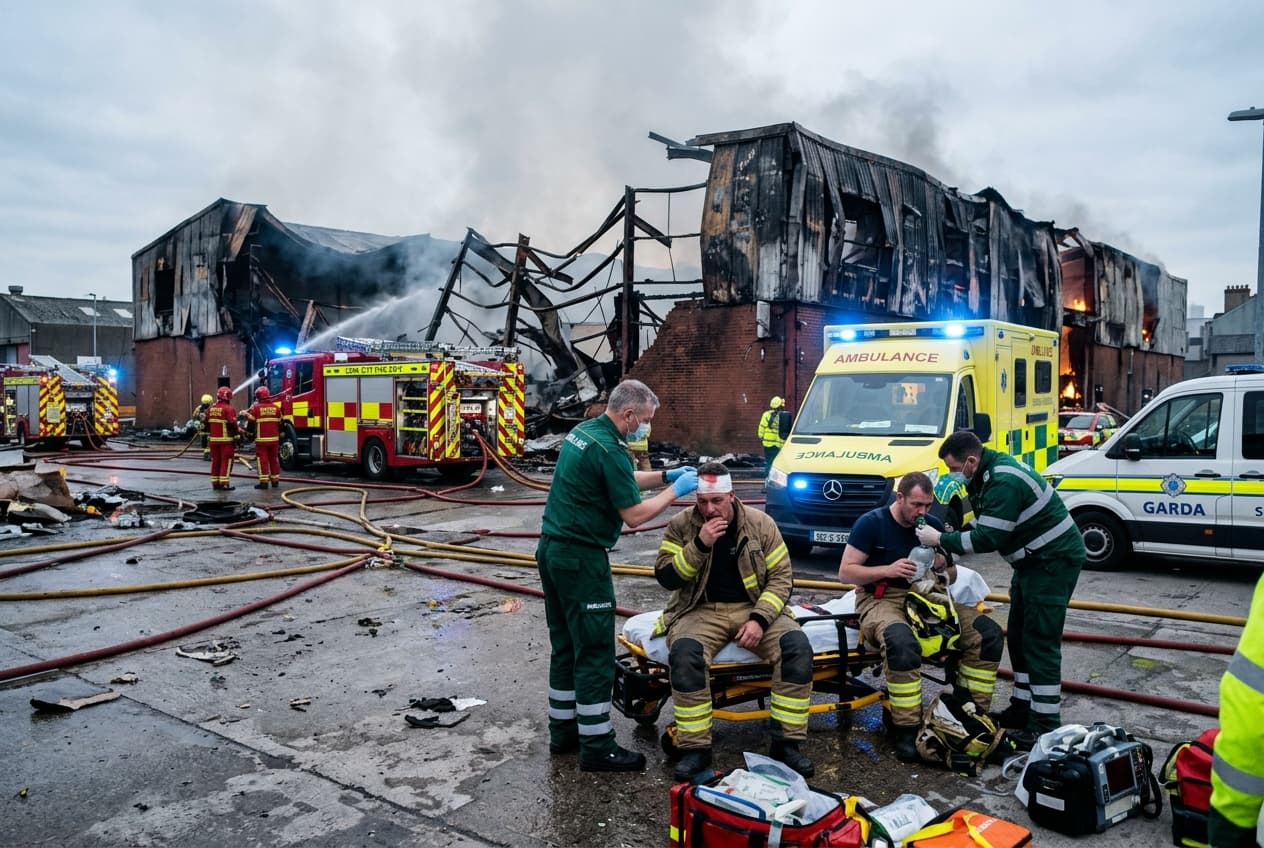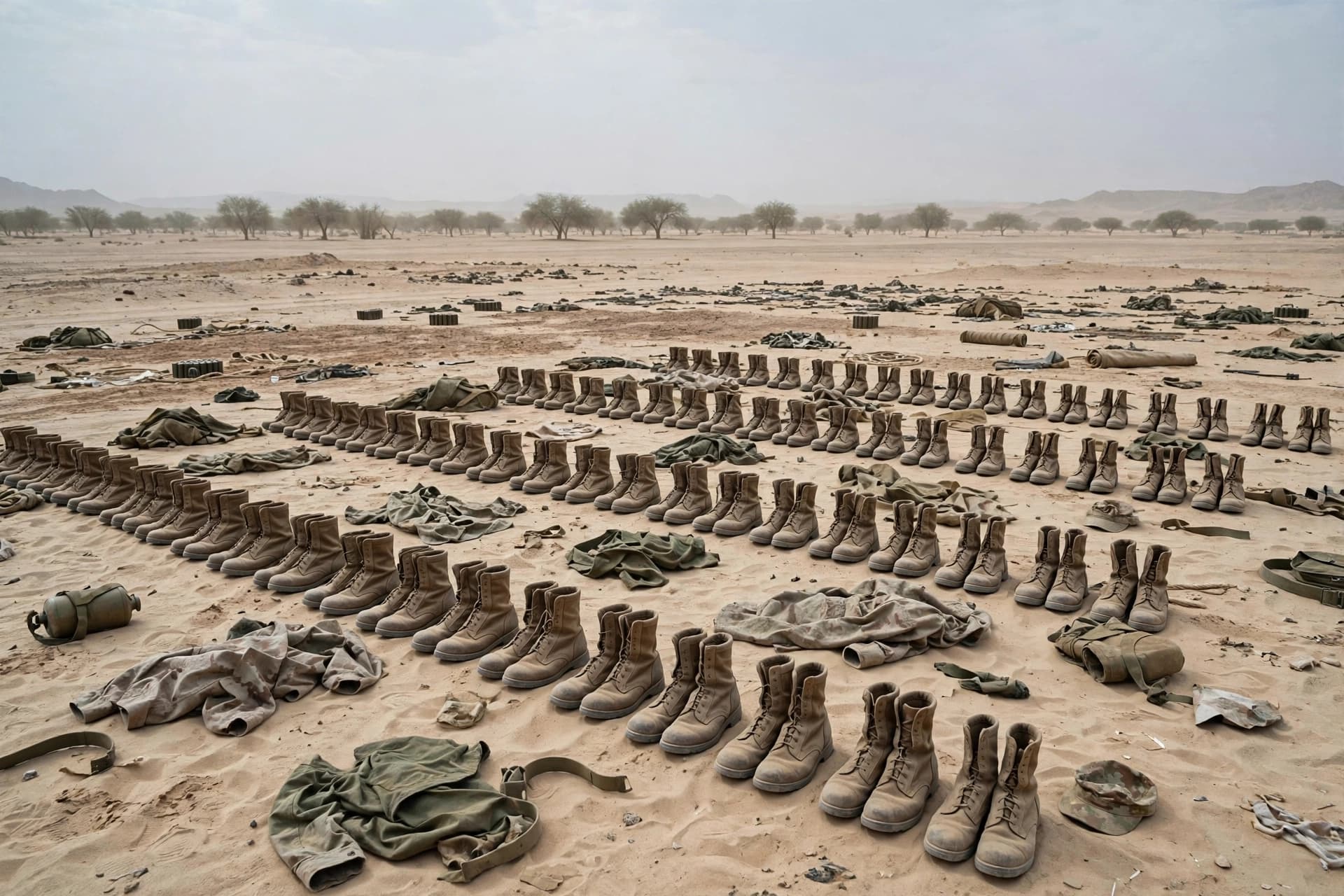
There is a particular sorrow that settles over a training ground after the missiles have fallen, a quiet that arrives not from peace but from the sudden absence of young men who had gathered in formation, not yet soldiers, not yet asked to fight. In the southern province of Shabwa, a camp called al-Alam held recruits between the ages of eighteen and twenty, young men from across the province who had come to learn how to keep their communities safe. On Monday, three ballistic missiles struck while they stood in line. By Tuesday, the provincial government confirmed that seventy-three had died, and fourteen were still missing.
The strike was the deadliest single attack in Yemen since fighting escalated three months ago, when airstrikes on Sanaa International Airport shattered a ceasefire that had largely held since 2022 . The Houthis claimed responsibility, saying they had targeted "Saudi enemy gatherings" at the camp, which they described as run by a Saudi officer . Shabwa's governor, Awad Ibn al-Wazir, offered a different account of the men who died. They were new recruits, he said, being trained to provide security in the province, not for combat operations. "This had nothing to do with front lines," he told the Associated Press. "They had not attacked anyone or advanced against anything. It was only to protect the security of their province" .
More than two hundred others were wounded, many critically, and were transferred to hospitals in other provinces as Shabwa's medical facilities struggled to absorb the casualties . Videos analyzed by the AP showed motionless bodies lying on the sandy ground of the camp, a scene that has become familiar in a conflict that has killed more than 150,000 people and created what the United Nations has called one of the world's worst humanitarian disasters . At least fifteen of the dead were from a single tribe, the Awlaqi, and another sixteen from the Maraziq, losses that will be felt in specific villages and specific families for generations .
The context of the strike is a war that has widened and hardened. The Houthis seized Sanaa in 2014, forcing the internationally recognized government into exile, and a Saudi-led coalition intervened the following year. A truce in 2022 offered a measure of quiet, but it collapsed in July when government and coalition forces struck the Houthi-held airport. Since then, the Houthis have besieged Taiz, Yemen's third-largest city, cutting supply routes and placing civilians at what the UN human rights chief has called "grave risk" . The al-Alam camp sits on a supply line connecting Shabwa to Marib, part of a strategic triangle where Yemen's oil and gas reserves lie .
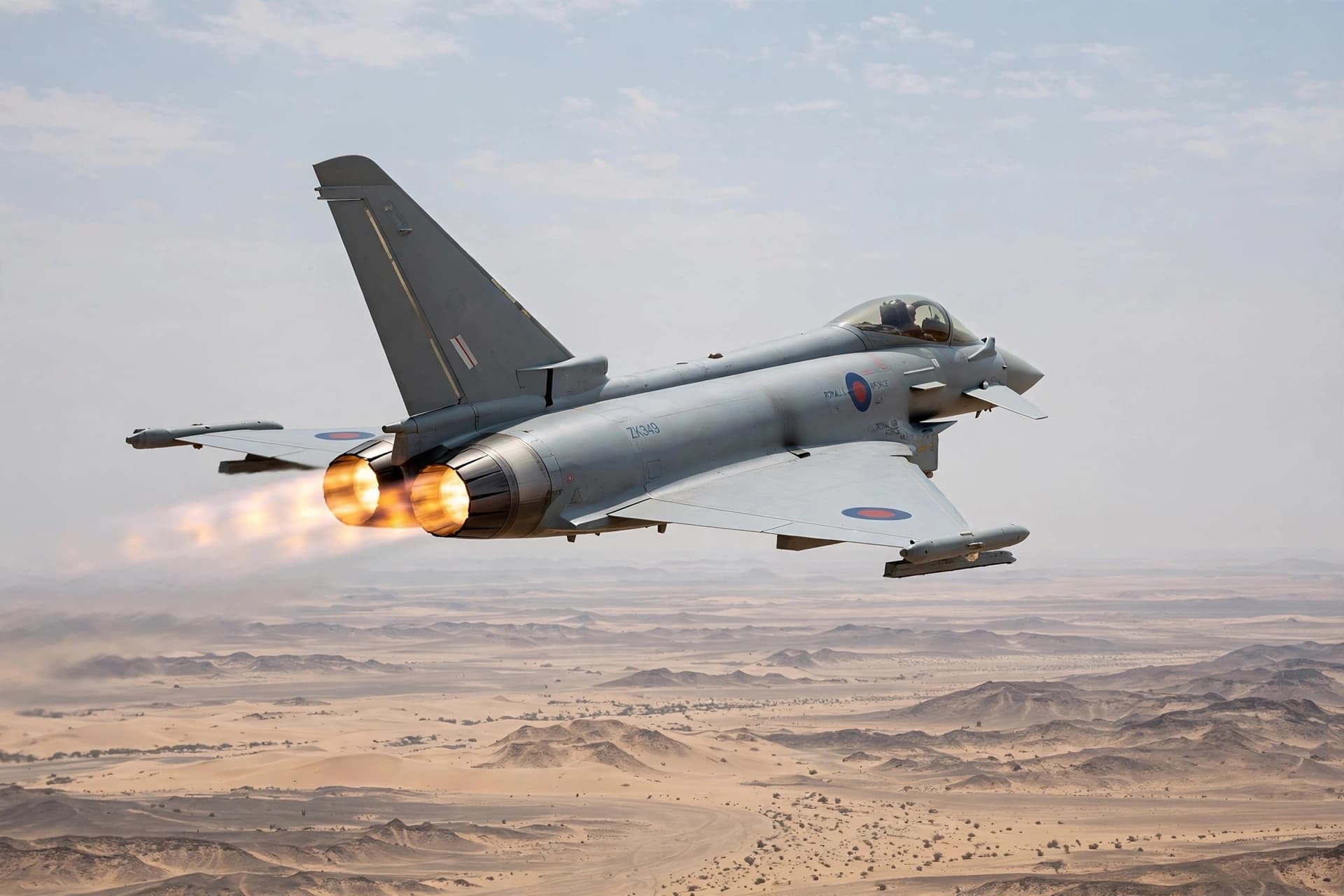
There is a geopolitical dimension that extends beyond Yemen's borders. The Houthis have launched attacks on Saudi Arabia, and Britain announced this week that it would expand military support for the kingdom to include "defensive" air patrols by Royal Air Force jets . Saudi Arabia said it intercepted a ballistic missile fired toward Riyadh on Tuesday . The conflict has become a widening front in a regional struggle, with the United States and Britain drawn in on the side of Saudi Arabia, and Iran backing the Houthis.
The provincial government in Shabwa has called on Yemen's government and the Saudi-led coalition to provide air defense, surveillance, and early-warning systems . The request is practical, almost bureaucratic, and it speaks to a vulnerability that no amount of mourning can address. The recruits at al-Alam were not equipped to defend against ballistic missiles. They were young men in formation, learning to be security officers, and they died in the open.
For the families of the seventy-three, the search for the fourteen missing continues. The governor's office said the toll could rise further. The wounded are in hospitals across Shabwa and beyond, some in critical condition. The war will continue, and the arguments about who is responsible will continue, and the strategic calculus of a region in conflict will grind on. But in Shabwa this week, there is only the slow work of counting the dead and the quiet grief of a province that lost a generation of young men in a single morning.
AI Image Disclaimer: The visuals accompanying this article are AI-generated and are for illustrative purposes only.
Sources: Associated Press, CBC News, Xinhua, Ahram Online, ReliefWeb
Published by Banx Network. This article is part of the Banx decentralized media programme, powered by the BXE token on the XRP Ledger.