
Key Highlights
- New System:The EU's Entry/Exit System aims to enhance border management.
- Increased Delays:Travelers are experiencing wait times of up to three hours.
- Biometric Checks:The system introduces fingerprint and facial recognition technology.
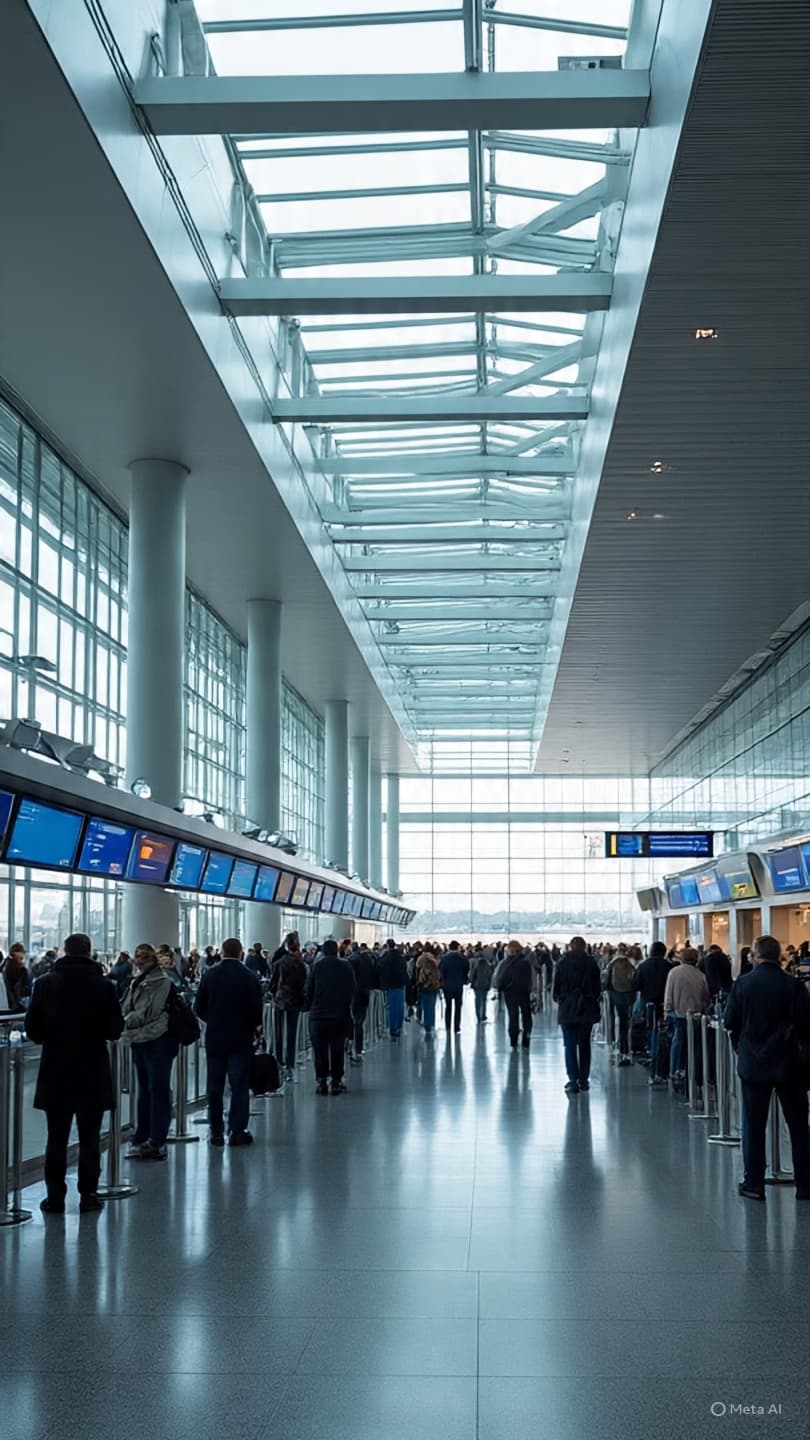
The morning light spills across Europe’s airports, illuminating glass terminals and flickering departure boards. For many travelers, these spaces serve as brief pauses between destinations. However, recent changes have transformed these pauses into longer, more deliberate waits, particularly at passport control.
The European Union's new Entry/Exit System is designed to digitally record the movements of non-EU travelers. This system replaces traditional passport stamping with biometric checks, including fingerprints and facial scans. While the intention is to streamline border management, the reality has led to significant delays, with reports of wait times extending up to three hours during peak travel periods.
Airports across the EU are grappling with the transition to this new system. Lines have become longer and more complex, often folding back on themselves as travelers navigate unfamiliar procedures. Staff members are tasked with guiding passengers through the new processes, while screens and kiosks attempt to manage the influx of travelers. The initial rollout has not been without friction, as the system struggles to accommodate the volume of arrivals.
The broader goal of the Entry/Exit System is to enhance border security and track overstays more effectively. By creating a centralized digital record, the EU hopes to improve efficiency in future crossings. However, the early implementation phase has revealed a gap between the intended efficiency and the current experience of travelers, who find themselves in a state of limbo between old and new systems.
As airports adjust to these changes, infrastructure must evolve to support biometric checkpoints. Staffing patterns are shifting to manage longer processing times, and effective communication is essential to help travelers navigate the new system. For many, the experience has become one of quiet recalibration, as the expectation of swift movement gives way to a more patient engagement with the process.
The human aspect of these delays is significant. Journeys that begin with excitement—whether for reunion, exploration, or return—are interrupted by queues that move slowly. In these moments, airports transform from mere transit points into spaces of collective experience, where conversations and shared glances acknowledge the frustration of waiting.
Officials have stated that such disruptions are expected during the system's gradual rollout. As technology stabilizes and travelers become more familiar with the new procedures, processing times are anticipated to improve. Training and adaptation will be crucial in shaping the system into a more efficient operation. However, for now, the experience remains marked by a transitional quality, where the promise of efficiency has yet to be fully realized.
As evening descends and terminals quiet down, the lines begin to thin, and travelers continue on their journeys, their data now integrated into a broader network that spans borders. The Entry/Exit System, still in its early stages, embodies both a promise of improved travel and the reality of a process still finding its footing.
In the coming days, it is hoped that delays will diminish, becoming less noticeable as the system matures. Yet, for the moment, the measured pace of passport control serves as a reminder that even in a fast-paced world, transitions require time, and movement is never entirely without pause.
Published by Banx Network. This article is part of the Banx decentralized media programme, powered by the BXE token on the XRP Ledger.



