In the changing rhythm of Parisian commerce, clothing can now arrive with a different price attached. France has begun implementing new fees on ultra-fast-fashion products, adding another layer to the growing cost of inexpensive online goods. The measure places Shein and Temu among the platforms facing a new commercial environment as France attempts to address the consequences of high-volume fashion consumption.
The new system took effect on September 1, following legislation approved earlier in 2026. Fees initially range from €0.25 for smaller products such as socks to €12 for larger items such as coats, with the charge capped at half of a product's pre-tax price. The structure is designed to increase the cost associated with products considered part of the ultra-fast-fashion category.
The calculation is connected to factors including the volume of products offered and their repairability. That distinction is significant because online platforms can present enormous selections to consumers, allowing new designs to appear at a pace difficult for traditional retailers to match. France's approach therefore focuses partly on the scale and characteristics of the digital marketplace itself.
The new fees arrive as the European market is already changing the economics of low-cost online shopping. Since July, a separate €3 charge has applied to certain low-value e-commerce parcels entering the European Union. French officials have reported that imports of small parcels from China have subsequently declined by roughly 30% to 40%.
For companies built around large product selections and low prices, even relatively small additional charges can influence the final price paid by consumers. The effect may be felt through purchasing decisions, product selection, shipping patterns, and the way online retailers organize their inventories.
Shein faces particular attention because of the scale of its online offering and its position in the global fast-fashion market. The company also recently entered public markets in Hong Kong, where its valuation was reported at around $26.3 billion at the time of its initial offering. That valuation is substantially below the levels associated with the company during its earlier period of rapid expansion.
The French measure also arrives within a wider European effort to establish producer-responsibility systems for textiles. The broader framework is intended to make producers and retailers contribute toward the collection, sorting, and recycling of textile waste. France's system differs in important respects from approaches being developed elsewhere in Europe.
For consumers browsing online stores, the change may gradually become visible through product prices and purchasing patterns. For retailers, it adds another consideration to an already evolving cross-border market. France's new fees mark a concrete shift in how ultra-fast fashion is treated commercially, while the broader European market continues to determine how far such measures will reshape the flow of inexpensive clothing across borders.
AI Image Disclaimer
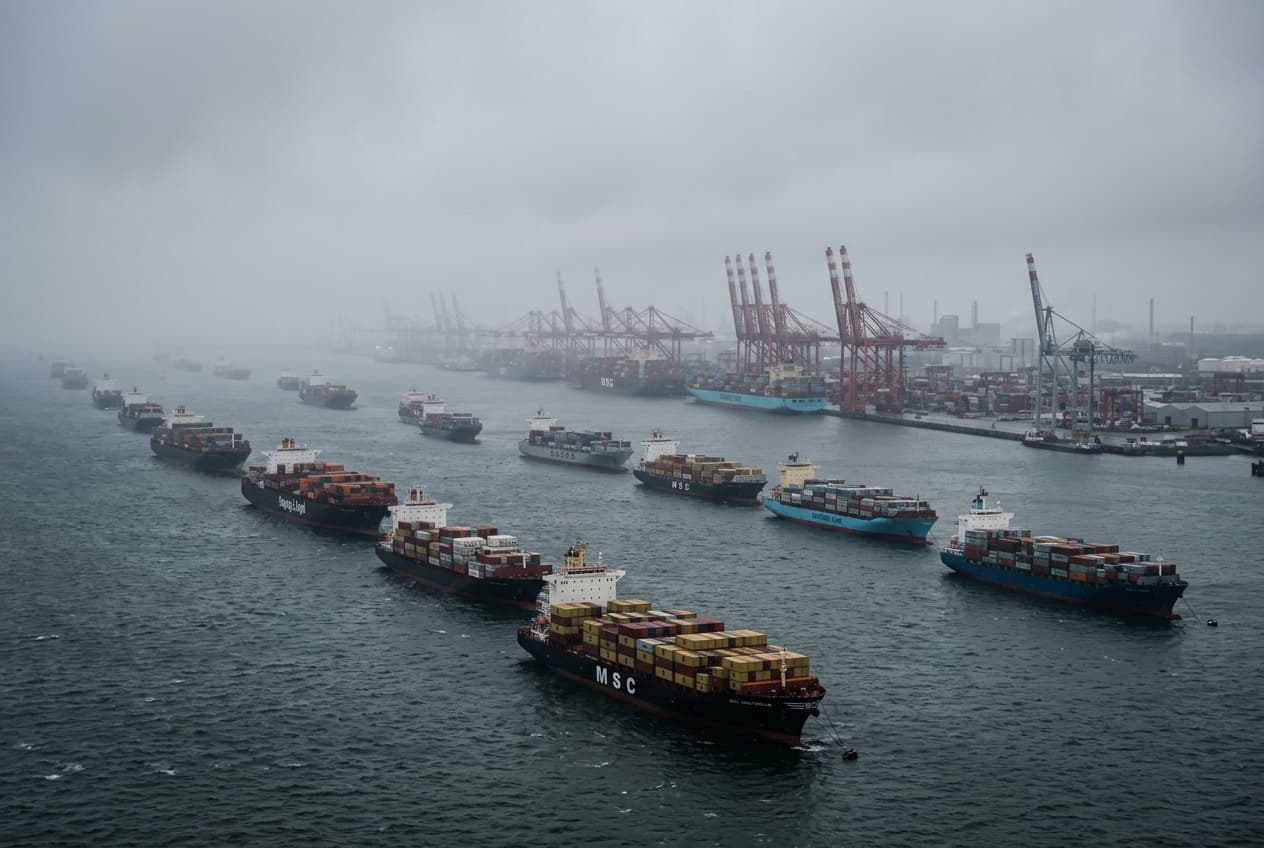
These illustrations were produced with AI technology and represent conceptual scenes rather than real-world photographs.
Sources
Reuters Euronews AFP Financial Times MarketScreener
Published by Banx Network. This article is part of the Banx decentralized media programme, powered by the BXE token on the XRP Ledger.