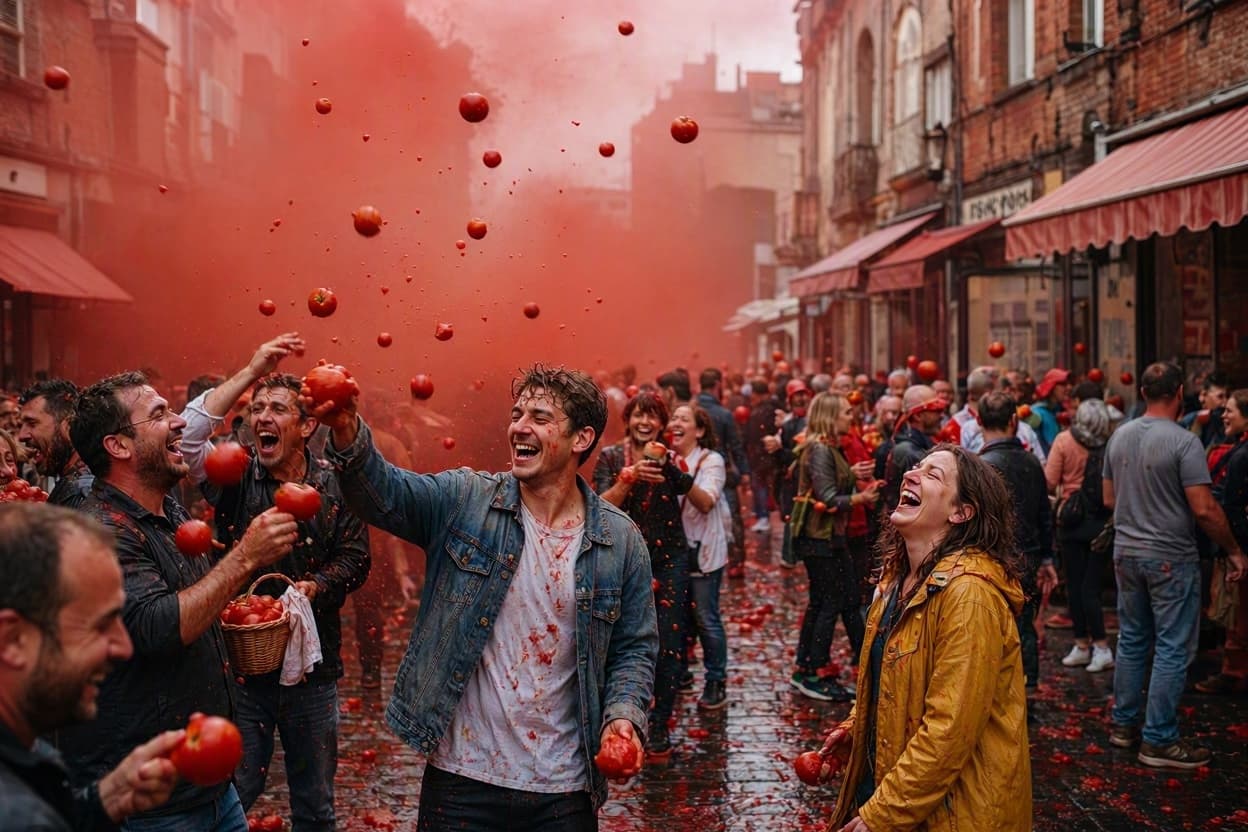
In the sun-drenched streets of Buñol, a small town in eastern Spain, order gives way to joyful chaos once a year. The air fills with the scent of crushed tomatoes and the sounds of laughter as thousands of participants engage in La Tomatina, the world’s largest food fight. This annual festival, characterized by its vibrant red haze and communal spirit, is more than just a messy spectacle; it is a celebration of release, unity, and the simple pleasure of shared experience.
La Tomatina takes place on the last Wednesday of August, drawing visitors from across the globe. The event begins with the "palo jabón," a traditional attempt to climb a greased pole to retrieve a ham, signaling the start of the tomato throwing. Once the signal fires, trucks dump tons of overripe tomatoes into the crowd, transforming the streets into a slippery, red river. For one hour, social barriers dissolve as strangers laugh together, covered in pulp and juice.
The origins of the festival date back to 1945, reportedly starting as a spontaneous brawl during a local parade. Over time, it evolved from a act of dissent into a sanctioned cultural event, officially recognized by the town council in the 1980s. Today, it is a carefully organized affair, with strict rules to ensure safety and cleanliness. Participants must squash the tomatoes before throwing them to reduce impact, and no other objects are allowed, maintaining the playful nature of the event.
The economic impact on Buñol is significant, with local businesses benefiting from the influx of tourists. Hotels, restaurants, and shops see a surge in activity, highlighting the role of cultural festivals in sustaining rural economies. Yet, despite the commercial aspects, the core of La Tomatina remains rooted in community tradition. It is a moment where locals and visitors alike participate in a ritual that defies conventional norms of behavior and hygiene.
Cleanup is a massive undertaking, involving high-pressure hoses and municipal workers who wash down the streets and buildings immediately after the event. The acidity of the tomatoes actually helps clean the surfaces, leaving the town surprisingly pristine by evening. This efficient restoration of order mirrors the temporary nature of the chaos, reinforcing the idea that the mess is contained within a specific time and space.
Photographs from the event capture the essence of human joy unburdened by self-consciousness. Faces smeared with red, eyes crinkled in laughter, and arms raised in triumph create images that resonate with viewers worldwide. These photos serve as visual testaments to the power of play and the universal desire for connection. They remind us that amidst the seriousness of daily life, there is room for absurdity and fun.
For many participants, La Tomatina is a bucket-list experience, a chance to let go of inhibitions and embrace the moment. The sensory overload of smell, touch, and sight creates a memorable imprint, fostering a sense of camaraderie among those who share the experience. It is a reminder that happiness can be found in the simplest, most unexpected places, even in a pile of squashed tomatoes.
La Tomatina stands as a unique cultural phenomenon, blending tradition, tourism, and pure revelry. As thousands leave Buñol stained red but smiling, they carry with them memories of a day when the world paused for a playful battle. It is a celebration of life’s messiness, proving that sometimes, getting dirty is the best way to feel clean at heart.
AI Image Disclaimer: Please note that any accompanying visuals for this article are AI-generated representations intended for illustrative purposes only.
Sources: Reuters, The Guardian, Spain.info, AP News
Published by Banx Network. This article is part of the Banx decentralized media programme, powered by the BXE token on the XRP Ledger.