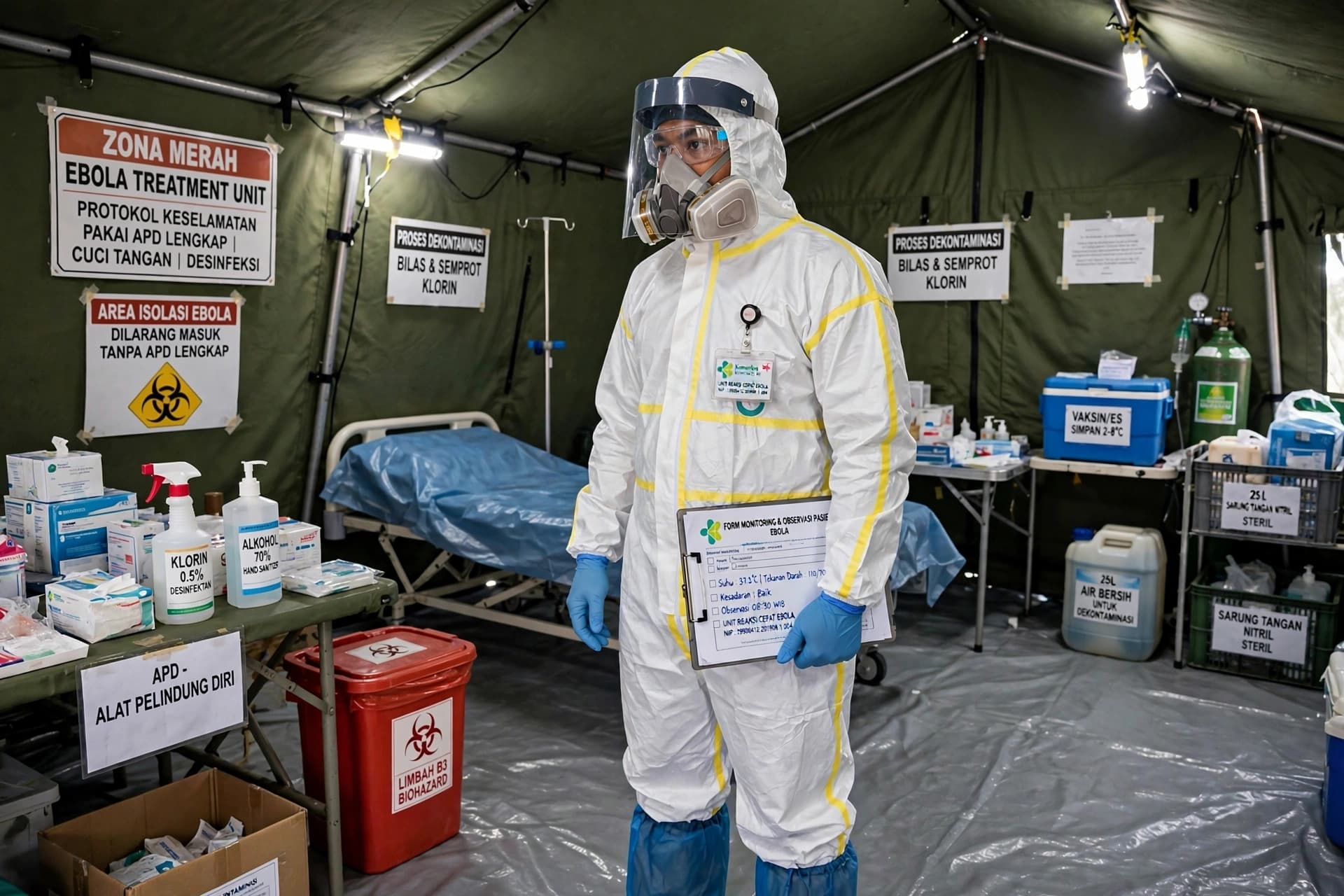
Those working on the front lines of an Ebola outbreak wear protective equipment that covers their entire bodies, follow strict protocols, and undergo repeated training. They understand the risks. They know that Bundibugyo virus—one of the four types of Ebola virus known to infect humans—does not recognize the boundary between patient and caregiver, between those receiving treatment and those providing it. Yet they continue to go. And sometimes, even when extensive precautions are taken, the virus finds a way through. Médecins Sans Frontières (MSF) confirmed on Thursday, October 1, 2026, that one of its staff members working on the Ebola response in the Democratic Republic of the Congo had tested positive for Bundibugyo virus disease.
The individual was being evacuated to the Netherlands for treatment under strict medical protocols and in close coordination with health authorities in the DRC and the Netherlands. The Dutch Ministry of Health said the patient was an MSF doctor deployed to the DRC to help fight the outbreak and would be treated in a specialized isolation unit at Leiden University Medical Center, approximately 40 kilometers southwest of Amsterdam. The patient would remain under strict isolation.
The case emerged as an Ebola outbreak in the DRC, caused by the Bundibugyo strain, had grown into the largest and deadliest outbreak ever recorded in the country. Government data released Monday showed that confirmed cases had surpassed 8,000 for the first time, reaching 8,067, while deaths had reached 3,901. The outbreak had surpassed the DRC's 2018–2020 Ebola epidemic and ranked second only to the 2014–2016 West Africa outbreak, which infected more than 28,600 people and killed more than 11,000 across Guinea, Liberia, and Sierra Leone.
MSF, which supports the response in Ituri, North Kivu, Tshopo, and Haut-Uele provinces, said that despite extensive protective measures for its staff, the risk of exposure could never be completely eliminated. The organization expressed solidarity with everyone working on the front lines of the Ebola response, recognizing the courage, commitment, and determination required to protect communities and save lives. MSF said it could not provide specific details about the individual's medical evacuation in order to respect medical confidentiality and protect the person's privacy.
In its official statement, MSF reaffirmed its commitment to continue working alongside Congolese health authorities and affected communities to help bring the outbreak under control. The organization is currently responding to the outbreak across four provinces, and although the infection of one of its staff members represents a serious development, humanitarian operations continue. For those working in the field, risk is part of the job—a reality they accept knowingly while helping people who have little choice but to confront the outbreak themselves.
AI Image Disclaimer: All visual elements in this article were generated by artificial intelligence and are intended solely for illustrative purposes.
Sources: Médecins Sans Frontières, Reuters, Ministry of Health of the Netherlands, Jordan Times
Published by Banx Network. This article is part of the Banx decentralized media programme, powered by the BXE token on the XRP Ledger.