There is a particular arithmetic to election seasons, a rhythm in which promises are made and their costs are counted, sometimes by the same voices on different days. In Victoria, that rhythm has produced a pledge that will sound sweet to commuters and sobering to those who keep the state's books: a cap on public transport fares at thirty dollars a week, offered by a government asking to be returned to office.
Premier Ben Carroll made the commitment this week, framing it as relief for households squeezed by the cost of living . Under the plan, a regular commuter traveling five days a week would see their weekly fare fall from around fifty-seven dollars to no more than thirty, a saving the government estimates at fourteen hundred dollars a year for full-time workers . The policy would run for two years, until December 2028, at an estimated cost of $206 million—a figure the Premier says would be offset by savings elsewhere . It follows a parallel pledge to cap freeway tolls at the same weekly figure, a pairing that positions Labor as the party of the daily commute's ledger.
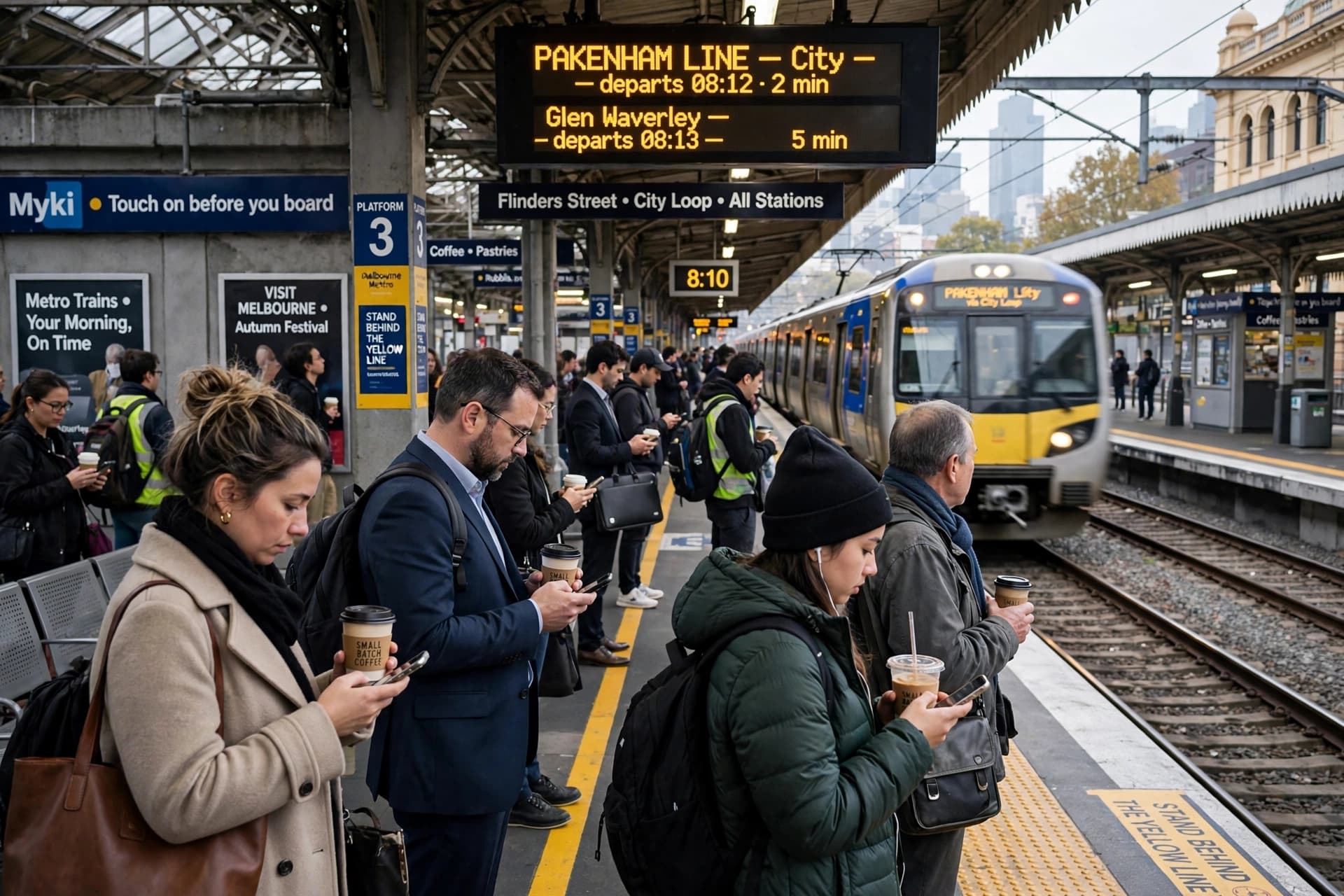
For the commuter standing on a platform in the early cold, the appeal is immediate and tangible. Daniel Bowen of the Public Transport Users Association described it as a significant benefit, though he also suggested the government consider reducing short-distance fares, which currently sit at $5.70 . The logic is straightforward: public transport is a service used disproportionately by those with less disposable income, and making it cheaper is a redistributive act dressed in the language of efficiency. It is also, in the context of a cost-of-living election, a message that resonates.
But the Victorian Chamber of Commerce and Industry has raised a question that elections often defer: can the state afford it? Amelia Bitsis, the chamber's policy and advocacy chief, spoke of concerns among businesses large and small about the "escalating profligacy" of the campaign, and she pointed to a debt picture that remains, in her words, insufficiently clear . The chamber's position is not an argument against public transport or against helping commuters. It is an argument about sequencing—about whether promises should precede a full accounting of what the state already owes.
The tension is not new. Victoria's debt has grown substantially in recent years, and every election commitment carries an opportunity cost measured in schools not built, hospitals not staffed, or taxes not lowered. The chamber's call for "fiscal restraint" from all major parties is a reminder that the money being promised is not abstract; it is borrowed against future revenues, and those revenues come from the same businesses and households the promises aim to help . The question Bitsis posed—"can we afford them?"—is not rhetorical, though it is often treated as such .
There is also a political texture to the moment that cannot be ignored. The fare cap follows a toll cap, and both arrive in the heat of a campaign in which the Coalition has made its own transport promises. The bidding war is not unique to Victoria; it is the grammar of modern elections, where each side accuses the other of reckless spending while adding to the pile. What distinguishes this particular pledge is its directness: a number, a timeline, a cost, and a claimed offset. Voters are being invited to weigh the benefit against the burden, and to decide whether the trade is worth making.
The Premier's framing is that this is "real cost-of-living relief," and for many commuters, it will be exactly that . For others—the business owner watching margins, the taxpayer attuned to debt—the promise will read as another entry in a ledger already straining under its weight. Both readings can be true at once, which is the difficulty of governing in a season of scarcity and expectation.
The fare cap will be debated, costed, and ultimately decided by the voters in November. What remains is the question that lingers beneath every election promise: what kind of state do Victorians want, and what are they willing to pay for it?
AI Image Disclaimer: This article includes AI-generated images intended solely for illustrative purposes.
Sources: Australian Broadcasting Corporation, OZ Arab Media, china.com.au
Published by Banx Network. This article is part of the Banx decentralized media programme, powered by the BXE token on the XRP Ledger.