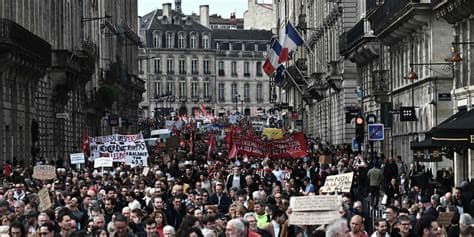
There is a line that runs between anger and destruction, and it is often crossed in the heat of a moment that begins with legitimate grievance. Italy saw that line crossed on Saturday, as protests against the rising cost of living turned violent in Milan, Turin, Bologna, and other cities. What began as a march for economic relief ended in shattered glass, burning barricades, and injuries on both sides of a police line.
Prime Minister Giorgia Meloni condemned the violence in a social media post, expressing "full solidarity" with law enforcement and describing the perpetrators as "criminals who, even through organized groups, exploit demonstrations to seek conflict and sow chaos" . She acknowledged that thousands had demonstrated peacefully, stating that "participation is the foundation of any healthy democracy," but added that "burning and destroying our cities is not" a right . Her language was pointed: "gangs of thugs" who had "ravaged" the city, and a call for the opposition to condemn the violence unequivocally .
The numbers tell a story of significant disorder. Police arrested 28 people, including 12 minors, and identified 197 others . At least 141 law enforcement officers were injured . In Milan, where around 5,000 people participated in the march, groups threw stones, bottles, firecrackers, and barriers at officers, who responded with tear gas and water cannon . Shops were damaged and looted, and a Carabinieri vehicle was destroyed . The retail association Confcommercio estimated damage to businesses at more than 500,000 euros .
The protests were organized by the Italia in Piazza movement, opposing rising living costs, fuel prices, and tax pressures . In Turin, police arrested an adult for resisting an officer and three minors allegedly carrying Molotov cocktails . In Bologna, five minors were arrested after clashes near the railway station, and the station was closed as a precaution . Milan Mayor Giuseppe Sala said the protesters' grievances were understandable but that violence against officers and extensive damage to the city were unjustifiable . Bologna Mayor Matteo Lepore similarly condemned the unrest and urged young people to distance themselves from those using demonstrations as a pretext for violence .
The political fallout has been immediate. Deputy Prime Minister Matteo Salvini said his League party would resubmit a parliamentary proposal requiring organizers of demonstrations deemed risky to provide financial guarantees covering potential damage . The proposal is controversial—a measure that critics might see as an infringement on the right to assembly—but it reflects a governing coalition searching for a response to unrest that has shaken the country's sense of order.
What makes moments like this difficult is that the underlying grievances are real. The cost of living has risen. Fuel prices and taxes press on households. The anger is not manufactured. But anger, when it turns to fire and stone, produces victims who have nothing to do with the policies being protested—the shopkeeper whose window is smashed, the officer whose helmet is struck, the city that wakes to broken glass. Meloni's condemnation of the "thugs" is one response. The question that remains is whether a government can address the legitimate anger while holding the line against the destruction it sometimes becomes.
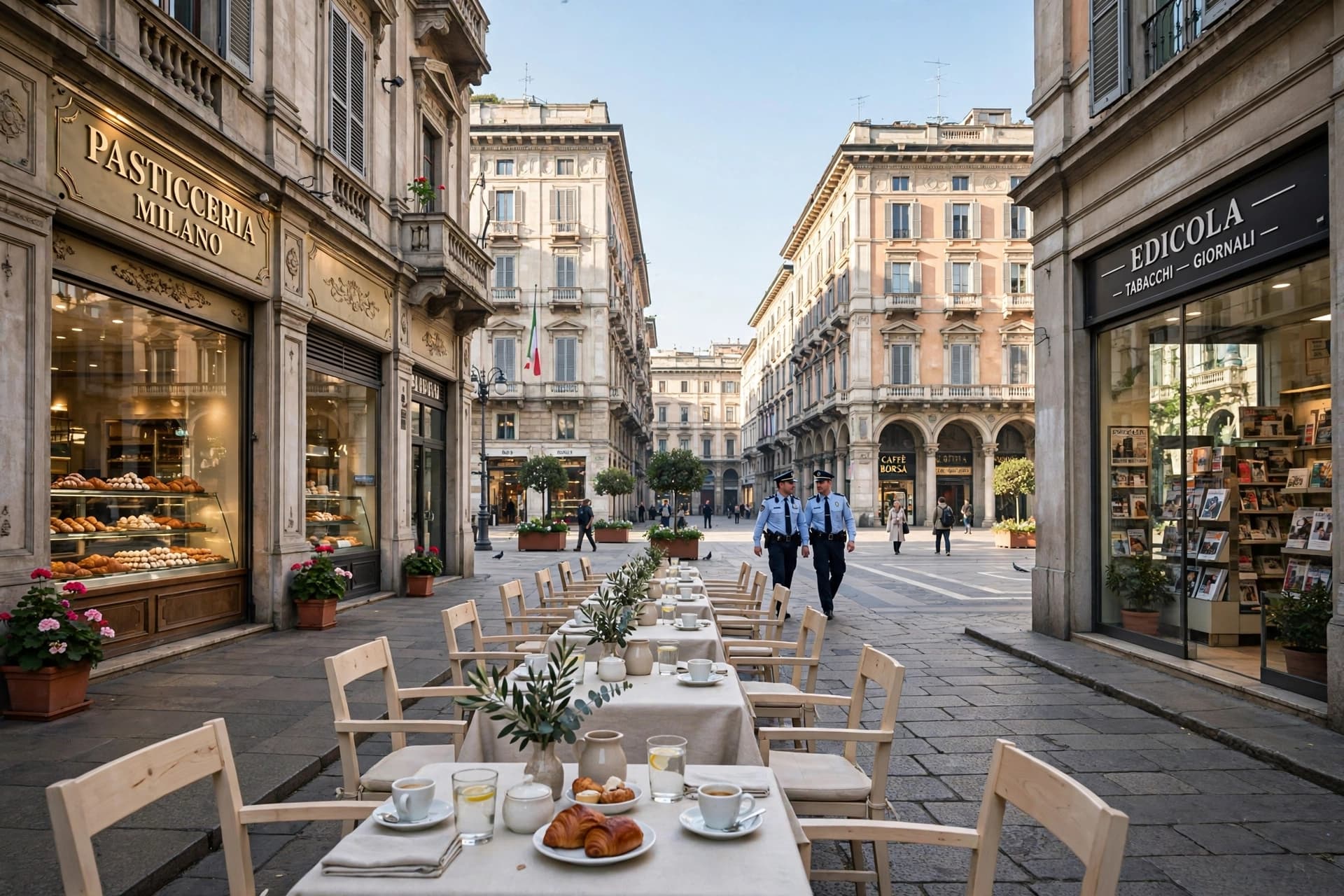
AI Image Disclaimer: This article includes AI-generated imagery created for illustrative purposes only.
Sources: Anadolu Ajansı, Agenzia Nova, Il Fatto Quotidiano, Tanjug, Saba News, Xinhua
Published by Banx Network. This article is part of the Banx decentralized media programme, powered by the BXE token on the XRP Ledger.