The moon has long captivated the human imagination, a silent companion in the night sky that promises new frontiers and endless possibilities. Recent visions of lunar colonization often include bustling cities and thriving communities, fueled by the promise of ice hidden in shadowed craters. However, a new scientific analysis offers a sobering perspective, suggesting that the moon’s water resources may be insufficient to support large-scale urbanization. This revelation invites a gentle recalibration of our cosmic ambitions, urging us to balance dreams with practical realities.
Scientists estimate that while there may be billions of tons of water ice on the moon, much of it is trapped in tiny glass beads or located in hard-to-reach polar regions. Extracting this water requires significant energy and advanced technology, making it a scarce and precious resource rather than an abundant supply. For a small research outpost, this might be manageable, but for a city of millions, the math simply does not add up. The consumption rates of a large population would quickly deplete the available reserves.
A study published in Frontiers in Space Technologies highlights that even a modest city of one million people could exhaust the moon’s accessible water supply in just a few decades. Water is essential not only for drinking but also for growing food, generating oxygen, and producing fuel. Without a sustainable and renewable source, any lunar settlement would face constant logistical challenges, relying heavily on resupply missions from Earth, which are costly and complex.
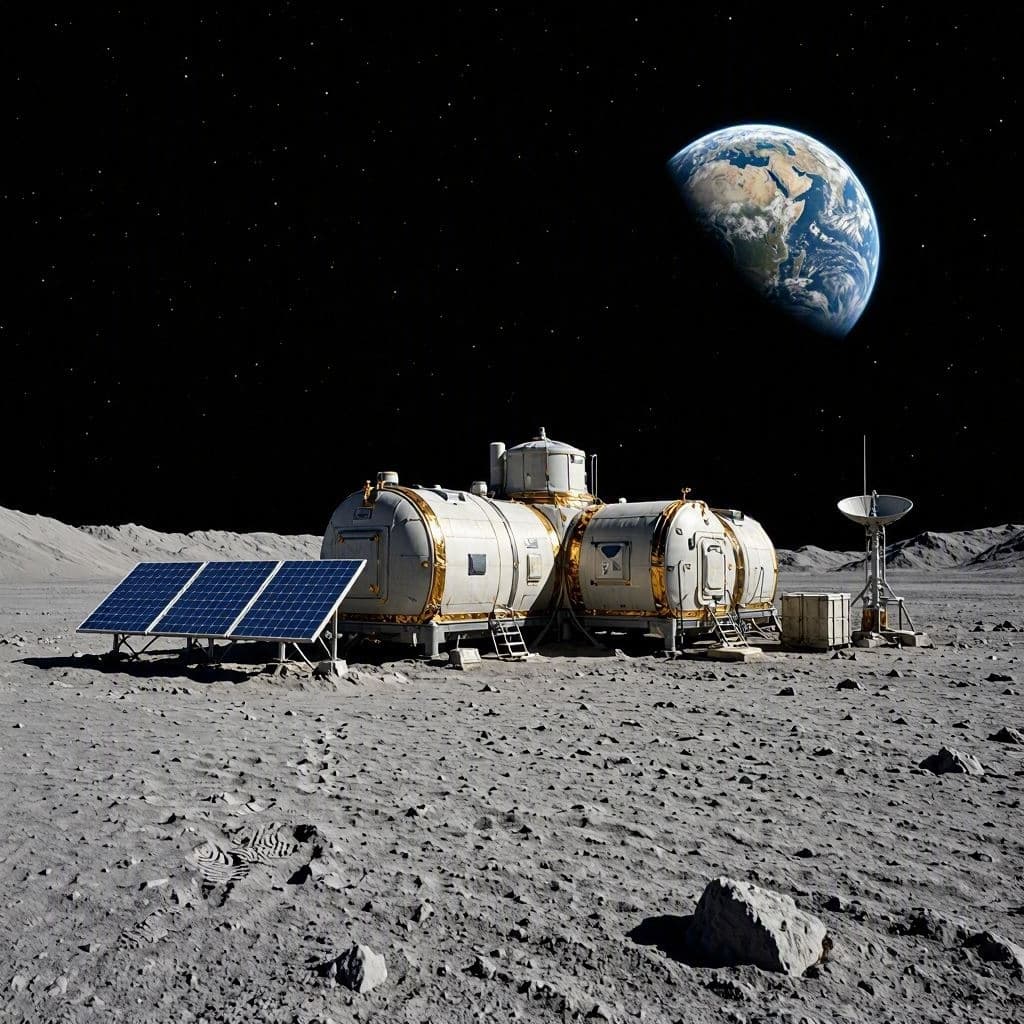
This does not mean that lunar exploration is impossible, but rather that it must be approached with caution and efficiency. Small, specialized bases focused on scientific research may be viable, utilizing closed-loop systems to recycle every drop of water. These outposts would serve as stepping stones for deeper space exploration, rather than permanent homes for large populations. The focus shifts from colonization to temporary habitation and resource utilization.
The findings also emphasize the importance of technological innovation in water conservation and extraction. Researchers are exploring ways to improve the efficiency of mining lunar ice and developing better recycling systems. Advances in these areas could extend the lifespan of lunar missions, but they are unlikely to support the kind of expansive cities seen in science fiction. The dream of a lunar metropolis may need to be scaled down to a more realistic scope.
Public interest in moon colonization remains high, driven by private companies and national space agencies. The recent "moon rush" has sparked excitement about potential economic opportunities and scientific breakthroughs. However, this new data serves as a reality check, reminding stakeholders that the lunar environment is harsh and unforgiving. Success will depend on careful planning and a respect for the limitations imposed by nature.
As we look to the stars, it is important to maintain a sense of humility. The moon is not a blank canvas for human expansion but a delicate ecosystem with its own constraints. By understanding these limits, we can design missions that are sustainable and respectful of the celestial body we wish to explore. This approach ensures that our presence on the moon is beneficial and enduring, rather than short-lived and destructive.
The prospect of lunar cities may be dimmed by the scarcity of water, but the spirit of exploration remains undimmed. Scientists and engineers continue to work toward solutions that make lunar habitation possible, even if on a smaller scale. The moon remains a vital destination for humanity, offering lessons in resilience and innovation. As we plan our next steps, let us do so with clarity, ensuring that our ambitions are grounded in the reality of the resources available.
AI Image Disclaimer: The visuals associated with this piece are AI-generated illustrations created to complement the narrative.
Sources: CNN, Frontiers in Space Technologies, Space.com, ExtremeTech, ABC News
Published by Banx Network. This article is part of the Banx decentralized media programme, powered by the BXE token on the XRP Ledger.