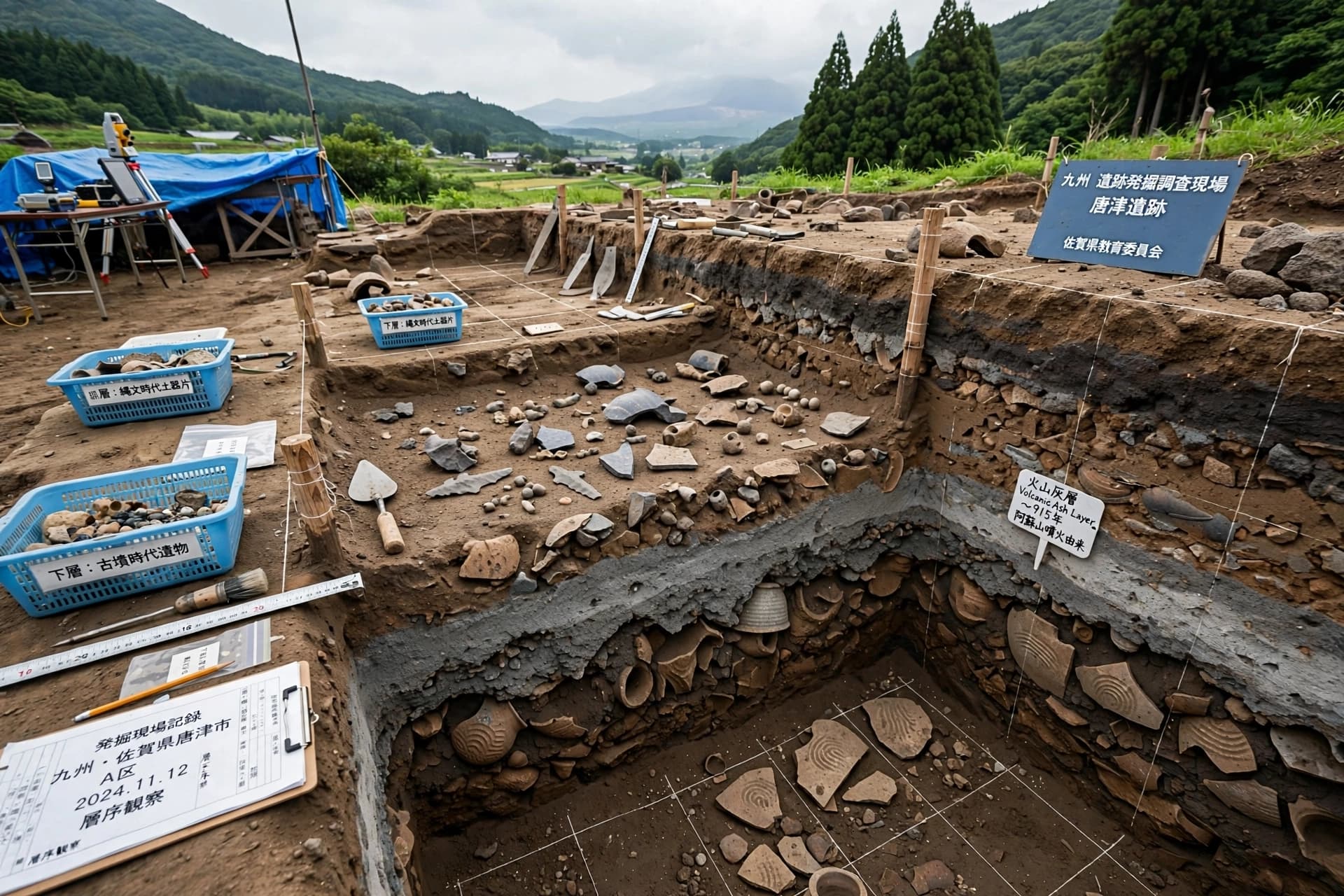
There is a particular intimacy in touching something that no human hand has touched for nearly five thousand years. It is not the intimacy of ownership but of continuity—the sudden, tangible awareness that the world you inhabit was also inhabited by people who sailed the same sea, carried the same jars, and worried about the same winds. Off the coast of Turkey, that awareness has surfaced from the seafloor.
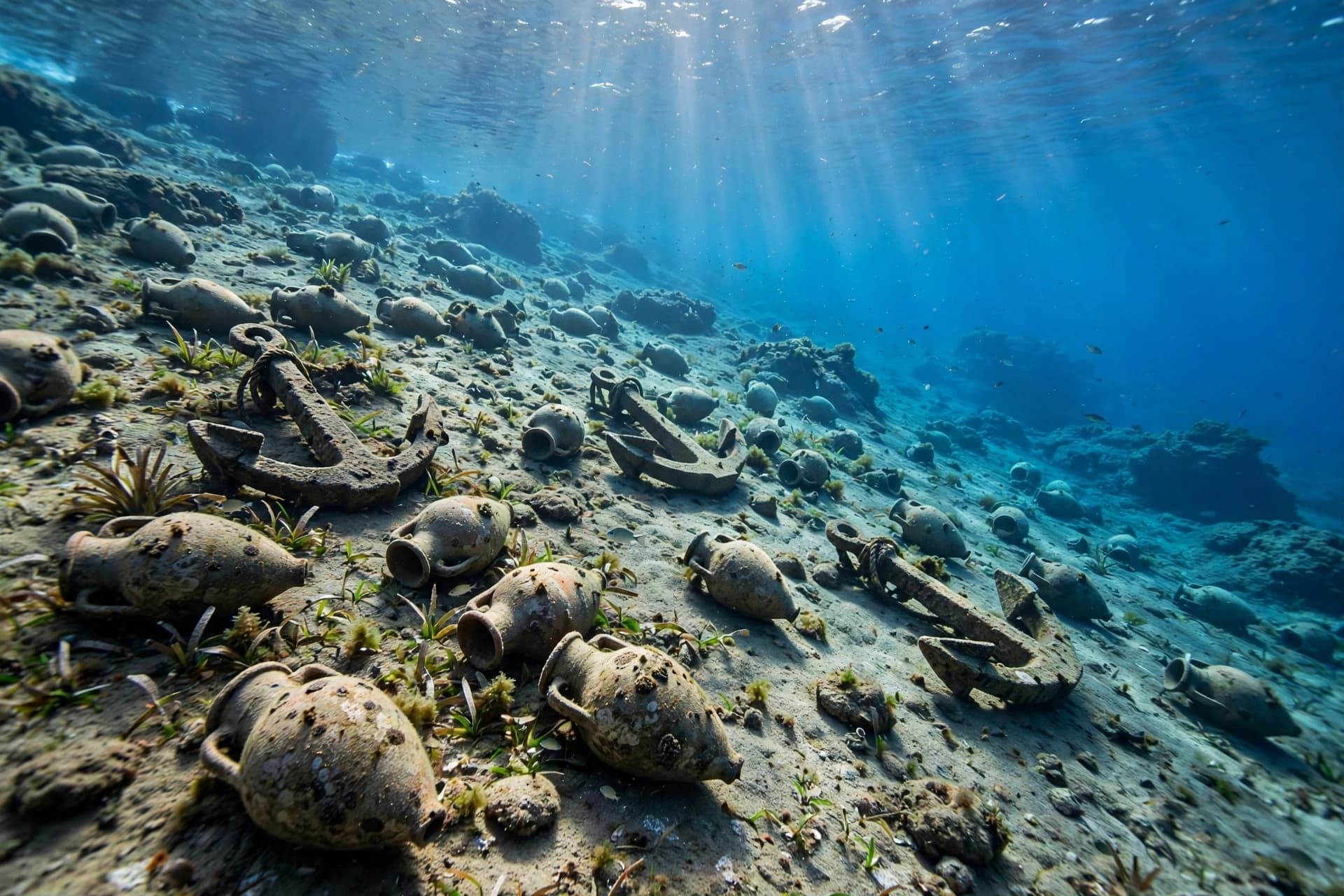
Archaeologists have discovered what is believed to be the world's oldest known shipwreck near Kekova Island, off Turkey's southern Mediterranean coast, dating to between 4,400 and 4,700 years ago—the Early Bronze Age, roughly contemporary with the construction of the Great Pyramid . The wooden hull has long since disintegrated, but its cargo remains: more than thirty ceramic storage jars, called amphorae, and three large stone anchors, lying scattered across an underwater slope about thirty meters beneath the waves .
The dating was determined not by radiocarbon analysis—impossible without organic material—but by the distinctive shape of the amphorae, which feature two handles, a ridge in the middle, and a flat base. This design matched other jars unearthed in Egypt and the Middle East known to be 4,400 to 4,700 years old . "Comparing the decoration techniques, we can definitely say our wreck is Early Bronze Age," said Professor Hakan Öniz of Akdeniz University, who led the expedition. "This is 100 percent" .
What makes the discovery particularly remarkable is what the jars still contain. When archaeologist Karin Sowada of Macquarie University examined the recovered amphorae, she found a viscous, glossy residue inside some of them—traces of the liquids the ship was carrying when it sank. "I looked inside and nearly fainted," she said. "I could not believe how much was visible" . The residue could be olive oil, wine, or tree resins, and researchers are working to determine exactly what it was .
The ship itself was likely a sail-powered cargo vessel about ten meters long, traveling from somewhere along the eastern Mediterranean coast—perhaps the Jordan Valley—toward either ancient Troy in northwestern Turkey or the Minoan civilization in Crete . Its sinking, whether from the strong currents and winds that have claimed many ships around Kekova, or from another cause, preserved its cargo in the quiet darkness of the seafloor for millennia.
The wreck now tops the list of the world's oldest known shipwrecks, surpassing the Dokos wreck off southern Greece, which dates to about 4,200 years ago . The artifacts are owned by the Turkish Ministry of Culture and will be displayed at the new Mediterranean Underwater Archaeology Museum in Antalya when it opens . For Öniz, the discovery carries a meaning beyond chronology. "We are the first humans who have touched these objects after 5,000 years," he said. "We are always thinking of the sailors, the producers of the amphora, and the person who carried the amphora on their shoulders to the ship, and the women who were waiting for their husbands, and they unfortunately couldn't go back" .
The sea has a way of holding what we lose, and occasionally returning it—not whole, but enough. A jar. An anchor. A residue of oil. These fragments do not tell us the whole story of the Kekova ship, but they tell us enough: that trade routes crossed this water long before any map recorded them, and that the people who sailed them were not so different from us in their hopes, their cargo, and their vulnerability to the wind.
AI Image Disclaimer: The images in this article were produced using artificial intelligence and are intended for illustrative purposes only.
Sources: BBC, Smithsonian Magazine, RNZ, CBC, NHK
Published by Banx Network. This article is part of the Banx decentralized media programme, powered by the BXE token on the XRP Ledger.