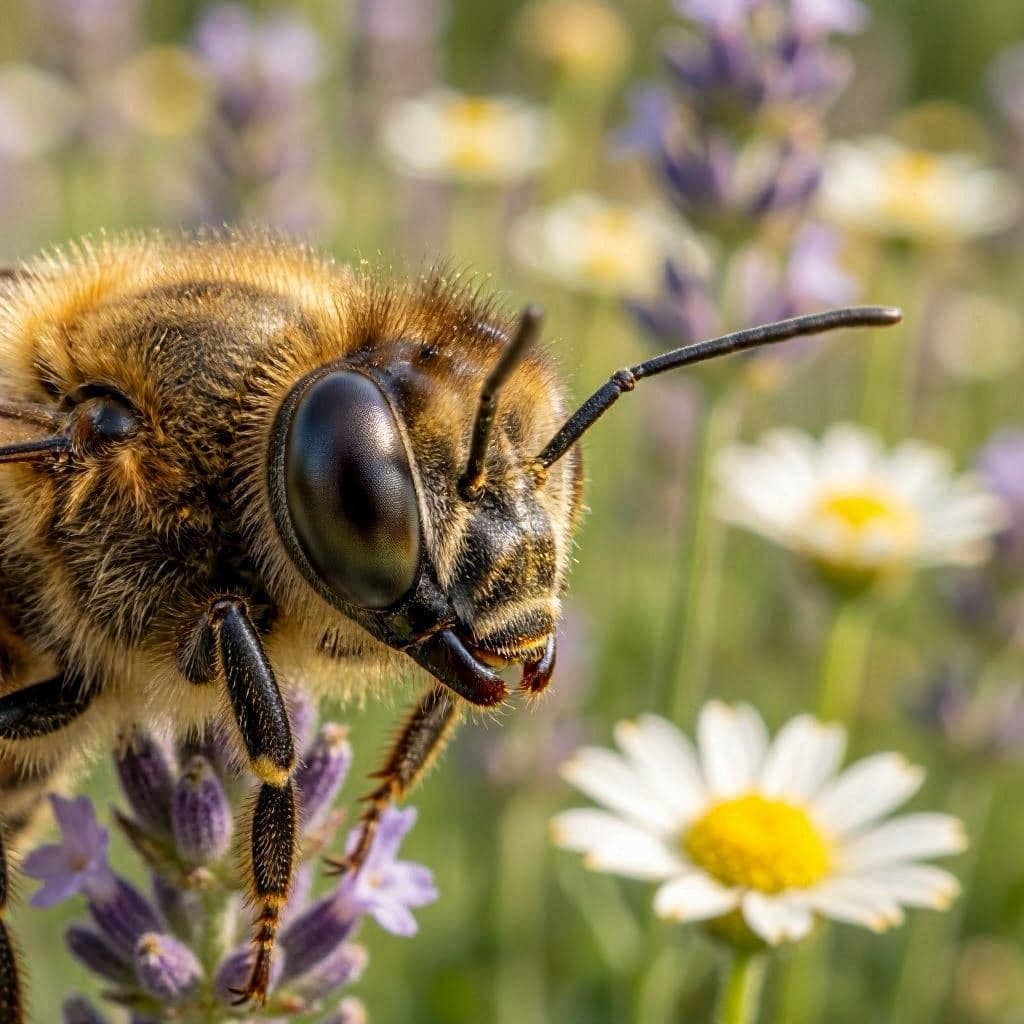
In the intricate society of a honeybee colony, there is no queen giving orders, no general directing troops. Instead, harmony emerges from chaos, a symphony played by thousands of individuals each following simple rules. Recent research into the neural mechanisms of bees has shed light on this phenomenon, revealing how complex collective behavior arises from decentralized decision-making. It is a lesson in efficiency and cooperation that offers insights not just for biology, but for human organizations as well.
Body: Scientists have focused on the miniature brains of bees, which contain fewer than a million neurons yet manage sophisticated tasks like navigation, communication, and resource allocation. By observing how individual bees respond to stimuli, researchers have identified specific neural pathways that guide their actions. These pathways are not designed for independent ambition but for responsive interaction with the environment and fellow colony members.
The key to the colony’s success lies in the aggregation of these small decisions. When a scout bee finds a food source, it does not command others to follow; it performs a waggle dance that encodes direction and distance. Other bees interpret this signal and make their own choice to investigate. This distributed processing allows the colony to adapt quickly to changes, such as the depletion of a flower patch or the appearance of a predator.
This decentralized model contrasts sharply with hierarchical systems, where bottlenecks can occur at the top. In a bee colony, if one individual fails, the system continues uninterrupted because the knowledge and function are spread across the group. This resilience is a product of evolution, favoring structures that can withstand loss and maintain functionality under stress.
The study of bee brains also reveals the importance of sensory input in shaping behavior. Bees rely heavily on visual and olfactory cues, processing this information rapidly to make split-second decisions. Their neural architecture is optimized for speed and reliability, ensuring that the colony can react to threats and opportunities with minimal delay. This efficiency is crucial for survival in a competitive natural world.
Understanding these mechanisms has implications for robotics and artificial intelligence. Engineers are increasingly looking to nature for inspiration, designing swarm robots that mimic the cooperative behavior of bees. By programming simple agents to follow local rules, they can create systems that solve complex problems without central control, offering robust solutions for tasks like search and rescue or environmental monitoring.
For humans, the bee model offers a perspective on leadership and collaboration. It suggests that effective coordination does not always require strong central authority but can emerge from shared goals and clear communication. In an era of complex global challenges, the wisdom of the hive reminds us of the power of collective intelligence and the value of individual contribution to the common good.
Closing: The humble bee, with its tiny brain and vast social network, teaches us that complexity can arise from simplicity. By studying how these insects coordinate without a central controller, we gain a deeper appreciation for the elegance of natural systems. Their success is a testament to the power of cooperation, offering lessons that resonate far beyond the hive.
AI Image Disclaimer: Visuals included here are AI-generated illustrations of bee anatomy and swarm behavior, created to visualize the scientific concepts of decentralized decision-making.
Sources: Journal of Experimental Biology Smithsonian Magazine National Geographic Proceedings of the Royal Society B
Published by Banx Network. This article is part of the Banx decentralized media programme, powered by the BXE token on the XRP Ledger.