Out at sea, distance is measured not only in miles, but in what is carried across them.
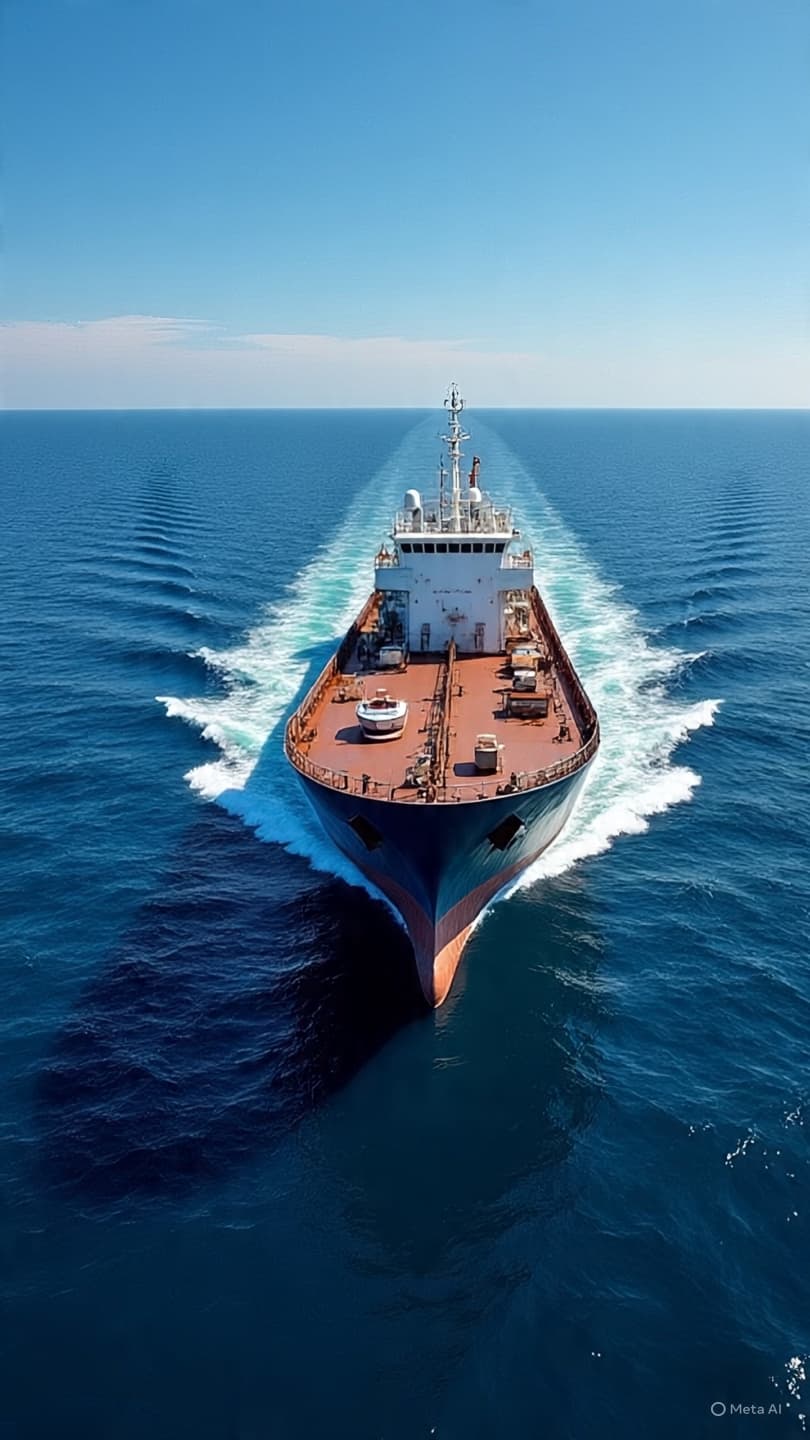
A tanker moving eastward toward Japan cuts through open water with an unusual lightness—its cargo only half complete. In another moment, such a detail might pass unnoticed, a minor irregularity in the vast choreography of global shipping. But now, it has come to represent something larger: a system adjusting in real time to pressures that extend far beyond the horizon.
Across energy markets, the flow of oil has grown less predictable. Disruptions linked to tensions involving Iran—particularly around key transit routes such as the Strait of Hormuz—have introduced new constraints into a network that depends on continuity. Shipping schedules shift, insurance costs rise, and decisions that once followed established patterns begin to diverge.
The half-full tanker is one such divergence. Rather than waiting to complete its load, it departs early, prioritizing certainty of delivery over efficiency of volume. The calculation reflects a changing logic: that in uncertain conditions, partial movement may be preferable to delay. For import-dependent economies like Japan, where energy security is closely tied to stable supply chains, even incremental deliveries carry significance.
Behind this adjustment lies a broader scramble among buyers and sellers. Refineries seek to secure crude from alternative sources, traders navigate fluctuating prices, and governments monitor reserves with renewed attention. Each actor responds to the same underlying signal—the recognition that the usual pathways of supply may no longer hold steady.
The implications extend outward. Freight rates have risen, reflecting both increased demand for available tankers and the added risks associated with navigating contested waters. Insurance premiums, too, have adjusted, incorporating the possibility of disruption into the cost of each journey. Together, these factors reshape not only the economics of oil transport, but the decisions that guide it.
For Japan, the situation underscores a long-standing reality. As a nation heavily reliant on imported energy, it has developed systems designed to manage volatility—strategic reserves, diversified sourcing, and close coordination with international partners. Yet even these measures operate within a global framework that can shift quickly when geopolitical tensions intensify.
Elsewhere, similar calculations are unfolding. Countries across Asia and beyond are reassessing supply routes, weighing the balance between cost, risk, and reliability. In this context, the image of a half-full tanker becomes less an anomaly and more a signal—a visible marker of a system under strain, adapting as it moves.
At sea, the vessel continues its journey, its reduced cargo altering neither its course nor its destination. But its passage carries with it a quiet message about the present moment: that in times of uncertainty, movement itself becomes a form of assurance, even if it arrives incomplete.
The facts are clear. A tanker heading to Japan has departed with only part of its intended load, reflecting broader disruptions in oil supply linked to tensions around Iran and key shipping routes. The decision highlights a wider scramble among energy markets to maintain flow amid uncertainty.
And as the ship moves steadily across open water, it traces a line between what is available and what is needed—an incomplete cargo, perhaps, but one that speaks to a world adjusting, one shipment at a time.
AI Image Disclaimer Illustrations were created using AI tools and are not real photographs.
Sources Reuters Bloomberg Financial Times BBC News The Wall Street Journal
Published by Banx Network. This article is part of the Banx decentralized media programme, powered by the BXE token on the XRP Ledger.