Some places become more than points on a map. They evolve into shared spaces where daily life, history, recreation, and opportunity meet along the same shoreline. Toronto's waterfront has long reflected that balance, and a debate over the future of Billy Bishop Airport has become a broader conversation about who shapes the city's next chapter.
Toronto Mayor Olivia Chow declared that Ontario Premier Doug Ford's proposal to expand Billy Bishop Toronto City Airport "won't fly" after the federal government formally rejected the project. Speaking after Ottawa's decision, Chow said the city's waterfront is a public asset that should remain accessible to all residents, adding that "the waterfront belongs to everyone." She also urged the province to return lands that had been expropriated as part of the airport expansion initiative.
The proposed expansion sought to allow larger passenger jets to operate from the island airport by extending infrastructure and modifying surrounding lands. Ontario's government argued that the project would strengthen transportation links, support economic development, and improve regional connectivity. Provincial officials maintained that environmental concerns could be addressed through careful planning and modern construction practices.
However, the federal government ultimately declined to proceed with the proposal following a public consultation that attracted more than 87,000 responses. Federal Transport Minister Steven MacKinnon stated that Ottawa would not support plans that would affect treasured public spaces, increase noise, create significant environmental impacts, or interfere with Toronto's housing priorities.
The issue has drawn strong reactions from community organizations, environmental advocates, and local residents. Opponents argued that expanding the airport could alter the character of the Toronto Islands, increase aircraft noise, affect nearby parks and beaches, and place additional pressure on an already busy waterfront. Supporters, meanwhile, emphasized the airport's economic importance and the potential benefits of expanded air service for business and tourism.
Following Ottawa's decision, Chow submitted an urgent motion asking the Ontario government to return control of the affected waterfront lands, including areas associated with Little Norway Park and the Toronto Islands. She described the provincial legislation authorizing the land transfer as an unnecessary intrusion into municipal planning authority and called for renewed cooperation among all levels of government.
Although the federal decision represents a significant setback for the expansion proposal, provincial officials have indicated that discussions about the airport's future are not necessarily over. Any future proposal would still need to satisfy federal regulatory requirements while addressing environmental, transportation, and community concerns.
For now, the debate has become about more than a single airport project. It reflects the ongoing challenge of balancing economic growth with environmental stewardship and preserving public spaces that many residents regard as part of the city's shared identity. As governments continue their discussions, Toronto's waterfront remains at the heart of that conversation.
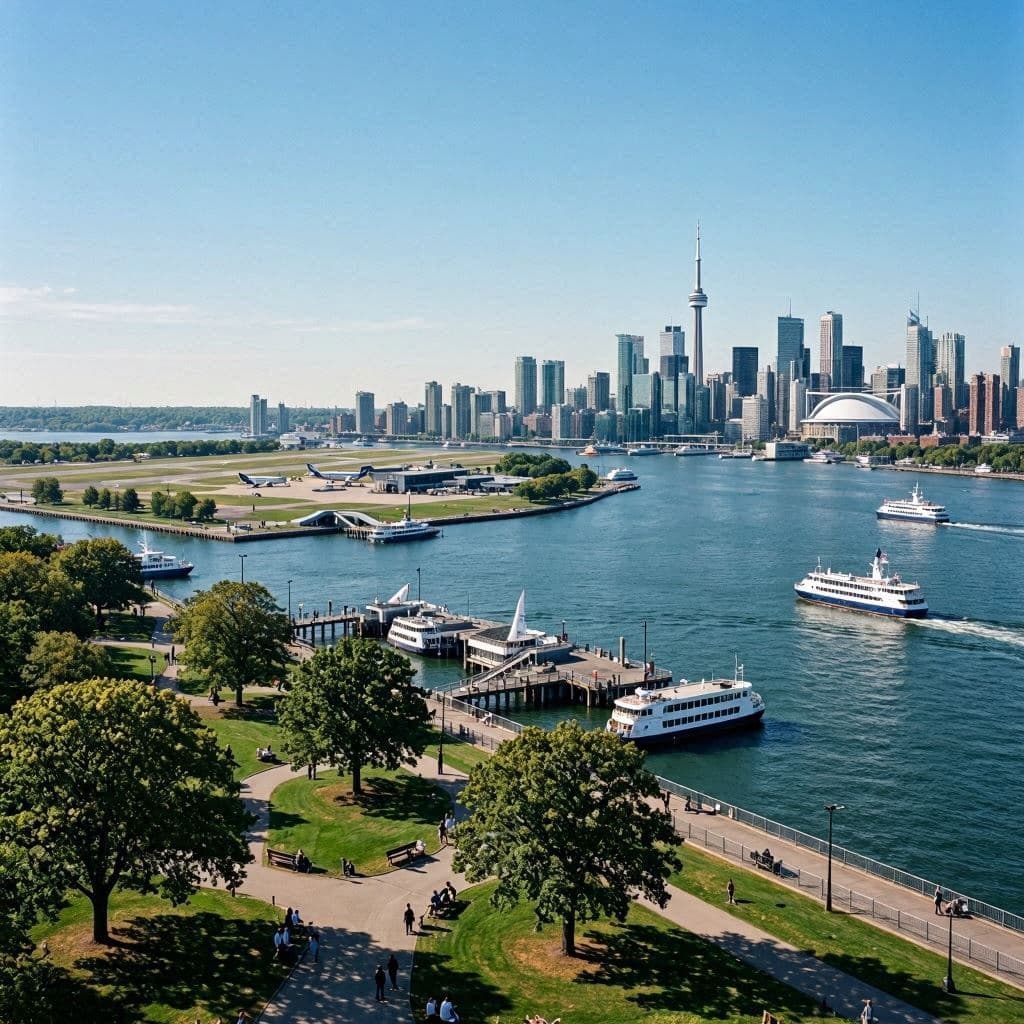
AI Image Disclaimer: The accompanying illustrations are AI-generated visual interpretations based on verified public reporting and are intended for editorial representation rather than depicting actual events.
Sources (Verified):
Reuters The Canadian Press CityNews Toronto Global News CBC News
Published by Banx Network. This article is part of the Banx decentralized media programme, powered by the BXE token on the XRP Ledger.