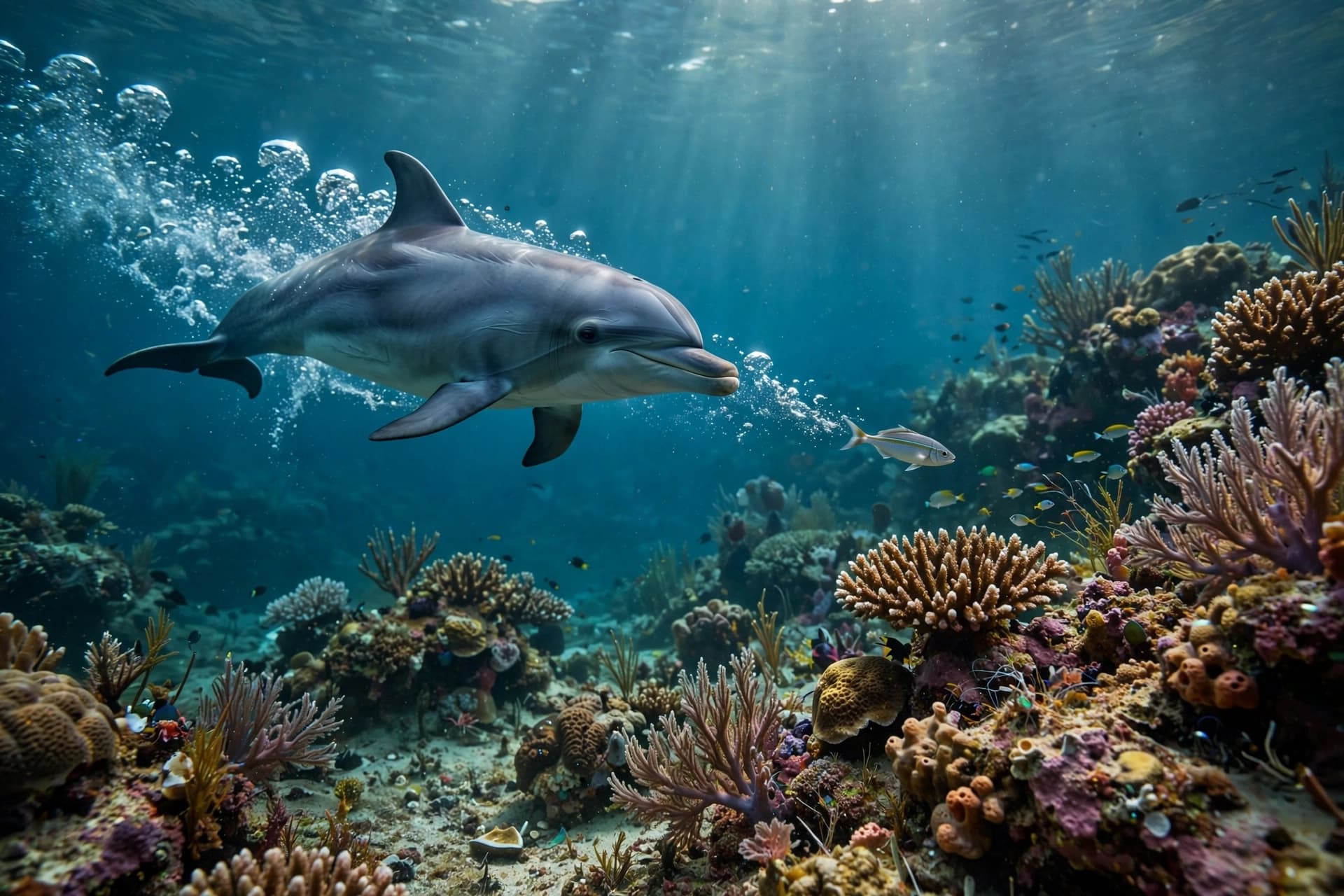
In the sun-dappled waters off Lady Elliot Island in Australia, a unique drama unfolds beneath the surface, one that challenges our understanding of marine intelligence and dining etiquette. Here lives Bubbles, a bottlenose dolphin with a hunting strategy that is as effective as it is unconventional. Rather than catching his prey directly, Bubbles engages in a high-speed chase that ends not with a bite, but with a regurgitated meal. This behavior, known as kleptoparasitism, offers a fascinating glimpse into the adaptive creativity of cetaceans in the wild.
The phenomenon was first brought to scientific attention in 2017, when local guides and tourists began reporting unusual interactions between Bubbles and the fish he pursued. Instead of consuming the trevally or other reef fish he chased, Bubbles would drive them to the point of exhaustion and stress until they vomited. He would then calmly consume the upchucked contents, securing a meal without the effort of digestion or the risk of swallowing bones. It is a method that is both efficient and, to human observers, somewhat startling.
Researchers have documented this behavior through underwater footage, noting the precision with which Bubbles mirrors the movements of his target. The fish, likely overwhelmed by the relentless pursuit and the physical pressure of the chase, expel their stomach contents as a stress response. For Bubbles, this is not an accident but a learned technique, one that has been refined over years of practice. It highlights the cognitive abilities of dolphins, who are known for their complex social structures and problem-solving skills.
Kleptoparasitism is rare among cetaceans, making Bubbles’ actions particularly significant for marine biologists. While some species, such as certain whales, may steal food from fishing nets or other animals, the act of forcing a wild fish to regurgitate its meal is almost unheard of. This discovery adds a new layer to our knowledge of dolphin foraging strategies, suggesting that individual innovation can play a key role in survival and success in competitive environments.
The location of this behavior, Lady Elliot Island, is a protected marine reserve known for its rich biodiversity. The clear waters and abundant reef life provide an ideal setting for observing such intricate interactions. For the scientists and divers who witness Bubbles’ hunts, the experience is both educational and humbling. It serves as a reminder that nature often operates according to rules that are far more complex and varied than we might assume.
Bubbles has become something of a local celebrity, drawing visitors who hope to catch a glimpse of his unique hunting style. However, experts caution against interfering with natural behaviors or attempting to feed wild dolphins. The integrity of the ecosystem depends on maintaining the delicate balance between predator and prey, even when the methods used are unusual. Bubbles’ success is a testament to his adaptability, not a invitation for human intervention.
As climate change and human activity continue to impact marine environments, understanding these nuanced behaviors becomes increasingly important. Each new insight into dolphin intelligence and ecology helps inform conservation efforts and policy decisions. Bubbles’ story is not just a curious anecdote but a valuable piece of data in the broader puzzle of ocean health and animal behavior.
Bubbles the dolphin remains a captivating figure in the waters of Lady Elliot Island, embodying the ingenuity of marine life. His unusual hunting method reminds us that there is always more to learn about the natural world. As research continues, his legacy will likely inspire further study into the clever and sometimes surprising ways animals adapt to their environments.
AI Image Disclaimer: The illustrations accompanying this article are AI-generated visualizations designed to evoke the underwater setting and the dynamic interaction between dolphin and fish, not actual photographs of Bubbles or the event.
Sources: Science Magazine, Ars Technica, People, Facebook (Master Reef Guides)
Published by Banx Network. This article is part of the Banx decentralized media programme, powered by the BXE token on the XRP Ledger.