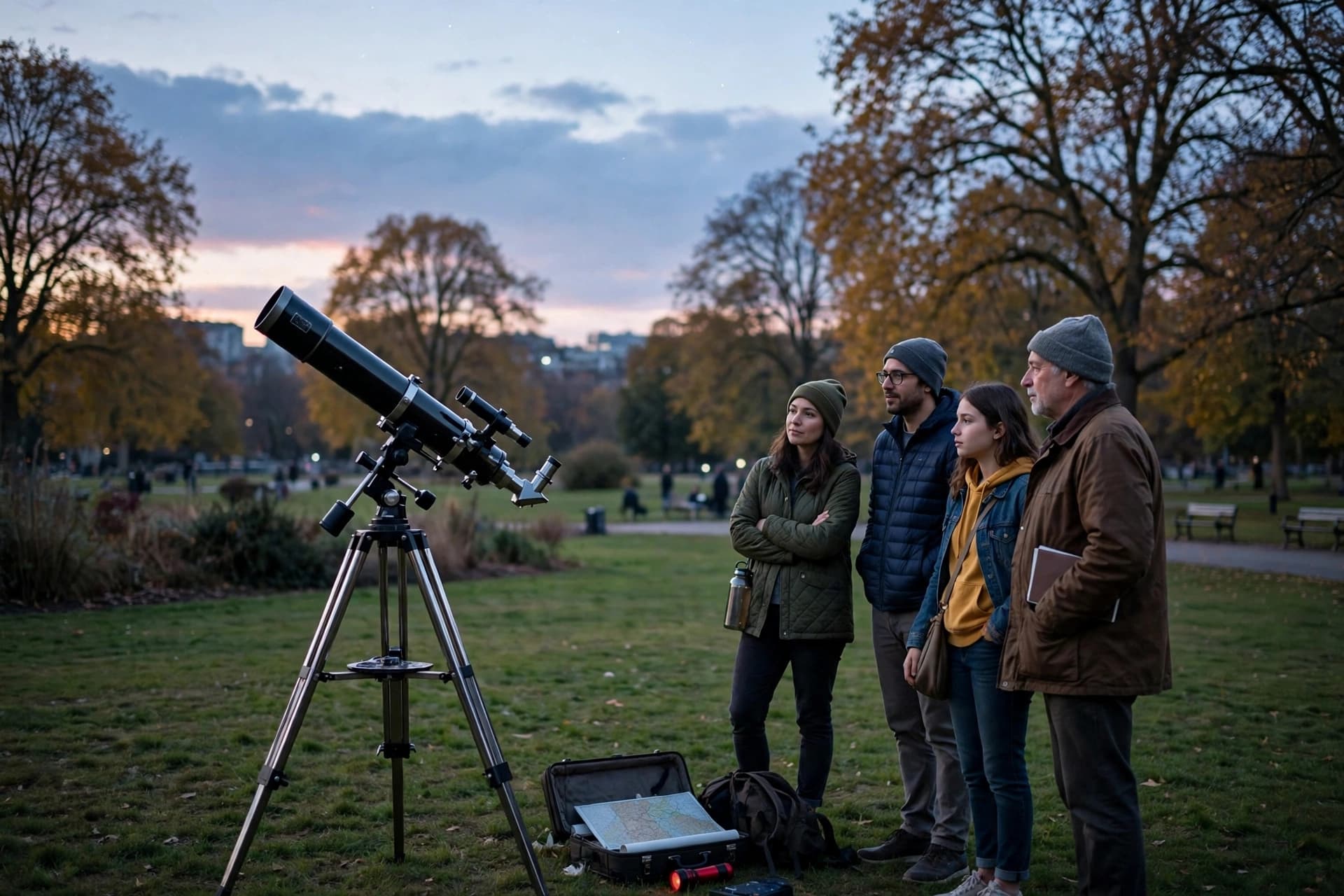
There is a kind of patience required in building instruments that will never be touched again once they leave the ground. A telescope destined for orbit, a radar module meant to measure snow from hundreds of kilometers above, the electronics that will read light from the distant universe—these are not products in any ordinary sense. They are commitments, made years in advance, to get a small and delicate thing exactly right. The Canadian Space Agency has recently invited industry to make such commitments, issuing a request for proposals under its Space Technology Development Program.
The RFP, titled Enabling Technologies for Future Missions, was posted on October 15 and covers three distinct technologies, each with its own contract and its own target on the technology readiness level scale . The total funding available is up to four million dollars, divided unevenly across the three projects. The agency is not seeking finished flight hardware but rather the incremental progress that moves a concept closer to being ready for the harshness of space.
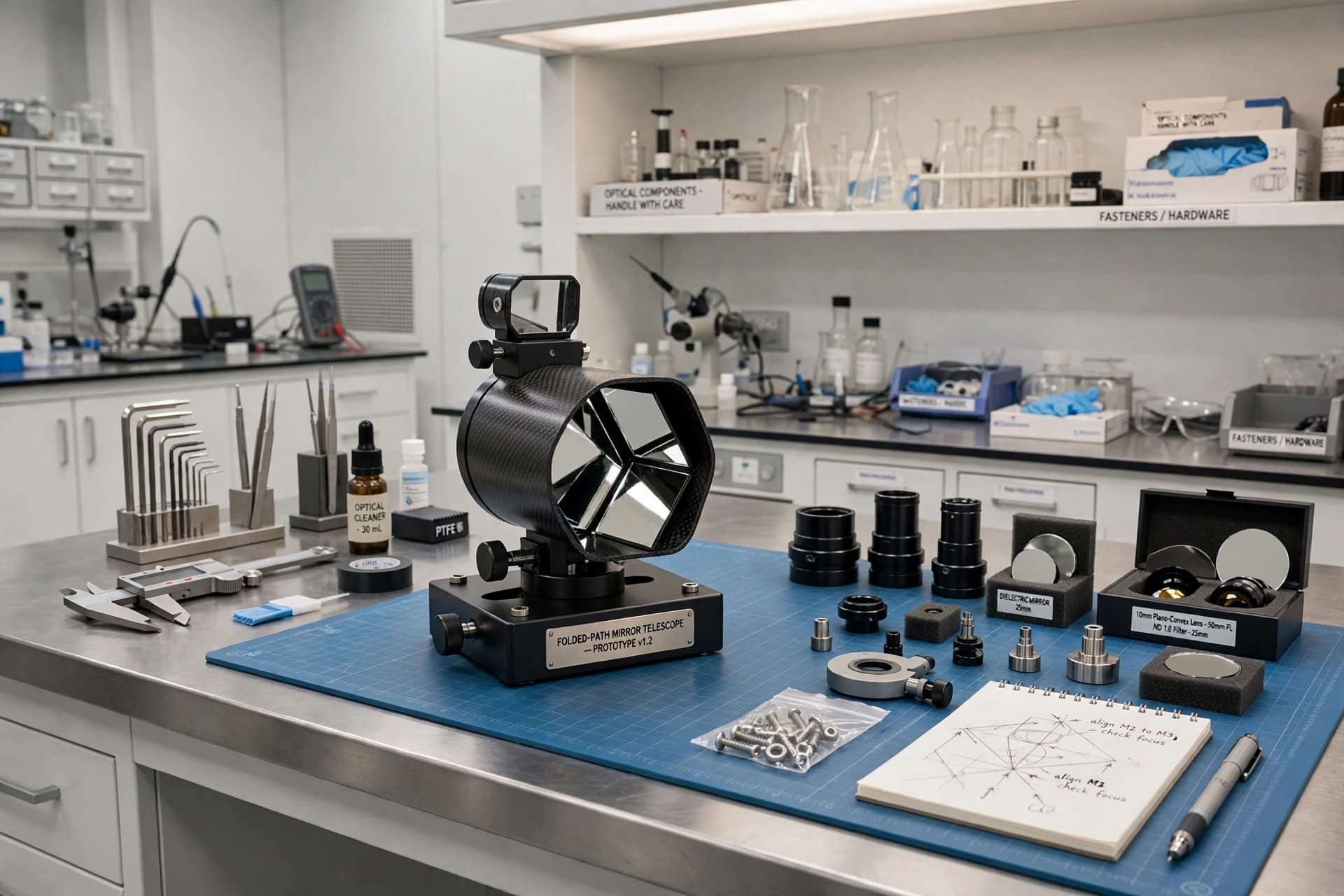
The first technology is a lightweight athermal reflecting telescope small enough to fit within two standard CubeSat units. Most CubeSats today rely on lens-based telescopes, which limit how much detail they can capture. A mirror design folds the light path, allowing a longer focal length in the same volume, and the "athermal" requirement speaks to a particular challenge: keeping the optics aligned as temperatures swing wildly in orbit . The CSA envisions a design adaptable to satellites of different sizes, with Earth observation as the primary use and astronomy as a secondary possibility.
The second contract concerns readout electronics for the large mosaic focal plane arrays that would be used on CASTOR, the Canadian Cosmological Advanced Survey Telescope for Optical and UV Research. The detectors in question, Teledyne e2v's CIS 301/302, currently have no camera system capable of running them. The RFP also mentions NASA's Habitable Worlds Observatory as a potential future target, noting that a Canadian contribution is at a preliminary definition stage . The work is foundational: without the electronics that power and extract data from the sensors, the telescope itself cannot function.
The largest share of funding, two million dollars, goes to the Terrestrial Snow Mass Mission, a joint effort between the CSA and Environment and Climate Change Canada to measure snow water equivalent across the country. Seasonal snow is a critical part of Canada's water cycle, yet the RFP notes that it is inadequately monitored . The contract covers a transmit-receive module for a Ku-band synthetic aperture radar, the electronics behind each antenna element. A lower-cost pathfinder satellite would fly first to test the hardware, carrying roughly one hundred of these modules.
What unites these three projects is not a single mission or a single vision but a shared stage of development. Each is somewhere between an idea and an instrument, in that difficult middle ground where the physics is understood but the engineering is not yet settled. The CSA's approach—one contract per technology, each with a defined timeline and a target readiness level—reflects a deliberate method of advancing several threads at once rather than betting everything on a single flagship.
The space sector is often described in terms of launches and discoveries, the visible moments that capture attention. But the work that makes those moments possible happens quietly, in laboratories and workshops, over months and years. A mirror that stays in focus as it cools. A circuit that reads a sensor no one has yet built a camera for. A radar module that will help a nation understand its own snow. These are not glamorous ambitions, but they are necessary ones.
The proposals are due, and the evaluations will follow, and in time some of these technologies will move from drawings to hardware to orbit. The process is unspectacular by design. It is the slow, careful work of making sure that when the moment comes to look outward, the instruments are ready.
Image note: The illustrations accompanying this article are AI-generated and are not depictions of actual CSA facilities or hardware.
Sources: SpaceQ, CanadaBuys
Published by Banx Network. This article is part of the Banx decentralized media programme, powered by the BXE token on the XRP Ledger.