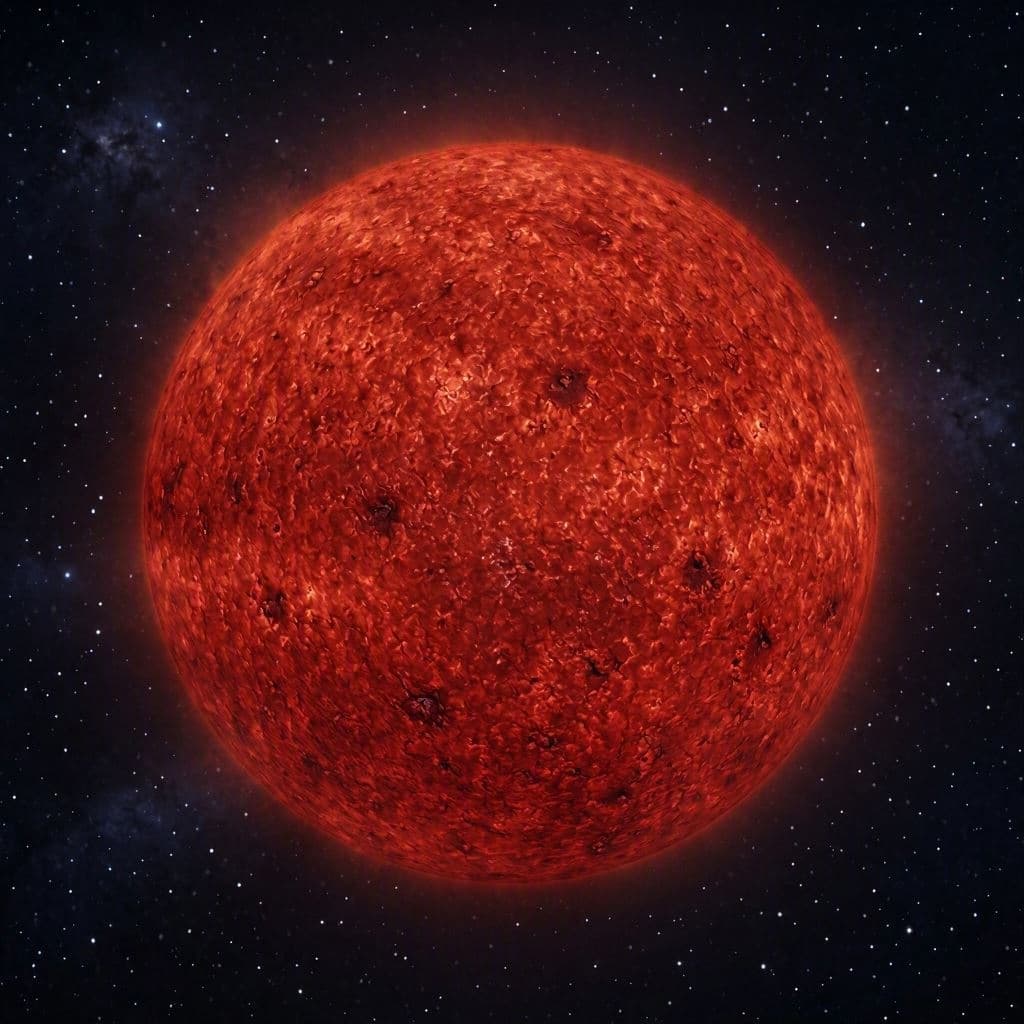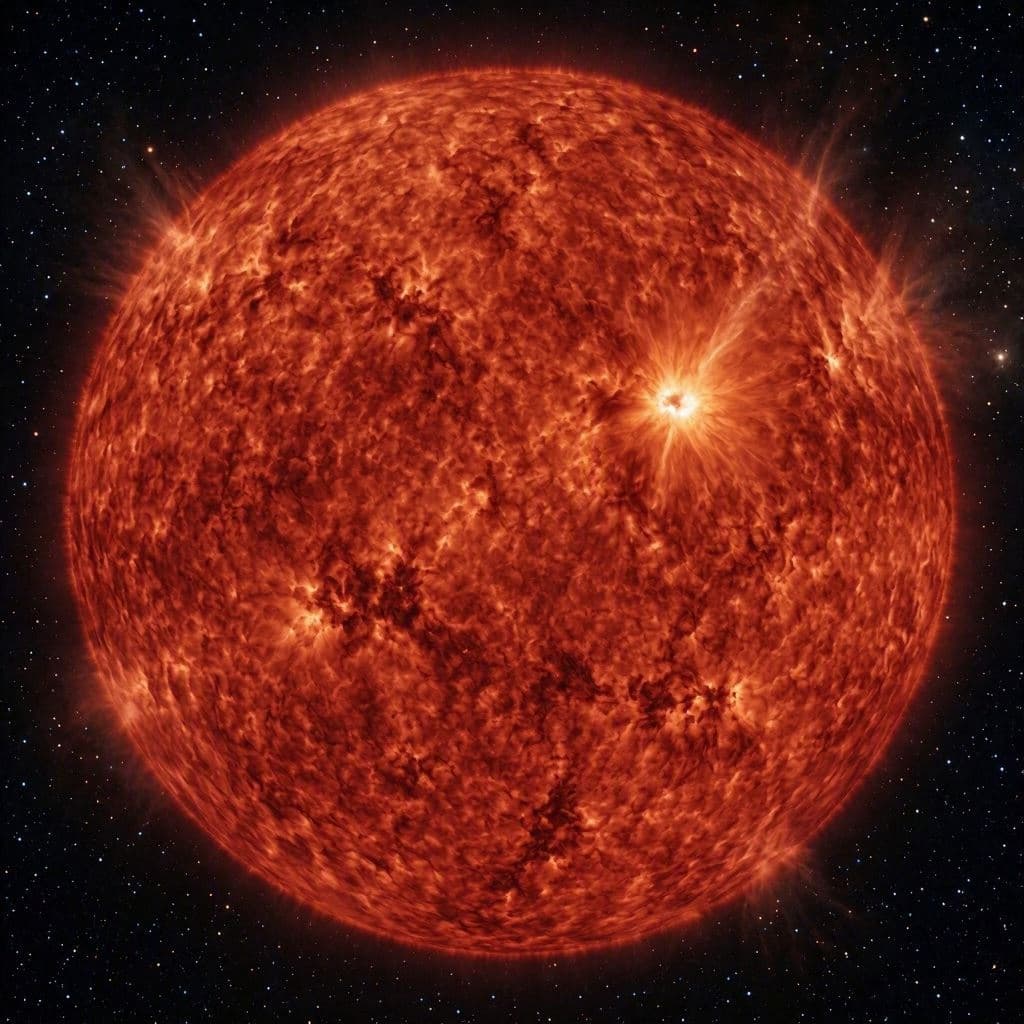
In the vast theater of the cosmos, stars are not static points of light but dynamic, churning spheres of plasma. Betelgeuse, the red supergiant in the constellation Orion, has long fascinated astronomers with its erratic behavior and immense size. Recent observations have revealed a persistent anomaly on its surface: a bright hotspot in the northeast region that has remained fixed in position from 2015 to 2023. This stability defies current theoretical models, which predict that such features should shift rapidly due to massive convective movements.
Betelgeuse is known for its enormous convective cells, bubbles of hot gas that rise from the interior to the surface, cool, and sink back down. These structures are typically short-lived, lasting only months or a few years before dissipating or moving. The expectation was that any bright region on the star’s surface would be transient, reflecting the turbulent nature of its outer layers. However, the northeast hotspot has persisted for nearly a decade, challenging our understanding of stellar dynamics.
Astronomers used advanced interferometry techniques to map the surface of Betelgeuse with unprecedented detail. By combining data from multiple telescopes, they created high-resolution images that tracked the movement of surface features over time. The consistency of the hotspot’s location suggests that there may be underlying mechanisms at play that are not accounted for in standard stellar evolution models. It raises questions about the stability of magnetic fields or deep-seated structural anomalies.
The discovery has significant implications for astrophysics. If current models cannot explain the longevity of this feature, they may need revision. Scientists are now exploring hypotheses involving strong magnetic fields that could anchor the hotspot, or perhaps a unique interaction between the star’s rotation and its convective zones. Each possibility offers a new avenue for research into the life cycles of massive stars.
Betelgeuse is also a candidate for a future supernova explosion, although predictions vary widely. Understanding its surface behavior helps astronomers better estimate its remaining lifespan and the conditions leading up to such an event. The persistent hotspot may be a clue to internal processes that precede major stellar changes. Monitoring it provides valuable data for predicting the star’s future evolution.
The scientific community remains cautious but excited by the findings. Peer-reviewed studies are underway to validate the observations and refine the models. Collaboration between observational astronomers and theoretical physicists is essential to unravel the mystery. This process exemplifies the iterative nature of science, where anomalies drive progress and deeper understanding.
For stargazers, Betelgeuse remains a prominent and intriguing object in the winter sky. Its reddish hue and variable brightness make it a favorite subject for amateur and professional observers alike. The knowledge that a mysterious hotspot persists on its surface adds a layer of intrigue to every glance upward. It reminds us that even familiar celestial neighbors hold secrets yet to be uncovered.
The persistent northeast hotspot on Betelgeuse challenges existing stellar models, prompting a reevaluation of convective processes in red supergiants. As scientists continue to study this anomaly, it offers a glimpse into the complex and unpredictable nature of stellar physics.
AI Image Disclaimer: Images used to depict this astronomical phenomenon are AI-generated for illustrative purposes.
Sources: Nature Astronomy European Southern Observatory (ESO) Space.com
Published by Banx Network. This article is part of the Banx decentralized media programme, powered by the BXE token on the XRP Ledger.