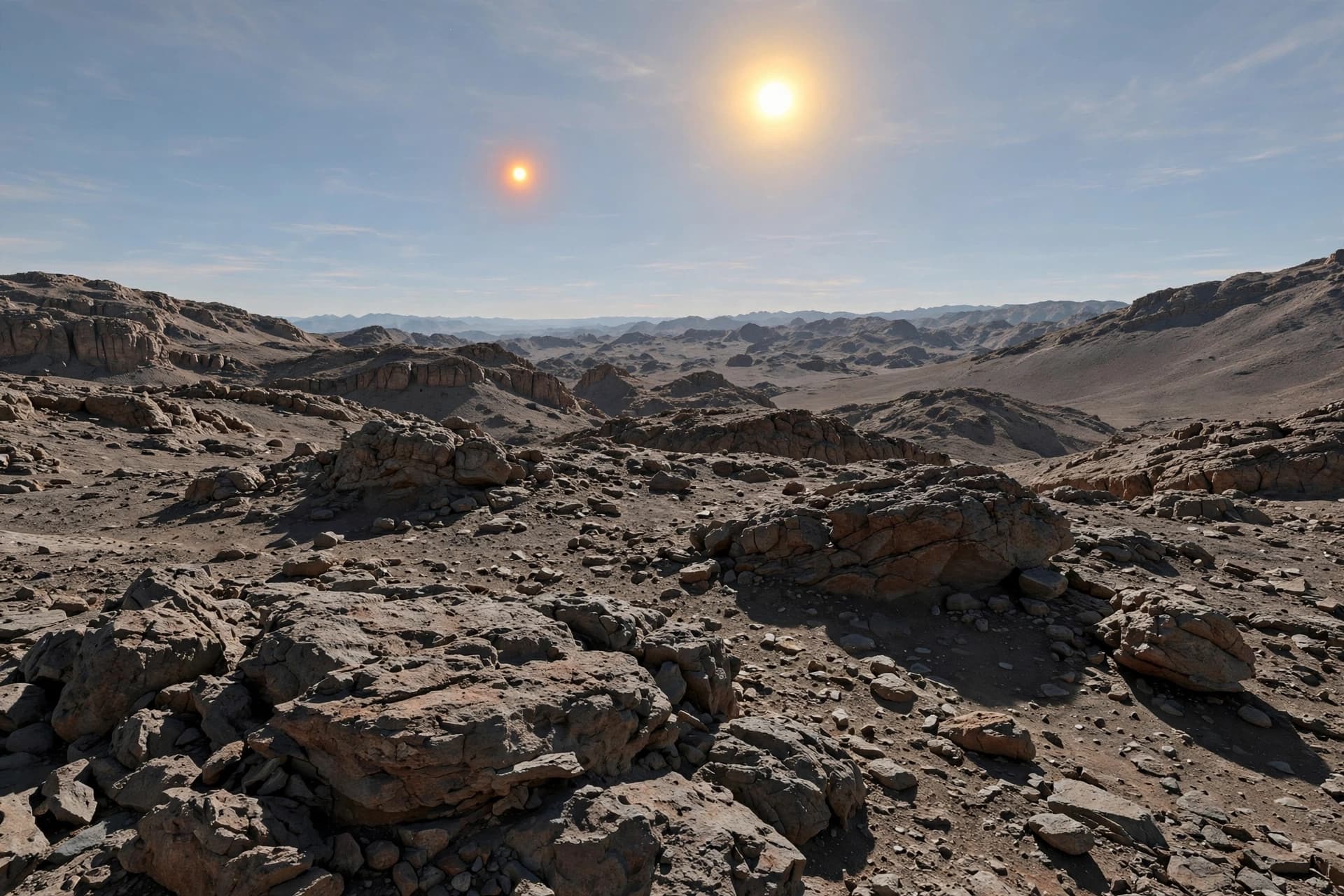
In the quiet darkness of the early universe, where the first structures were still learning how to exist, galaxies once gathered like faint embers in a vast cosmic hearth. Astronomers long believed that small galaxies were everywhere in those early moments, quietly forming, merging, and disappearing in ways too subtle for ancient telescopes to notice. Yet the universe, it seems, has been holding back part of its story. With the James Webb Space Telescope opening its golden eye deeper into time, the silence surrounding these missing galaxies has begun to feel less like absence and more like a question waiting to be answered.
Recent observations from JWST have revealed a surprising imbalance in the early cosmos. Where theory predicted a rich population of small, faint galaxies, the telescope instead finds fewer than expected. These galaxies were thought to be the building blocks of larger systems, shaping the evolution of stars, gas, and dark matter. Their apparent scarcity challenges decades of models that described the young universe as crowded and busy, rather than selective and restrained.
One possibility emerging from the data is that many early small galaxies lived brief, fragile lives. Intense radiation from the first stars may have stripped them of gas before they could grow, leaving behind dim remnants or nothing observable at all. Another explanation suggests that these galaxies are still there, but cloaked in darkness dominated by dark matter, forming stars so inefficiently that even JWST struggles to detect their faint glow. In this view, the universe did not lose its small galaxies; it simply hid them well.
The findings also invite reflection on how cosmic feedback shaped early history. Supernova explosions, stellar winds, and radiation may have acted like a relentless tide, erasing or reshaping smaller systems while allowing only the strongest to endure. This process could explain why today’s massive galaxies appear more orderly than the chaotic beginnings once imagined. The early universe may have been less generous, more selective, than previous theories allowed.
As astronomers continue to examine deeper fields and refine their models, the mystery remains open rather than solved. JWST has not closed the chapter on missing galaxies; it has widened the margins. What appears absent may still exist in unfamiliar forms, waiting for new methods and longer observations to bring them into view. For now, the early universe speaks softly, reminding us that discovery often begins not with what we see, but with what we do not.
In the coming years, additional JWST surveys and complementary observations will seek to clarify whether these galaxies were erased, hidden, or never formed in the numbers once expected. Until then, the missing galaxies remain a quiet but persistent reminder that the universe is still capable of surprising even those who study it most closely.
AI Image Disclaimer (Rotated Wording) Illustrations in this article were produced using AI tools and are intended as conceptual representations, not real astronomical photographs.
sources:
NASA ESA Nature Astronomy Science Magazine The Astrophysical Journal
Published by Banx Network. This article is part of the Banx decentralized media programme, powered by the BXE token on the XRP Ledger.