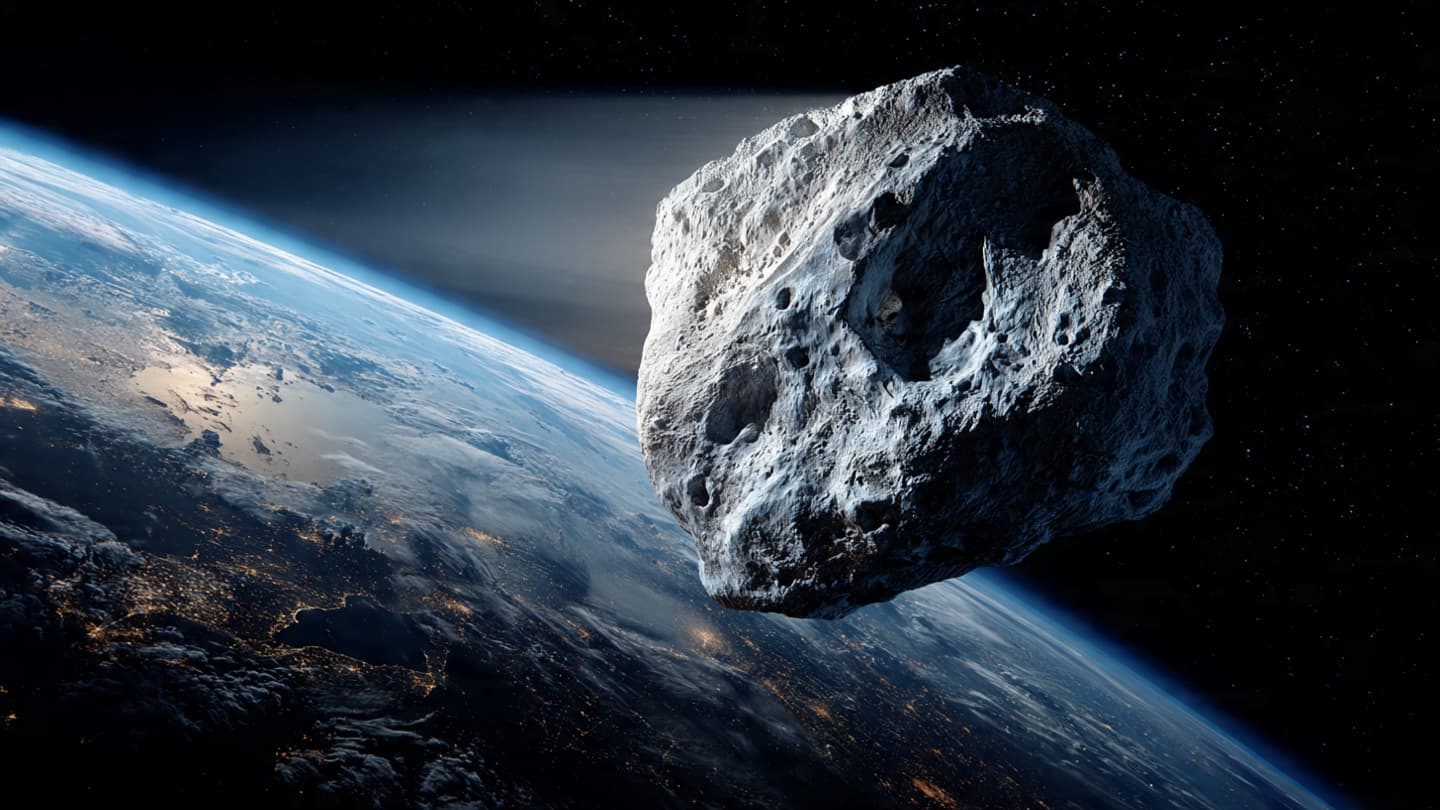
The sky has always carried both wonder and uncertainty, with distant objects crossing silently through darkness while humanity watches from below. Across generations, comets, asteroids, and unusual celestial visitors have inspired equal measures of curiosity and concern. In recent days, astronomers confirmed that the near-Earth object known as 2026 JH2 received a rating of zero on the Loeb Scale, signaling that scientists see no credible evidence suggesting unusual technological origin or immediate cause for alarm.
The Loeb Scale, proposed by researchers including astrophysicist , was designed as a framework for evaluating claims involving potentially artificial interstellar or extraterrestrial objects. The scale attempts to provide clearer communication regarding how scientifically significant or unusual a detected object may actually be.
A rating of zero represents the lowest category on the scale, indicating that the object appears fully consistent with ordinary natural phenomena. In the case of 2026 JH2, astronomers say current observations classify it as a typical near-Earth object rather than anything requiring extraordinary interpretation.
Scientists routinely monitor thousands of asteroids and small bodies passing relatively close to Earth. Space agencies and observatories track their trajectories, composition, and motion patterns to assess any potential impact risks and improve long-term planetary defense systems.
Public fascination surrounding near-Earth objects has increased in recent years, partly because of advances in detection technology and heightened discussion about planetary protection. Missions such as asteroid sample-return projects and impact-redirection tests have also brought greater visibility to asteroid science.
Researchers emphasize that scientific caution remains important whenever unusual cosmic observations emerge. However, they also note that speculative claims often spread more rapidly online than careful analysis. Systems like the Loeb Scale were developed partly to encourage measured communication grounded in evidence rather than sensationalism.
The object’s classification ultimately reflects the ordinary nature of much astronomical research. While the universe continues presenting mysteries worthy of exploration, most newly discovered objects turn out to follow familiar patterns shaped by gravity, orbital mechanics, and natural cosmic evolution.
Astronomers are expected to continue observing 2026 JH2 as part of standard tracking procedures, though no significant concerns have been associated with the object. For now, the event serves as a reminder that science often progresses through calm verification rather than dramatic revelation.
AI Image Disclaimer: Some astronomical visuals accompanying this article may be AI-generated renderings inspired by observational space data.
Sources: NASA Center for Near Earth Object Studies, Harvard University research publications, Space.com, Live Science
Published by Banx Network. This article is part of the Banx decentralized media programme, powered by the BXE token on the XRP Ledger.