
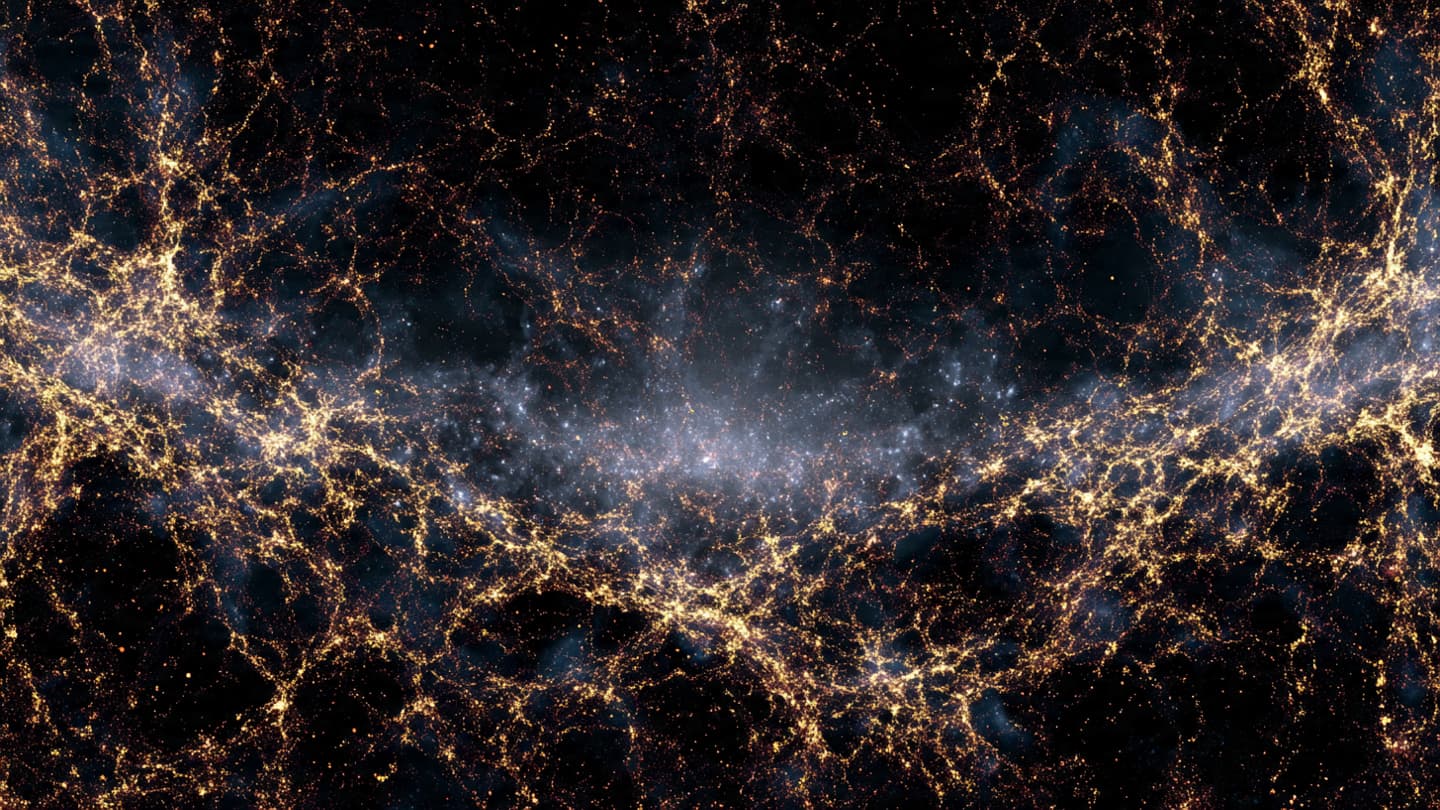
For generations, cosmology has rested upon an elegant assumption: that the universe, when viewed on the largest scales, is broadly uniform in all directions. Like calm water stretching beyond the horizon, the cosmos appeared to follow the same physical rules no matter where scientists looked. Now, new findings from physicists suggest the universe may not be as evenly structured as long believed.
Researchers analyzing large-scale cosmic observations have identified patterns hinting at possible irregularities in the distribution of matter and energy across space. If confirmed, the findings could challenge elements of the cosmological principle, a foundational assumption that has guided modern astronomy and physics for roughly a century.
The cosmological principle does not claim that stars and galaxies are spread perfectly evenly. Instead, it proposes that on immense scales, the universe should appear statistically similar regardless of direction or location. This idea forms part of the framework supporting the standard model of cosmology and theories describing cosmic expansion since the Big Bang.
According to scientists involved in the research, subtle anomalies emerged while examining astronomical data tied to galaxy distributions, cosmic background radiation, and large-scale cosmic flows. Some measurements appeared inconsistent with expectations based on existing cosmological models.
Researchers caution that the evidence remains under active investigation and does not yet overturn established cosmology. Scientific history contains many examples where apparent anomalies later proved to be statistical fluctuations, measurement errors, or incomplete interpretations. As a result, physicists are approaching the findings carefully rather than declaring a scientific revolution prematurely.
Still, the possibility of large-scale cosmic asymmetry has generated considerable interest within the scientific community. If the universe behaves differently across different regions or directions, current theories about cosmic evolution, dark energy, and expansion rates may require refinement.
The debate also highlights how astronomy continues evolving through increasingly precise measurements. Modern telescopes, satellites, and computational tools now allow scientists to study the cosmos with extraordinary sensitivity, revealing details once hidden beyond observational limits.
For many physicists, discoveries like these represent the strength rather than the weakness of science. Established models are constantly tested against new evidence, and even small inconsistencies can open pathways toward deeper understanding. The process is often gradual, unfolding through years of verification and debate rather than sudden certainty.
Scientists say further observations and independent analyses will be necessary before determining whether the findings represent a genuine challenge to modern cosmology or a more limited statistical effect within existing theories.
AI Image Disclaimer: Some astronomical illustrations accompanying this article were generated using AI-assisted visualization tools.
Sources: Nature Astronomy, Scientific American, Space.com, New Scientist, Reuters
Published by Banx Network. This article is part of the Banx decentralized media programme, powered by the BXE token on the XRP Ledger.



