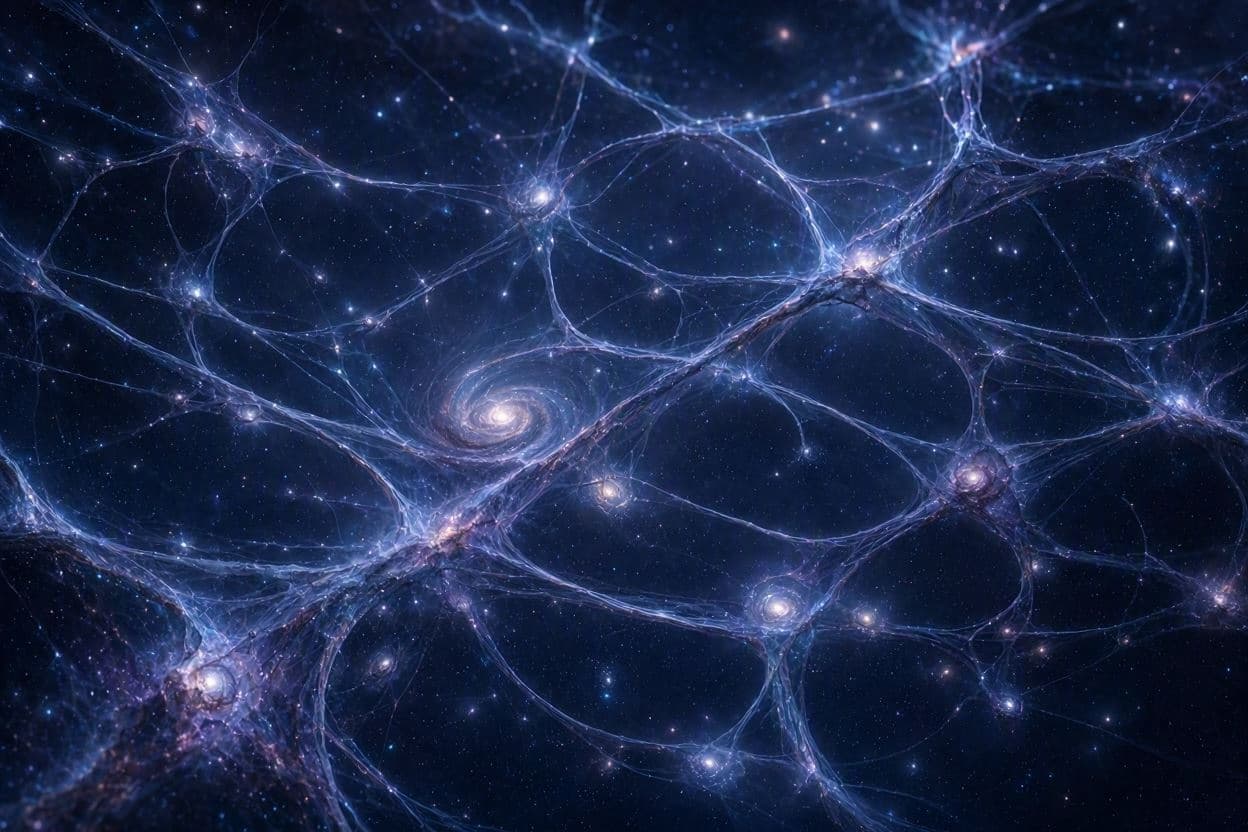
There is a profound humility in looking up at the night sky, a silent acknowledgment that we are but small observers in a vast, unfolding drama. For centuries, humanity has attempted to chart the heavens, drawing lines between stars to form constellations that tell stories of gods and heroes. Today, that ancient impulse has evolved into something far more intricate and accessible. We have moved from sketching patterns on parchment to constructing digital cathedrals of data, inviting everyone to wander through the corridors of the cosmos. The completion of the largest map of space is not merely a scientific milestone; it is an open invitation to explore the architecture of our universe from the comfort of our own screens.
This monumental achievement represents the culmination of years of dedicated observation and computational power. By aggregating data from various telescopes and surveys, astronomers have stitched together a three-dimensional tapestry that reveals the distribution of galaxies, dark matter, and cosmic structures on a scale previously unimaginable. It is a map that does not just show where things are, but hints at how they came to be, offering clues about the fundamental forces that shape reality. The sheer volume of information contained within this map is staggering, yet it has been designed with user experience in mind, transforming complex astrophysical data into an interactive journey.
The accessibility of this map marks a significant shift in how scientific discovery is shared with the public. No longer confined to academic journals or specialized software, the universe is now available for exploration by anyone with an internet connection. Users can zoom in on specific regions, trace the filaments of galaxy clusters, and witness the large-scale structure of the cosmos unfold before their eyes. This democratization of data allows for a new kind of engagement, where curiosity drives exploration rather than formal education or professional affiliation. It turns passive observation into active participation, fostering a deeper connection between the individual and the infinite.
Behind the scenes, the creation of this map involved overcoming immense technical challenges. Processing petabytes of data required advanced algorithms and massive computing resources to filter out noise and correct for distortions. Scientists had to account for the expansion of the universe, the bending of light by gravity, and the limitations of observational instruments. Each step in the process was a testament to human ingenuity and collaboration, bringing together experts from diverse fields to solve problems that no single discipline could address alone. The result is a tool that is both scientifically rigorous and visually stunning.
The implications of this map extend beyond public engagement. For researchers, it provides a new baseline for studying cosmic evolution, testing theories of dark energy, and understanding the formation of large-scale structures. It offers a reference point for future observations, allowing astronomers to compare new data against a comprehensive backdrop. This context is crucial for identifying anomalies, discovering new phenomena, and refining our models of the universe. The map is not a static endpoint but a dynamic foundation for ongoing inquiry, promising to yield insights for years to come.
Yet, there is also a poetic dimension to this technological feat. As we navigate through virtual space, tracing the paths of distant galaxies, we are reminded of our place in the grand scheme of things. The map serves as a mirror, reflecting our desire to understand and connect with the unknown. It invites us to contemplate the beauty of order amidst chaos, the elegance of physical laws, and the mystery of what lies beyond the observable horizon. In exploring the map, we are not just learning about space; we are engaging in a timeless human quest for meaning.
As technology continues to advance, the boundaries of what we can map and understand will continue to expand. Future iterations of this project may include even more detailed data, real-time updates, and enhanced visualization tools. The current map is a snapshot in time, a moment captured in the endless flow of cosmic history. It stands as a tribute to human curiosity and the power of collective effort, showing what we can achieve when we look up and work together to make sense of the stars.
The release of this interactive map is a gentle reminder that science is not just about answers, but about questions. It invites us to play, to explore, and to wonder, keeping the spirit of discovery alive in an increasingly digital world. By making the cosmos accessible, astronomers have given us a gift that transcends data: a renewed sense of awe.
AI Image Disclaimer: Please note that any accompanying visuals for this piece are generated by artificial intelligence to illustrate concepts and are not actual astronomical photographs.
Sources: National Geographic Space.com Scientific American
Published by Banx Network. This article is part of the Banx decentralized media programme, powered by the BXE token on the XRP Ledger.