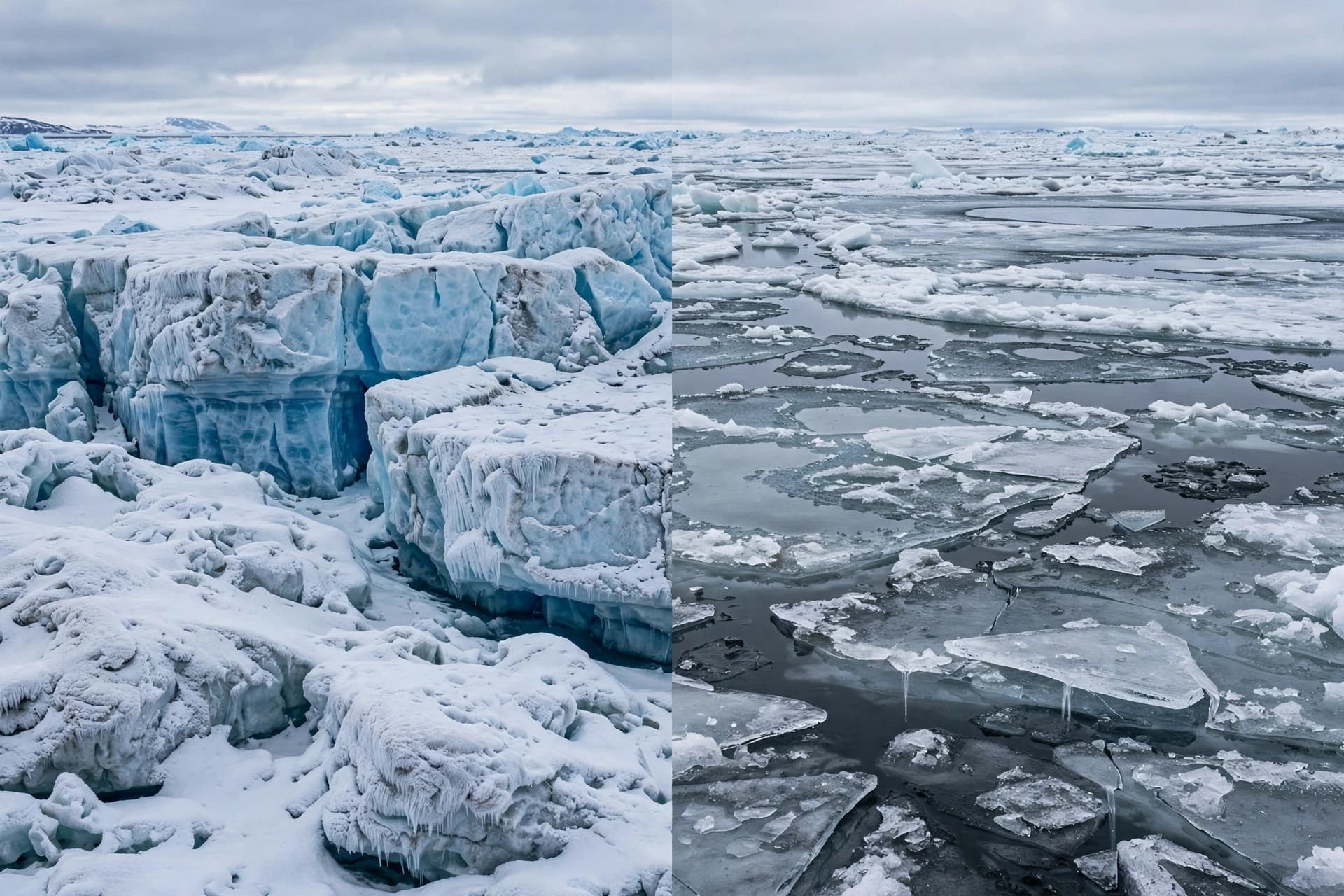
For nearly half a century, the Arctic has served as a stark barometer of planetary change, its white expanse shrinking and thinning in response to a warming world. The length of the melt season—the period each year when ice retreats faster than it forms—had been steadily expanding, a clear signal of shifting climate dynamics. Yet, around 2010, this relentless trend appeared to pause, leveling off in a way that surprised scientists and sparked intense debate. This unexpected plateau offers a complex narrative about the resilience and vulnerability of polar ice, reminding us that nature’s responses are rarely linear.
Data from satellite records, which began in 1979, show that the Arctic melt season lengthened by approximately 40 days over the following decades. This extension meant that ice was exposed to solar radiation for longer periods, accelerating melt and reducing the overall volume of sea ice. The trend was consistent and alarming, leading many to predict a continuous, rapid decline. However, starting around 2010, the rate of increase in melt season length stabilized, even as global temperatures continued to rise. This divergence between temperature trends and melt duration has puzzled researchers.
One explanation for this stabilization lies in the changing composition of the ice itself. Over the past few decades, the Arctic has shifted from being dominated by thick, multi-year ice to thinner, first-year ice. This younger ice is more susceptible to melting entirely during the summer, leaving large areas of open water earlier in the season. Once the ice is gone, the melt season effectively ends for those regions, regardless of how much warmer the air becomes. Thus, the "length" of the melt season may be capped by the physical reality of total ice loss in certain areas.
Another factor is the role of atmospheric circulation patterns. Changes in wind and pressure systems can influence how heat is distributed across the Arctic, sometimes promoting ice retention in one region while accelerating loss in another. These natural variations can mask or modulate the underlying warming trend, creating periods of apparent stability. Scientists caution, however, that this plateau does not indicate a recovery of sea ice but rather a new phase in its decline.
The implications of this shift are significant for climate models. If the melt season length has reached a limit, other factors such as ice thickness and volume become more critical indicators of health. The Arctic is losing mass at an unprecedented rate, contributing to sea-level rise and altering ocean currents. The stabilization of the melt season length does not mitigate these broader impacts but highlights the need for more nuanced metrics in monitoring polar change.
For indigenous communities and wildlife, the changes remain profound. The timing of ice formation and breakup affects hunting seasons, migration patterns, and ecosystem stability. Even if the melt season length has plateaued, the quality and extent of the ice continue to degrade, posing challenges for those who depend on it. The Arctic is not just a remote wilderness but a vital component of the global climate system, with local effects that resonate worldwide.
Researchers continue to monitor the situation closely, using advanced satellites and field measurements to understand the drivers of this stabilization. The hope is that by deciphering this puzzle, we can improve predictions of future ice behavior and better prepare for the consequences of a warming planet. The Arctic’s story is still being written, and every data point adds clarity to the picture.
The pause in the lengthening of the Arctic melt season around 2010 is a intriguing development in climate science. It underscores the complexity of polar systems and the importance of looking beyond simple trends. While the melt season may have stabilized, the Arctic continues to lose ice, reminding us that the crisis is far from over and that vigilance remains essential.
AI Image Disclaimer: The illustrations accompanying this article are AI-generated visualizations designed to represent the concept of seasonal ice change, not actual satellite imagery or photographic evidence of specific years.
Sources: Science Daily, NASA Earth Observatory, National Snow and Ice Data Center
Published by Banx Network. This article is part of the Banx decentralized media programme, powered by the BXE token on the XRP Ledger.