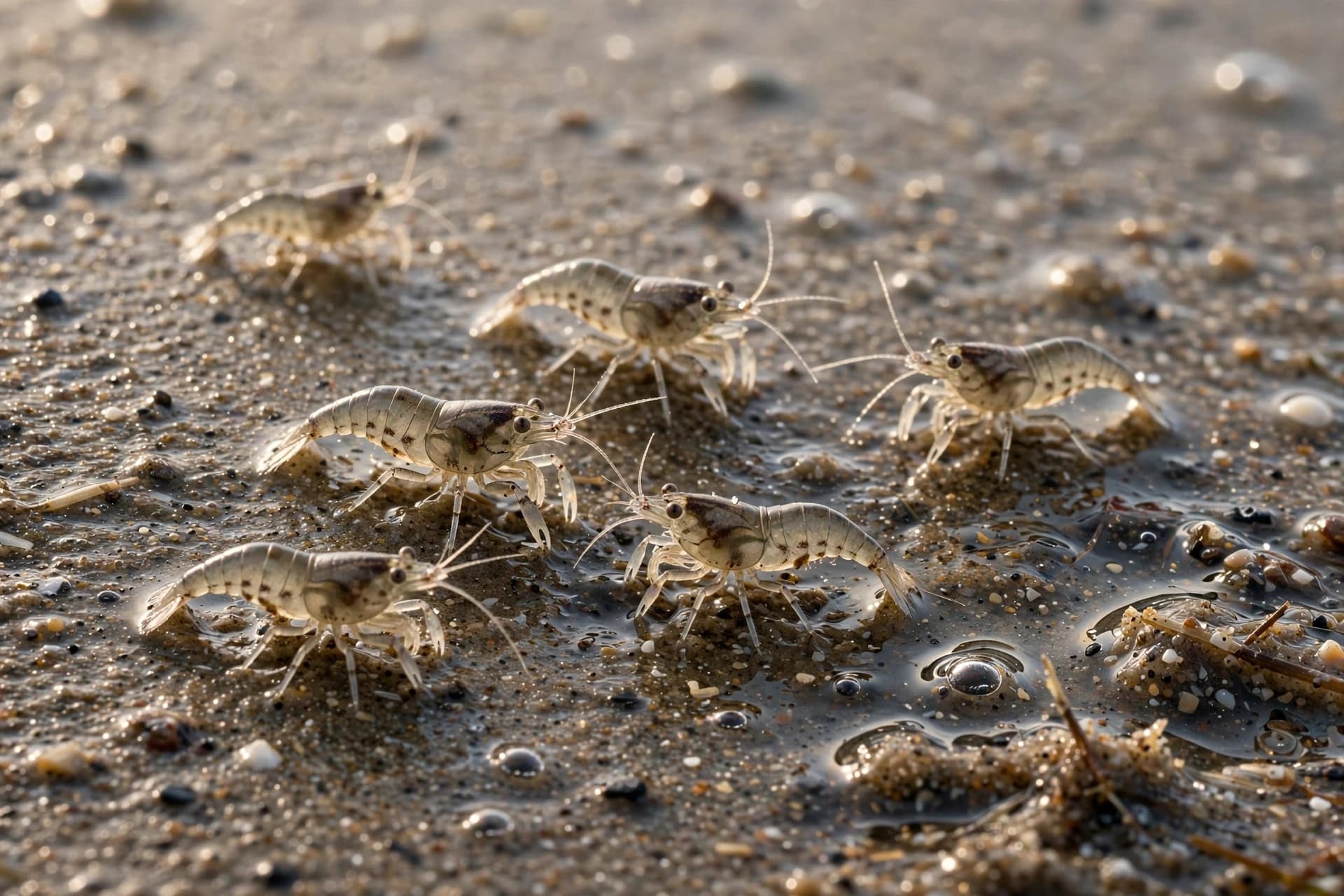
On the shores of California, where the Pacific meets the land, a hidden workforce is tirelessly at work. Beneath the feet of beachgoers, tiny shrimp-like creatures known as sand hoppers are burrowing, feeding, and moving vast quantities of sediment. Recent studies reveal that these small crustaceans are responsible for shifting up to 110 pounds of sand per meter of coastline every day. This discovery transforms our view of the beach from a passive landscape to a dynamic ecosystem shaped by the smallest of inhabitants. It is a reminder that even the most seemingly still environments are alive with activity.
Sand hoppers, or Megalorchestia species, are amphipods that play a crucial role in coastal ecology. By consuming decaying kelp and other organic matter, they help recycle nutrients and stabilize the sand. Their burrowing actions aerate the soil and influence the shape of the beach profile. While individually insignificant, their collective impact is profound, rivaling the sediment transport of some small rivers. This finding highlights the interconnectedness of life and landscape, where biology and geology dance in tandem.
Researchers from the University of California, Santa Barbara, conducted detailed observations of sand hopper populations along the coast. They measured the amount of sand displaced by these creatures as they dug burrows to escape predators and extreme temperatures. The results were surprising: in some areas, the volume of sand moved by sand hoppers was comparable to that moved by wind and waves. This bioturbation process is essential for maintaining the health of the beach ecosystem, preventing the accumulation of rotting seaweed and promoting plant growth.
The study also examined the role of sand hoppers in the food web. These creatures are a primary food source for shorebirds, fish, and other marine animals. Their abundance supports a diverse array of wildlife, making them a keystone species in coastal habitats. Any decline in their population could have cascading effects on the entire ecosystem, affecting everything from bird migrations to water quality. Protecting these tiny organisms is thus vital for the overall health of the coast.
Climate change poses a threat to sand hopper populations, as rising sea levels and increased storm intensity alter their habitat. Erosion and pollution can disrupt their breeding grounds and reduce the availability of food sources. Understanding their role in sediment transport helps scientists predict how beaches will respond to these changes. It provides a baseline for conservation efforts aimed at preserving coastal resilience.
The discovery also has implications for beach management. Traditional approaches often focus on physical structures like seawalls and groins, but this research suggests that biological processes are equally important. Encouraging the health of sand hopper populations could be a natural way to stabilize beaches and reduce erosion. It offers a sustainable alternative to hard engineering solutions, aligning human needs with ecological principles.
For the public, this finding invites a new appreciation for the beach. What appears to be empty sand is actually a bustling community of life. Observing the small jumps of sand hoppers at night reveals their presence and activity. It encourages a sense of stewardship, reminding us that our actions on the beach can have far-reaching consequences. Treading lightly and respecting wildlife are simple ways to support these hidden engineers.
As research continues, scientists aim to quantify the long-term impact of sand hoppers on coastal morphology. They are exploring how different species contribute to sediment movement and how environmental factors influence their behavior. Each study adds to our understanding of the complex dynamics that shape our shores. It is a testament to the importance of curiosity and careful observation in science.
The tiny sand hoppers of California are proving to be mighty shapers of the coast. Their daily labor reminds us of the power of small actions and the importance of every creature in the web of life. As we enjoy the beauty of the beach, let us also respect the unseen forces that keep it vibrant and resilient.
AI Image Disclaimer: The images accompanying this article are AI-generated illustrations designed to depict sand hoppers and coastal scenes without showing specific real-world locations.
Sources: UC Santa Barbara News Phys.org Earth.com Journal of Marine Biology
Published by Banx Network. This article is part of the Banx decentralized media programme, powered by the BXE token on the XRP Ledger.