In a quiet dawn of a winter morning, when frost still clings to the world and the horizon seems to hold its breath, there is a similar stillness stirring inside hospital corridors, research labs, and surgical theaters across the globe. Innovations that once lived only in the realm of imagination have begun to ripple through the landscape of medicine like soft echoes of a new season. These breakthroughs are not abrupt revolutions but gentle evolutions like spring’s first green unfurling through snow tending to human fragility with precision, curiosity, and care.
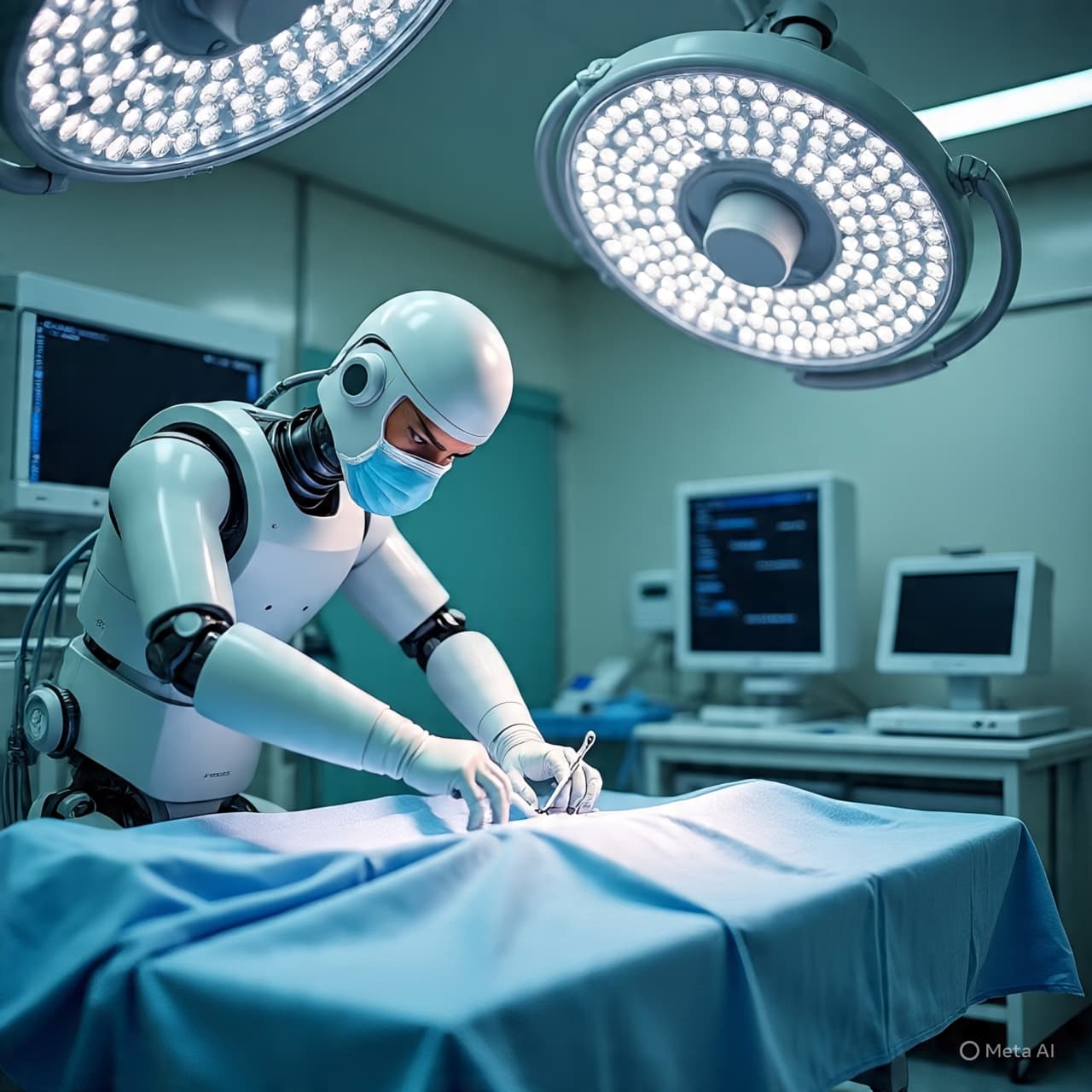
Imagine a pair of invisible hands guided not by distance but by data, light and the subtle movements of a surgeon’s intent. This year, robotic surgery has reached a threshold that blends human skill with machine steadiness in ways that once belonged to science fiction. Surgeons have performed procedures guided remotely across continents, and robots refined with microprecision are navigating the delicate terrain of human tissues with less trauma and more grace than ever before. Each successful incision, each carefully rendered stitch, reflects both the ingenuity of engineers and the wisdom of seasoned clinicians.
At the same time, a long-awaited promise in neurology one that dawned quietly after decades of incremental science now makes early Alzheimer’s disease detection less an ordeal and more a simple moment of understanding. Blood tests that identify molecular signposts of this condition, once detectable only after exhaustive scans or invasive procedures, are entering the clinical sphere. These innovations usher in the possibility of earlier pathways to care, earlier conversations between families and physicians, and earlier preparation for what lies ahead.
Technology also reaches into new territories where size seems to matter less than impact. Devices that whir through narrow vessels, shrinking and reshaping treatment possibilities for strokes and cardiovascular events, and AI-infused diagnostics that sift molecular whispers from bloodstreams are quietly reshaping the contours of care. The emphasis is not on dazzling spectacle but on reducing the unseen burdens the hours behind hospital beds, the fear of hidden disease, and the weight of waiting.
Taken together, what defines the medical advances of 2025 is not only the power of precision but also the poetry of possibility. Like a hospital window reflecting dawn’s first light, these breakthroughs remind us that healing is both art and science refined by years of research, tempered by patience, and propelled by a profound human desire to relieve suffering.
As this year gently folds into memory, the story of medical progress is neither triumphant boast nor grim forecast. It reads like a quiet affirmation: advances are meaningful when they restore agency, ease uncertainty, and extend care with empathy woven into each innovation.
AI Image Disclaimer (rotated wording) “Visuals are created with AI tools and are not real photographs.”
Source Check (mainstream / credible):
ABC News MedTech Dive Global Alzheimer’s Platform Foundation / Think Global Health StartUs Insights Roche / FDA updates
Published by Banx Network. This article is part of the Banx decentralized media programme, powered by the BXE token on the XRP Ledger.