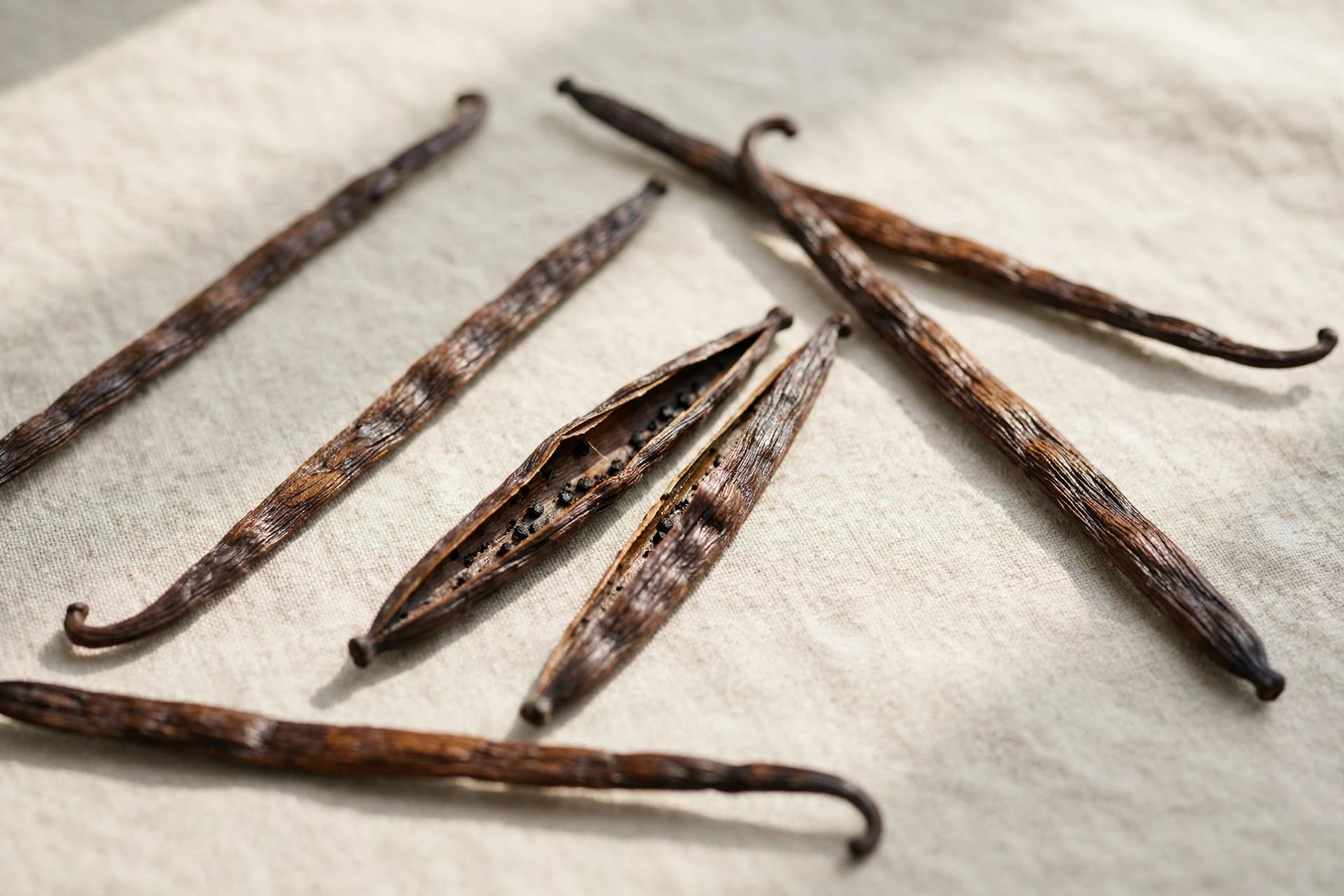
There is something almost poetic about the possibility that a flavor we associate with comfort—the warm sweetness of vanilla—might also hold the power to heal. Vanillin, the primary chemical compound extracted from vanilla pods, has long been valued for its aroma and taste, a staple of the global food system. But researchers at Flinders University in Australia have found that this familiar molecule possesses properties that extend far beyond the kitchen: pronounced antioxidant, anti-inflammatory, and antibacterial activities that make it a promising candidate for wound-healing formulations .
The research, published in the International Journal of Pharmaceutics, positions vanillin within what the team calls a "food-to-function" framework—linking its chemical characteristics to biological activity and potential medical applications . Professor Krasimir Vasilev, director of Flinders' Biomedical Nanoengineering Laboratory, noted that vanillin is among the most widely used flavor compounds in the world, valued for its sensory attributes, chemical stability, and long history of safety. "That can be transferred to other areas, such as medical uses," he said .
The scientific basis for vanillin's wound-healing potential lies in its molecular structure. As an aromatic aldehyde with both hydrophilic and lipophilic characteristics, vanillin can interact with reactive oxygen species, cellular membranes, and polymeric matrices . This amphiphilic nature allows it to serve not only as a bioactive agent but also as a functional element in material design—a dynamic crosslinker that can impart antimicrobial, antioxidant, and self-healing properties to soft biomaterials .
Chronic wounds, such as diabetic ulcers and pressure sores, represent a significant clinical challenge. They affect millions of people worldwide and are characterized by persistent inflammation, impaired cellular responses, and oxidative stress that derail the normal healing process . Vanillin has been implicated in modulating pathways central to tissue repair, including NF-κB signaling, cytokine regulation, and macrophage polarization—the process by which immune cells shift from a pro-inflammatory to a tissue-repairing state .
The practical advantages of vanillin are noteworthy. It is abundant, cost-effective, and can be produced synthetically from clove oil or rice as well as extracted from natural vanilla . It is compatible with good manufacturing practices, offering clear advantages for industrial scale-up, formulation reproducibility, and supply chain robustness . Researchers have already explored vanillin-based hydrogels, films, and nanoparticles for wound dressings, with studies demonstrating antibacterial activity against common pathogens and favorable biocompatibility .
The journey from laboratory promise to clinical application is rarely quick. Vasilev acknowledges that coordinated engagement between academia, clinicians, and industry will be necessary for vanillin to "progress from an underutilized bioactive to a clinically deployable component of next-generation wound care and regenerative therapeutics" . The research remains in its early stages, and the evidence, while encouraging, requires further validation through clinical trials.
There is a certain elegance in the idea that a molecule so familiar—so ordinary—might carry within it the capacity to heal. Vanillin has been used for generations to make life a little sweeter. If the research bears fruit, it may one day help mend what is broken, a quiet contribution from the world of flavor to the world of medicine.
AI Image Disclaimer: The visual elements in this article are AI-generated and are provided for illustrative purposes only.
Sources:
· Flinders University · International Journal of Pharmaceutics · ScienceDirect
Published by Banx Network. This article is part of the Banx decentralized media programme, powered by the BXE token on the XRP Ledger.