The dry pine forests that blanket the hillsides surrounding Tivat Bay offer a scenic, emerald backdrop to some of the most exclusive resort properties on the Adriatic coast. Here, the landscape is defined by its aromatic warmth, where the scent of resin and wild lavender fills the air during the long, sun-bleached months of summer. The luxury villas, tucked into the terraced slopes, are designed to offer seclusion and a panoramic view of the calm waters below, creating an architecture of quiet privilege. Yet, this idyllic relationship with nature carries an inherent, seasonal danger, as the Mediterranean heat turns the dense undergrowth into a fragile tinderbox.
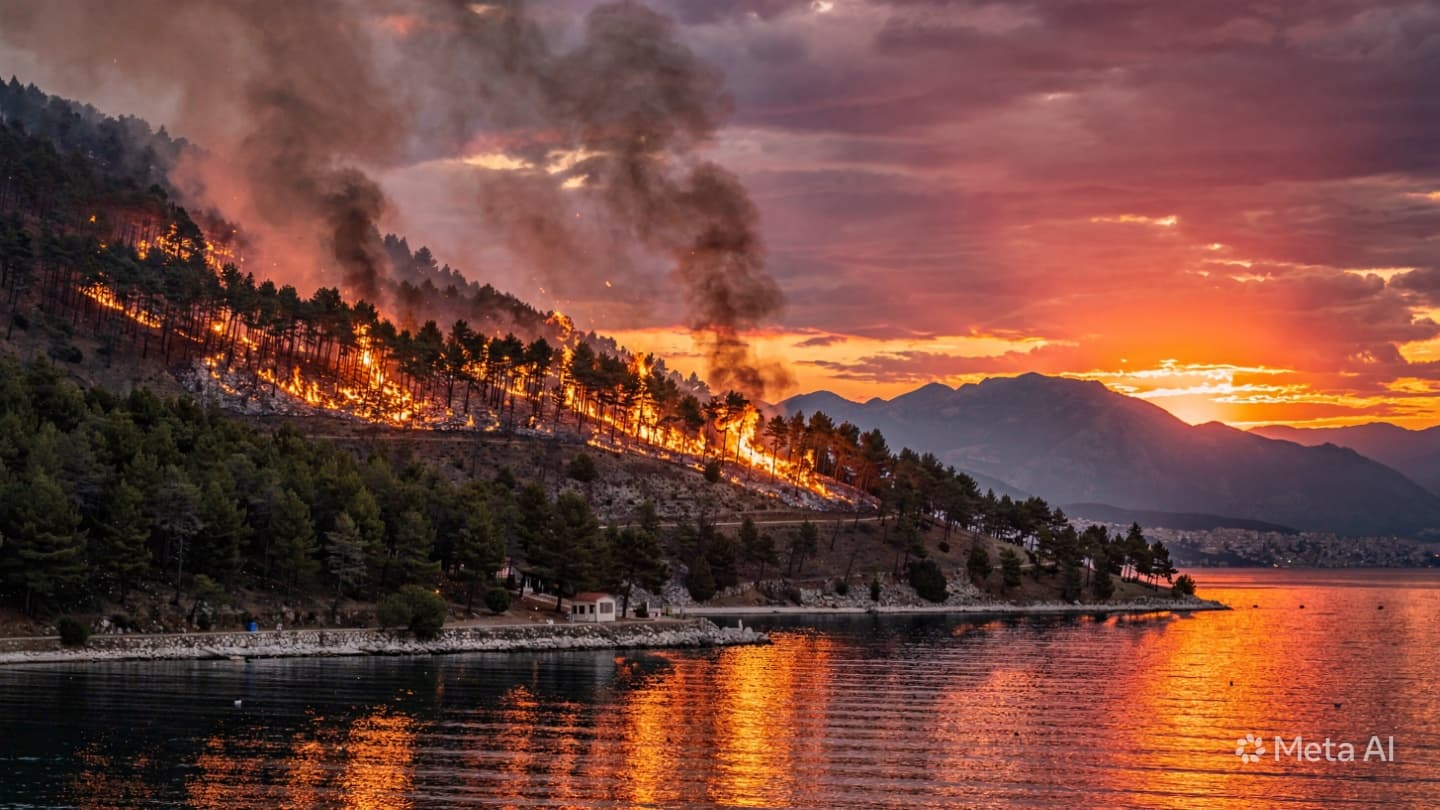
The afternoon began with a small plume of white smoke rising from a remote, uninhabited ridge, barely noticeable against the bright glare of the summer sun. Driven by a sudden, shifting thermal breeze from the bay, the spark found immediate traction in the thick layer of dry pine needles and parched brushwood that covers the forest floor. Within an hour, the isolated smoke transformed into a broad, advancing wall of flame that climbed into the canopy with an aggressive, crackling momentum. The fire moved downward along the contours of the slopes, directly toward the perimeter fences of the luxury residential developments that sit on the outer fringes of the bay.
It was a terrifying display of elemental force as the crimson horizon expanded, casting a dense canopy of orange smoke that blotted out the view of the water. The residents of the outer villas were forced into a hasty evacuation, packing light vehicles under the watchful eye of local security patrols as the heat became palpable. The sound of exploding pine cones, which acted as natural projectiles spreading the fire across the valleys, created an atmosphere of urgent crisis. The local fire services, accustomed to seasonal outbreaks, realized immediately that the steepness of the terrain would limit the effectiveness of ground-based trucks.
The response required a coordinated mobilization of municipal firefighting units from across the coastal region, supported by water-dropping aircraft that flew low over the bay to refill their tanks. The pilots executed a series of precise, dangerous runs through the heavy smoke, releasing sheets of water directly onto the leading edge of the blaze just yards from the nearest structures. On the ground, crews worked with hand tools to clear defensive firebreaks through the thick brush, their faces blackened by soot and sweat in the intense summer heat. It was a race against the afternoon wind, which threatened to push the fire deeper into the residential sectors.
By the time the sun began to set behind the mountains, the combined aerial and ground assault had succeeded in slowing the fire’s advance, saving the luxury properties from direct impact. The immediate threat to human life had passed, but the hillsides remained a glowing grid of hot spots that required continuous monitoring through the night to prevent a resurgence. For the evacuated homeowners standing at the shoreline below, the sight of the smoldering slopes was a sobering reminder of how quickly the natural environment can reclaim its dominance. The air over the bay remained heavy with the smell of burnt resin, a lingering reminder of the close escape.
The vulnerability of these high-end coastal developments to forest fires has raised long-term questions regarding the management of the wildland-urban interface along the Montenegrin littoral. Environmental experts note that decades of fire suppression and the abandonment of traditional grazing practices have allowed a dangerous volume of fuel to accumulate in the pine woods. The local government has initiated a review of building regulations, emphasizing the need for wider buffer zones and clearing of undergrowth around private properties in high-risk areas. The economic stakes are high, as the reputation of the bay as a safe luxury destination is vital for national investment.
As the morning light revealed the blackened scars across the green hillsides, the fire crews remained on the ridges, dampening down the smoking embers with handheld hoses. The local authorities have confirmed that an investigation into the cause of the fire is underway, with negligence by illegal campers or a discarded cigarette being considered as likely origins. The evacuated residents have been permitted to return to their homes, though the view from their windows is now a stark reminder of the fire’s path. The bay returns to its quiet state, but the memory of the crimson slope remains a shadow over the summer season.
Published by Banx Network. This article is part of the Banx decentralized media programme, powered by the BXE token on the XRP Ledger.