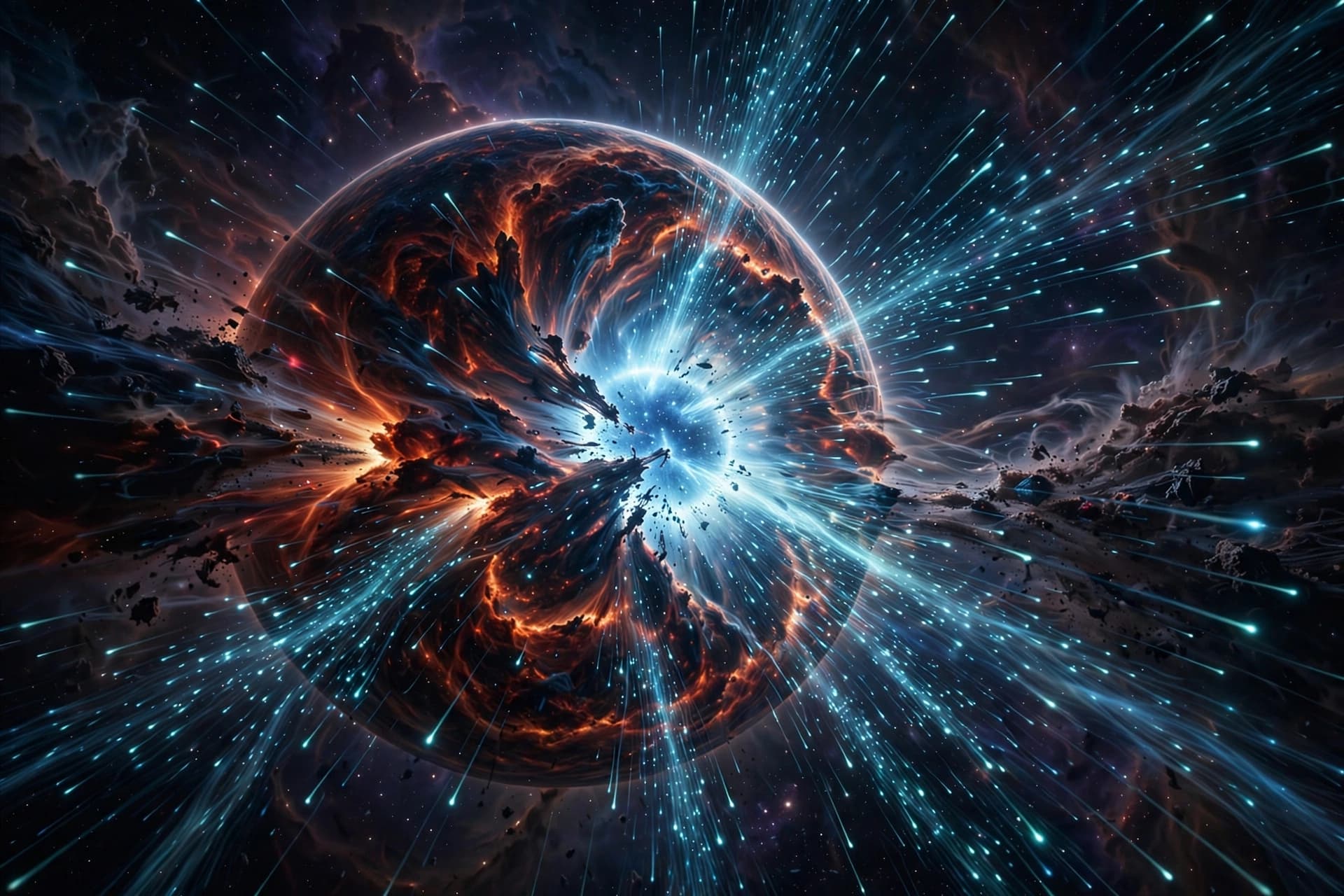
When a massive star reaches the end of its life, it faces a dramatic choice: explode in a supernova or collapse silently into a black hole. For decades, this decision seemed determined by mass and metallicity, but new research suggests a more subtle actor is at play. Neutrinos, the ghostly particles that rarely interact with matter, may hold the key. A recent study indicates that the "flavor" of these neutrinos—how they change identity as they travel—could influence whether a star bursts apart or implodes. It is a reminder that the smallest particles can shape the largest events.
The study, led by researchers at the University of Copenhagen, explores the role of neutrino oscillations in stellar collapse. As a star’s core collapses, it emits a flood of neutrinos. These particles come in three flavors: electron, muon, and tau. Under extreme densities, neutrinos can change from one flavor to another, a phenomenon known as oscillation. The research suggests that these changes affect how energy is transported out of the core, potentially altering the pressure dynamics that drive an explosion.
If neutrinos efficiently carry away energy, the core may cool too quickly to rebound, leading to a direct collapse into a black hole. Conversely, if flavor changes trap energy or alter the interaction rate, it might provide the extra push needed for a supernova. This nuanced mechanism adds a layer of complexity to stellar evolution models, which have traditionally relied on simpler assumptions about neutrino behavior. It highlights the intricate physics occurring in the final seconds of a star’s life.
For astrophysicists, this finding helps explain observational discrepancies. Some massive stars seem to disappear without a visible supernova, suggesting they formed black holes directly. Others explode with unexpected vigor. By incorporating neutrino flavor dynamics, models can better predict these outcomes. It bridges the gap between particle physics and astronomy, showing how micro-scale phenomena influence macro-scale structures.
The implications extend to the chemical enrichment of the universe. Supernovae are responsible for scattering heavy elements like iron and gold into space, seeding future generations of stars and planets. If neutrino flavors determine which stars explode, they indirectly influence the distribution of these elements. Understanding this process is crucial for knowing how the building blocks of life are spread across the cosmos.
Detecting these neutrinos remains a challenge. Current detectors like Super-Kamiokande and IceCube are sensitive to high-energy neutrinos from distant events, but capturing the low-energy flux from a collapsing star requires proximity. The next nearby supernova will be a critical test for these theories, offering a wealth of data that could confirm or refute the role of flavor oscillations. Until then, simulations remain our primary tool.
Public interest in neutrinos often stems from their mysterious nature. These particles pass through us by the trillions every second, unnoticed and unfelt. Yet, in the heart of a dying star, they become agents of destiny. This duality—of being both insignificant and decisive—captures the imagination. It reminds us that the universe is full of hidden forces that shape our reality.
The discovery that neutrino flavor may determine the fate of dying stars adds depth to our understanding of stellar evolution. It highlights the interconnectedness of particle physics and cosmology. As we refine our models, we move closer to predicting the final moments of massive stars, unraveling the mystery of their ultimate end.
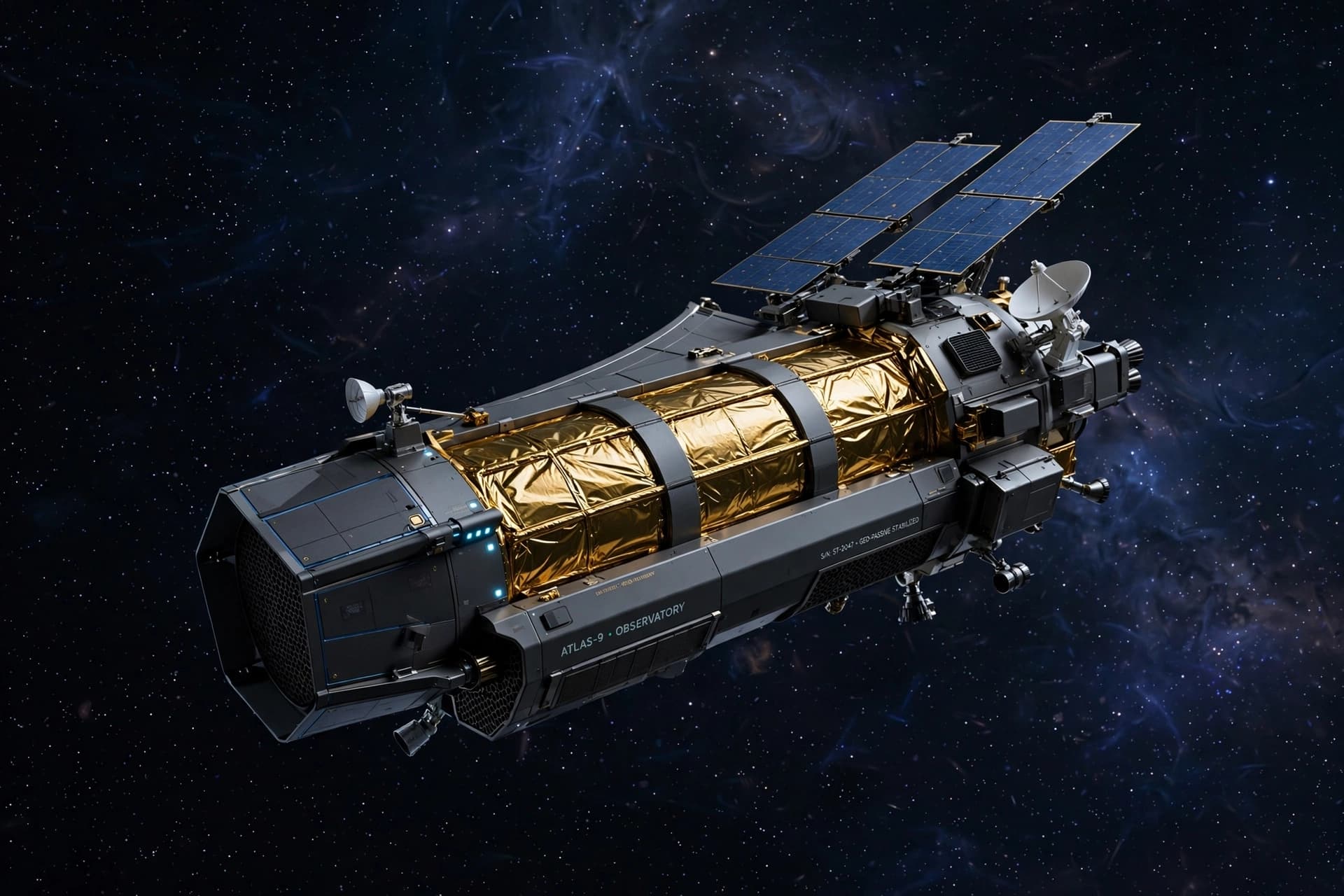
AI Image Disclaimer: The visuals in this article are AI-generated artistic interpretations of neutrinos and stellar collapse, not actual data visualizations from particle detectors.
Sources: University of Copenhagen Space.com Physical Review Letters
Published by Banx Network. This article is part of the Banx decentralized media programme, powered by the BXE token on the XRP Ledger.