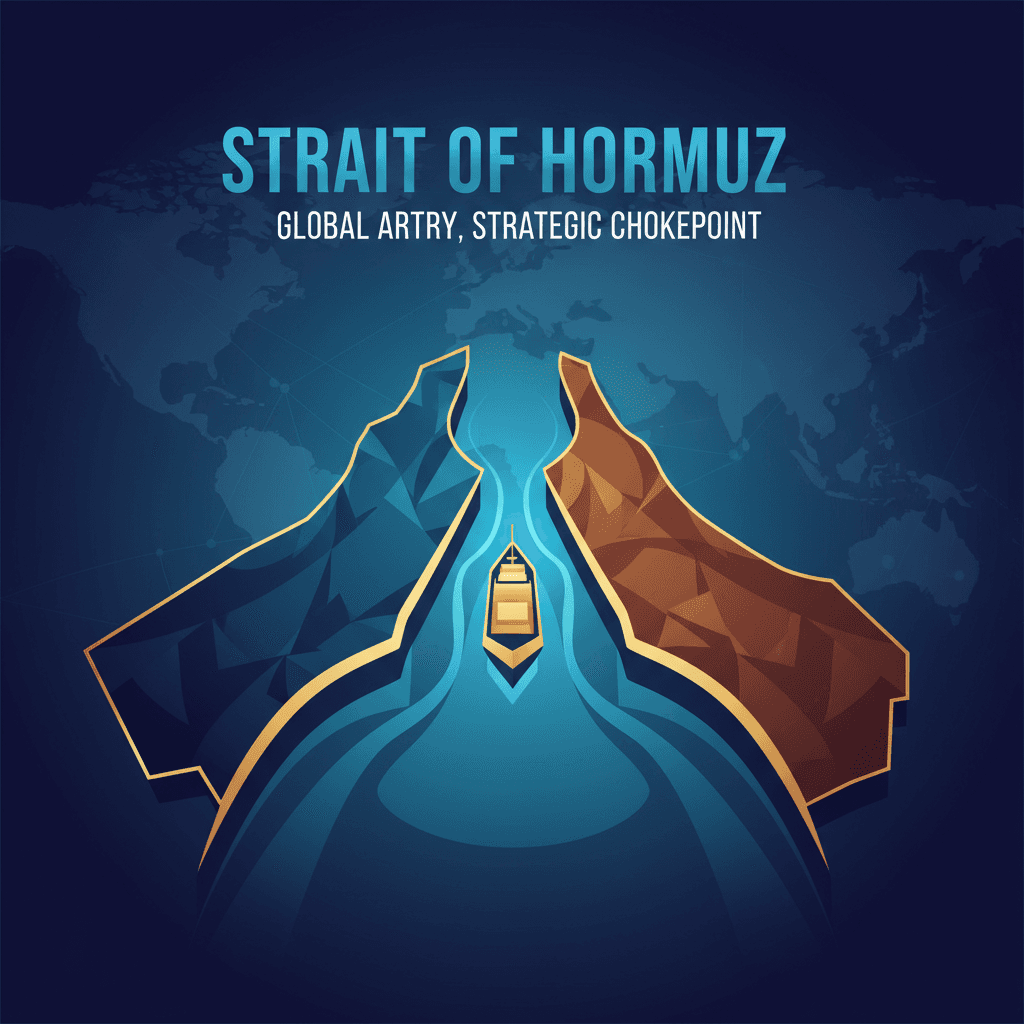
A quiet hum, almost imperceptible at first, often precedes the tectonic shifts in global finance. It’s the murmur of distant geopolitical currents, the whisper of strategic anxieties that eventually coalesce into market tremors. What strikes me about this moment isn't just the rising temperature in the Persian Gulf, but the collective amnesia regarding the Strait of Hormuz—a maritime artery so vital it’s less a passage and more a global pulse point. I've watched these cycles unfold for nearly two decades, and the current tension feels different, less about direct confrontation and more about the slow, deliberate tightening of an economic tourniquet. We’re talking about the Strait of Hormuz, after all. Its strategic importance can't be overstated. This isn't some sudden, impulsive leap into crisis; it feels more like a slow, deliberate ascent towards a precipice.
Look, the numbers don't lie. Roughly 20% of the world's total petroleum liquids consumption, and about 30% of all seaborne-traded crude oil, passes through this 21-mile-wide channel, according to 2023 data from the U.S. Energy Information Administration. That’s a staggering volume, a constant river of black gold fueling economies from Tokyo to London. Any disruption here sends ripples, no, tsunamis, through global supply chains and energy markets. It’s the kind of bottleneck that keeps central bankers awake at night, contemplating the inflationary pressures a sudden spike in oil prices would unleash. The view from Singapore, a hub profoundly reliant on these energy flows, often emphasizes the pragmatic need for de-escalation, understanding that even a minor incident could spiral. Reuters reported in late 2023 on the escalating rhetoric, noting increased naval exercises in the region, a clear signal that the stakes are being raised.
This isn't merely about oil; it’s about the intricate web of trade, the cost of goods, and ultimately, the stability of the global financial architecture. A disruption here isn't just an energy crisis; it's a crisis of confidence in the very pathways of global commerce. Frankly, the sheer volume of global trade reliant on the Strait of Hormuz makes it a non-negotiable point of stability. What happens if that stability cracks? It's a question that financial strategists quietly ponder, even as politicians publicly posture.
Here's what nobody's talking about, though: the quiet, almost unnoticed, shift in how capital is preparing for such a contingency. While the headlines scream about naval deployments, a different kind of maneuver is happening in the digital corridors of finance. I've observed a subtle, yet persistent, uptick in interest for decentralized finance (DeFi) solutions that offer hedging against geopolitical risk, particularly those focused on commodity tokenization. Call me skeptical, but the smart money isn't just buying oil futures; it's exploring how blockchain-based assets can provide a more resilient, less centralized alternative to traditional risk management in a world where physical chokepoints, like the Strait of Hormuz, are increasingly vulnerable. Bloomberg, for instance, has covered the nascent but growing market for tokenized real-world assets, including energy, hinting at a future where physical assets are mirrored on distributed ledgers.
This isn't to say DeFi is a panacea for geopolitical risk, far from it. The regulatory framework is, to put it bluntly, a mess, and the volatility of many crypto assets remains a significant hurdle for institutional adoption. And let’s be honest, the promise of digital assets often outpaces their practical application in times of true global stress. Yet, the sheer volume of conversations I'm hearing from fund managers, particularly those in emerging markets, about the potential of distributed ledger technologies for faster, cheaper cross-border payments in a world of fractured supply lines, suggests a deeper undercurrent. The innovation around instant settlement and low-cost transactions could offer a crucial pressure release valve for liquidity in a crisis, bypassing traditional banking rails that might be slower or politically compromised. It's a quiet revolution, building resilience into the very fabric of global trade, one transaction at a time.
But wait — what if we’re missing the forest for the trees? What if the digital solutions, while promising, merely shift the vulnerability rather than eliminate it? A recent report by Messari, for example, highlighted the persistent centralization risks within certain DeFi protocols, reminding us that even distributed systems can have single points of failure. The digital realm, for all its innovation, is still subject to the whims of code, the vulnerabilities of infrastructure, and the ever-present threat of cyberattack. This unexpected turn means we must temper our enthusiasm with a healthy dose of realism. The digital corridors, while offering an alternative to the physical chokepoints of the Strait of Hormuz, aren't immune to their own unique forms of disruption. It's a different kind of battle, but a battle nonetheless.
Perhaps the real question isn't whether the Strait of Hormuz will erupt, but whether we’ve been asking the right questions about how to build a financial system robust enough to withstand such an event—both physical and digital. The physical world has its bottlenecks, its narrow passages where power dynamics play out. But the digital realm, with its promise of distributed networks and transparent ledgers, offers a different path. It's a path that, while still fraught with its own challenges, invites us to reconsider the very nature of economic vulnerability. Will the digital currents find a way to flow around the physical chokepoints, or are we destined to repeat the same patterns of reliance and anxiety, merely trading one set of vulnerabilities for another? The hum of distant geopolitical currents continues, ever present.
AI Image Disclaimer
Visuals are created with AI tools and are not real photographs.
Source Check Credible sources exist for this article:
U.S. Energy Information Administration Reuters Bloomberg Messari CoinDesk
Published by Banx Network. This article is part of the Banx decentralized media programme, powered by the BXE token on the XRP Ledger.