There is a quiet mathematics to road safety that rarely makes headlines until it fails. A stop sign obeyed, a phone left untouched, a seatbelt clicked into place—these small decisions accumulate into something we call safety, a collective agreement that the road is a shared space and not a personal one. When the agreement frays, the consequences are measured in funerals.
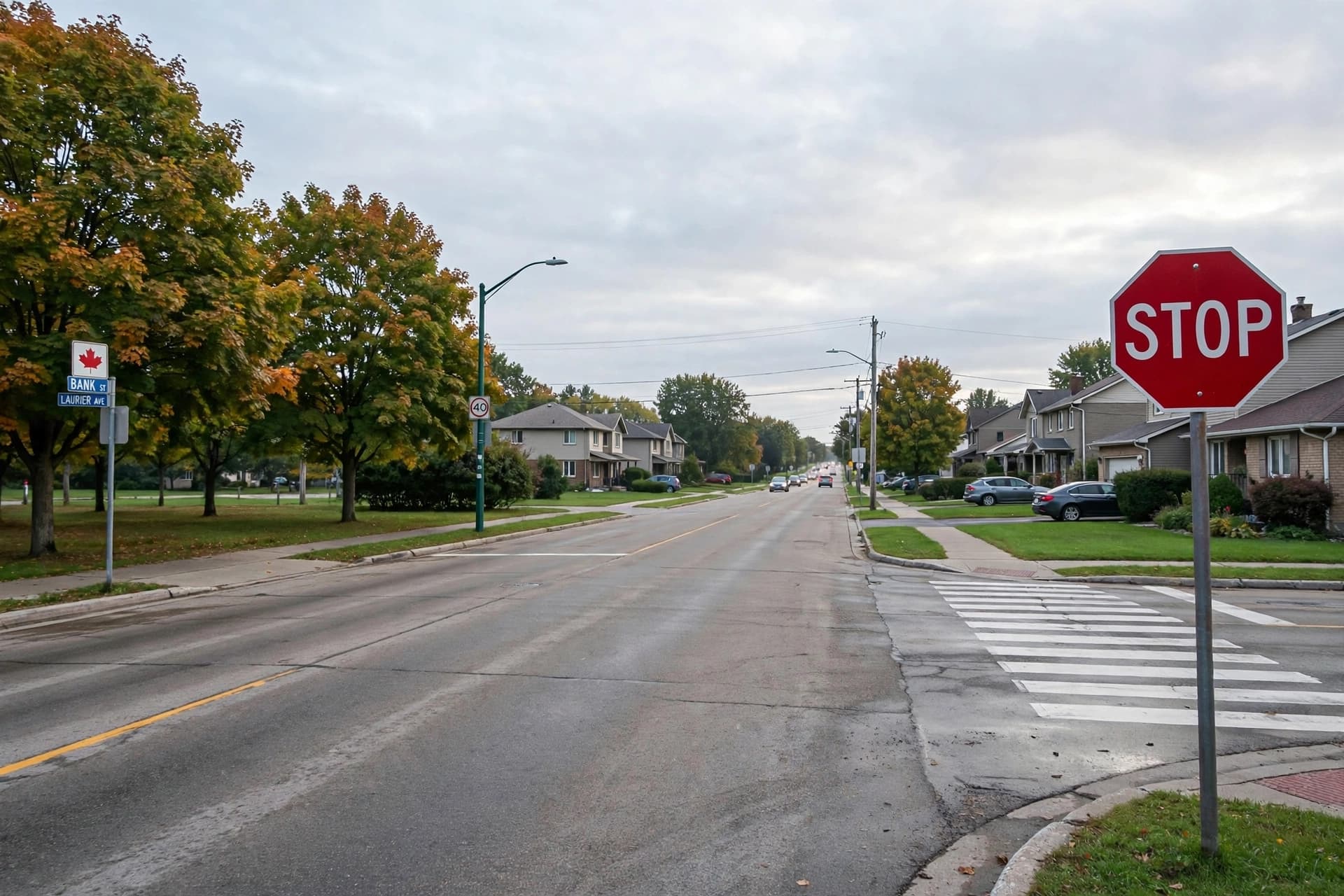
This past weekend, Ottawa police conducted a traffic blitz in Barrhaven, Findlay Creek, and Riverside South, focusing on major intersections along Hunt Club Road and in Findlay Creek . Officers issued 41 provincial offense notices and searched four vehicles in connection with concerns involving cannabis or alcohol . The offenses identified were familiar ones: distracted driving and handheld device use, driving with cannabis or liquor readily available, obstructed license plates, disobeying stop signs, improperly tinted windows, driving without a valid permit, and failing to surrender proof of insurance .
The blitz was not merely about enforcement. In a statement, police described the initiative as focused on "both enforcement and meaningful community engagement," with officers speaking directly to drivers and passengers about safe driving practices and the shared responsibility of keeping roads safe . It is a gentle framing for a serious concern: Ottawa has seen 30 traffic-related deaths so far this year, compared to 23 in all of last year .
That number—30—is the quiet center of this story. It is not a statistic that announces itself with sirens. It accumulates slowly, one collision at a time, each one a life interrupted or ended. The blitz, with its 41 tickets and four vehicle searches, is a small intervention in a pattern that has been worsening. The offenses are not exotic. They are the ordinary carelessness that becomes lethal when combined with speed, weight, and the physics of a moving vehicle.
Ottawa police have been urging drivers to slow down, put the phone away, and drive sober. The blitz in the south end was one expression of that urging, a visible presence in neighborhoods where residents had raised concerns about traffic safety . The Community Safety Data portal allows residents to view and interact with data released by the police service, a quiet tool for a quiet problem .
The tickets will be paid, or contested, and the blitz will recede into the weekend's memory. But the arithmetic of safety continues: each decision to slow down, to look twice, to leave the phone in the pocket, is a small vote for the kind of world where a Friday afternoon in October ends with everyone arriving home.
Police have not announced the date of the next blitz. The work of keeping the roads safe, however, does not wait for announcements.
The visual content accompanying this report was created using AI generation tools.
Sources: CTV News Ottawa, Ottawa Police Service
Published by Banx Network. This article is part of the Banx decentralized media programme, powered by the BXE token on the XRP Ledger.