The International Space Station has a rhythm that rarely pauses. One crew arrives, unpacks their belongings into the same narrow sleep stations their predecessors just vacated, and begins the slow adjustment to weightlessness. Meanwhile, on the ground, the next set of names is already being read aloud in conference rooms and press briefings, a quiet acknowledgment that the work of exploration is never about a single moment.
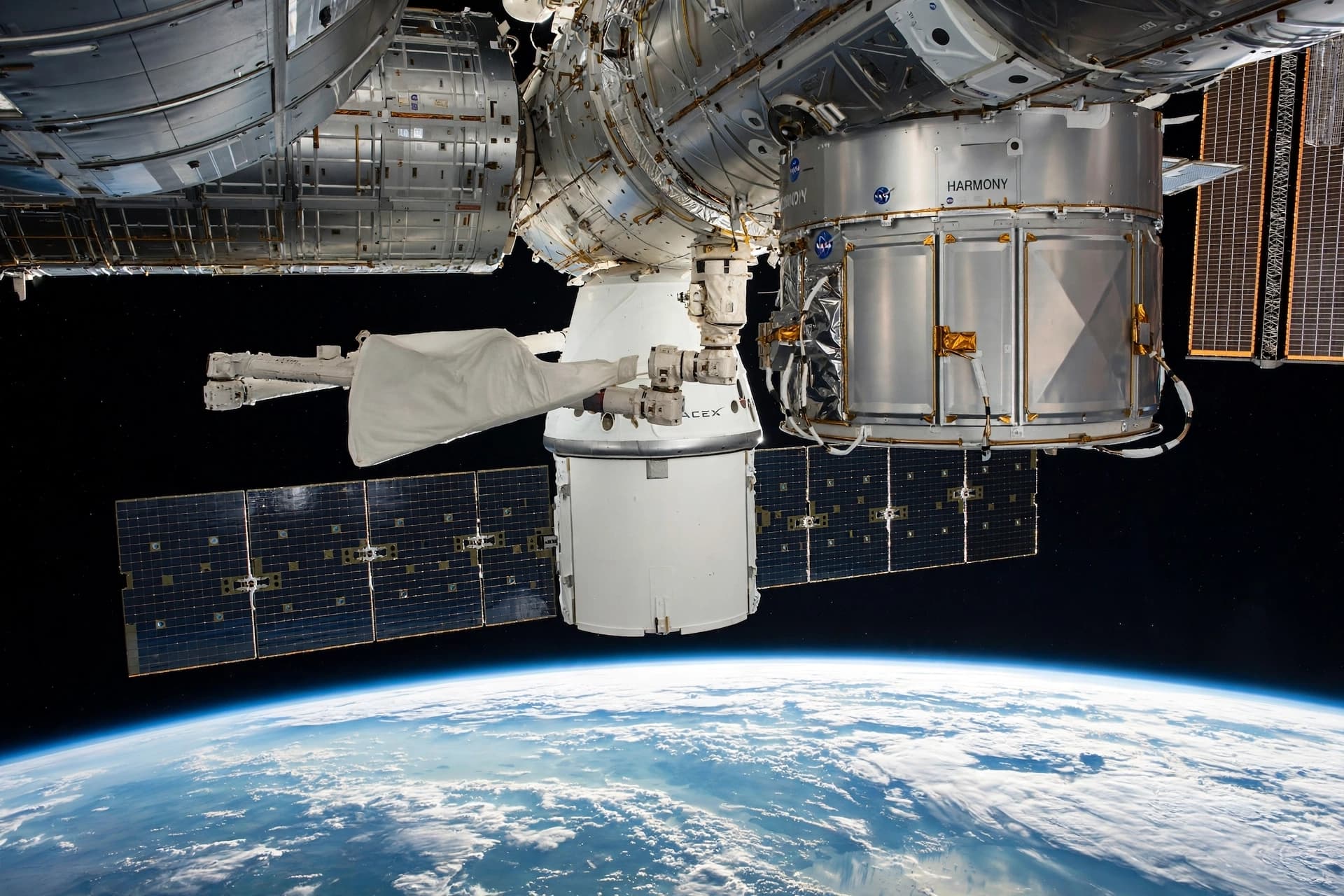
Crew-13 docked with the station on October 1, 2026, completing the fastest launch-to-docking journey of a U.S. spacecraft in the station's history—seven hours and fifty-five minutes from Florida to orbit . NASA astronauts Jessica Watkins and Luke Delaney, along with Canadian Space Agency astronaut Joshua Kutryk and Roscosmos cosmonaut Sergey Teteryatnikov, opened the hatch and floated into the Harmony module, joining the Expedition 75 crew already aboard .
Even before that hatch opened, NASA had already announced the crew that will replace them. The agency named Kayla Barron as commander, Chris Birch as pilot, JAXA's Makoto Suwa, and Roscosmos cosmonaut Arutyun Kiviryan to the Crew-14 mission, scheduled for no earlier than spring 2027 . Barron is a Navy commander returning for her second long-duration stay; for the other three, it will be a first flight into the black.
The back-to-back announcements reflect something practical about the station's operations. A crew rotation is not a single event but a rolling process of training, certification, and launch readiness that stretches across years. By naming replacements months in advance, NASA and its partners keep that pipeline flowing . SpaceX's Dragon vehicle will again carry the crew, continuing the company's role as the primary transport for station rotations under the Commercial Crew Program .
That reliance on SpaceX has deepened in recent months. NASA awarded the company three additional crew missions—Crew-15 through Crew-17—at a value of $946 million, bringing the total Commercial Crew Transportation Capability contract to $5.92 billion across seventeen flights . The award followed a notice of intent issued in May, driven in part by the ongoing technical delays with Boeing's Starliner . The contract period runs through 2030.
For the astronauts themselves, the gap between announcement and launch is filled with training that can feel both interminable and too brief. There are systems to learn, robotics to practice, experiments to rehearse. And there is the quieter work of preparing to live in a place where every object must be tethered, where the view out the window is the same curve of Earth and ocean that has greeted every crew since 2000.
The space station was never meant to be a destination in itself. It is a workshop, a laboratory, a proving ground for the longer journeys that will follow. When Crew-14 finally lifts off next spring, they will inherit not just a set of sleep stations and science racks, but a rhythm that has carried the station forward for a quarter century.
AI-generated images illustrate this article for editorial purposes.
Sources: NASA, USA Today, Anadolu Ajansı, China Daily, Teslarati
Published by Banx Network. This article is part of the Banx decentralized media programme, powered by the BXE token on the XRP Ledger.