The universe rarely offers simple answers, yet it continues to leave quiet clues scattered among the stars. Every discovery made in deep space reminds humanity that the ingredients for remarkable stories may exist far beyond our own planet. A recent scientific finding has added another intriguing piece to that larger puzzle, as researchers detected sugar molecules near the center of the Milky Way, strengthening scientific interest in how the chemical foundations of life may form throughout the cosmos.
Astronomers reported detecting complex organic molecules, including sugars considered important to prebiotic chemistry, within dense molecular clouds near the center of our galaxy. The discovery was made using advanced radio astronomy techniques capable of identifying the unique spectral signatures emitted by molecules in interstellar space. Such observations allow scientists to determine the chemical composition of regions located thousands of light-years from Earth.
The identified molecules are not evidence of life itself. Instead, researchers emphasize that these compounds are regarded as potential building blocks involved in the chemistry that can precede the emergence of living organisms. Sugars and other organic molecules play important roles in biological systems on Earth, making their presence elsewhere in the galaxy an important area of astrobiological research.
Molecular clouds near the Milky Way's center are known to contain large quantities of gas and dust where new stars and planetary systems may eventually form. Within these environments, chemical reactions driven by radiation, temperature changes, and cosmic particles gradually produce increasingly complex organic compounds. Scientists believe these regions offer valuable opportunities to study the chemical evolution of the universe.
Over the past several decades, astronomers have identified more than 300 different molecules in interstellar space, including alcohols, amino acid precursors, and other carbon-based compounds. Each new detection expands scientific understanding of how chemical complexity develops naturally in space before planets are fully formed. The latest observations add further evidence that many of the ingredients associated with life are not unique to Earth.
Researchers caution that the discovery should not be interpreted as proof that life exists elsewhere in the Milky Way. The transition from simple organic chemistry to living organisms involves numerous biological processes that remain the subject of active scientific investigation. Nevertheless, identifying these molecules helps scientists refine models describing how life's essential ingredients may become available during planetary formation.
Future observations using increasingly sensitive radio telescopes and space observatories are expected to reveal additional complex molecules across different regions of the galaxy. By comparing molecular clouds, protoplanetary disks, and star-forming regions, researchers hope to better understand how chemical diversity evolves under varying cosmic conditions.
The detection of sugar molecules near the heart of the Milky Way offers another meaningful contribution to humanity's exploration of the universe. While many questions about the origin of life remain unanswered, discoveries like this continue to demonstrate that the chemistry associated with life's building blocks extends far beyond our own solar system, encouraging further scientific investigation into the nature of the cosmos.
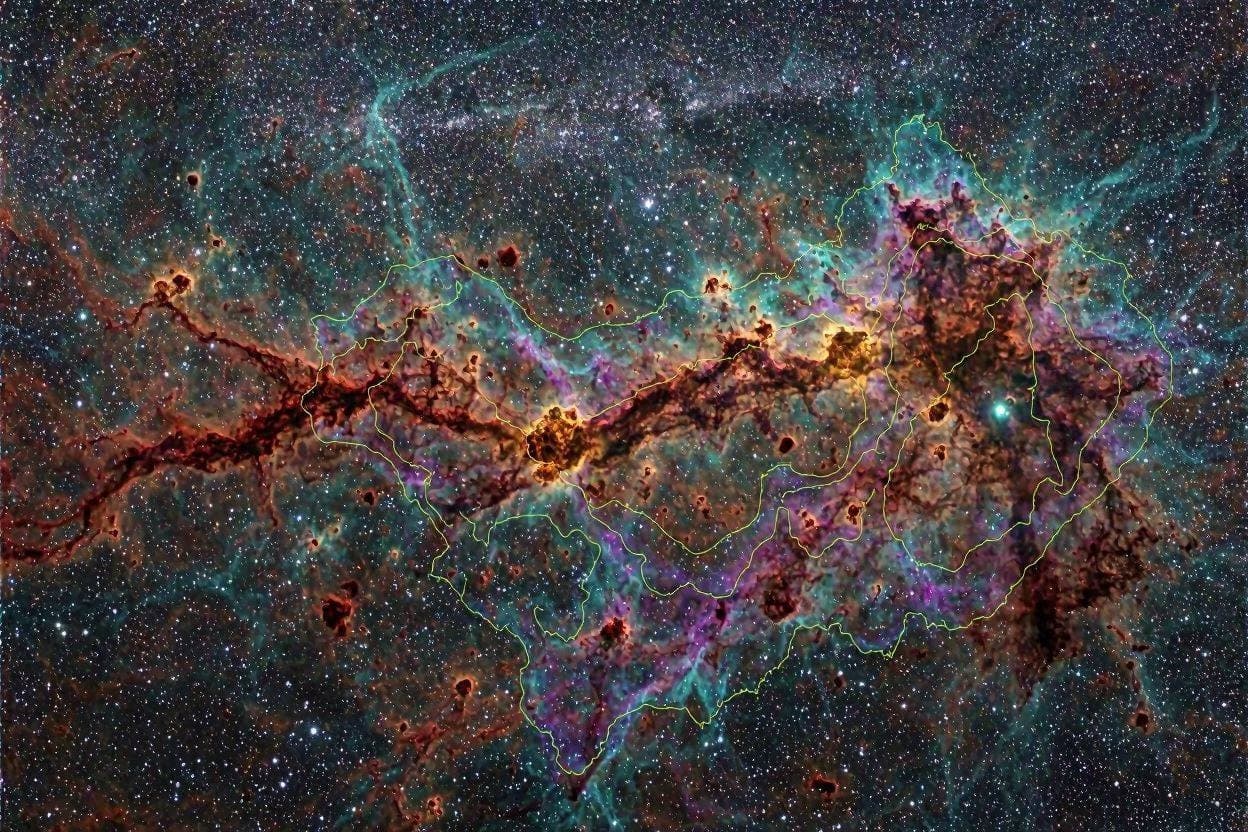
AI Image Disclaimer: The illustrations accompanying this article are AI-generated artistic visualizations based on astronomical observations and are not direct images of the detected molecules.
Source Verification Check: Strong credible sources found.
Sources:
NASA European Southern Observatory (ESO) Nature Astronomy Science Live Science
Published by Banx Network. This article is part of the Banx decentralized media programme, powered by the BXE token on the XRP Ledger.