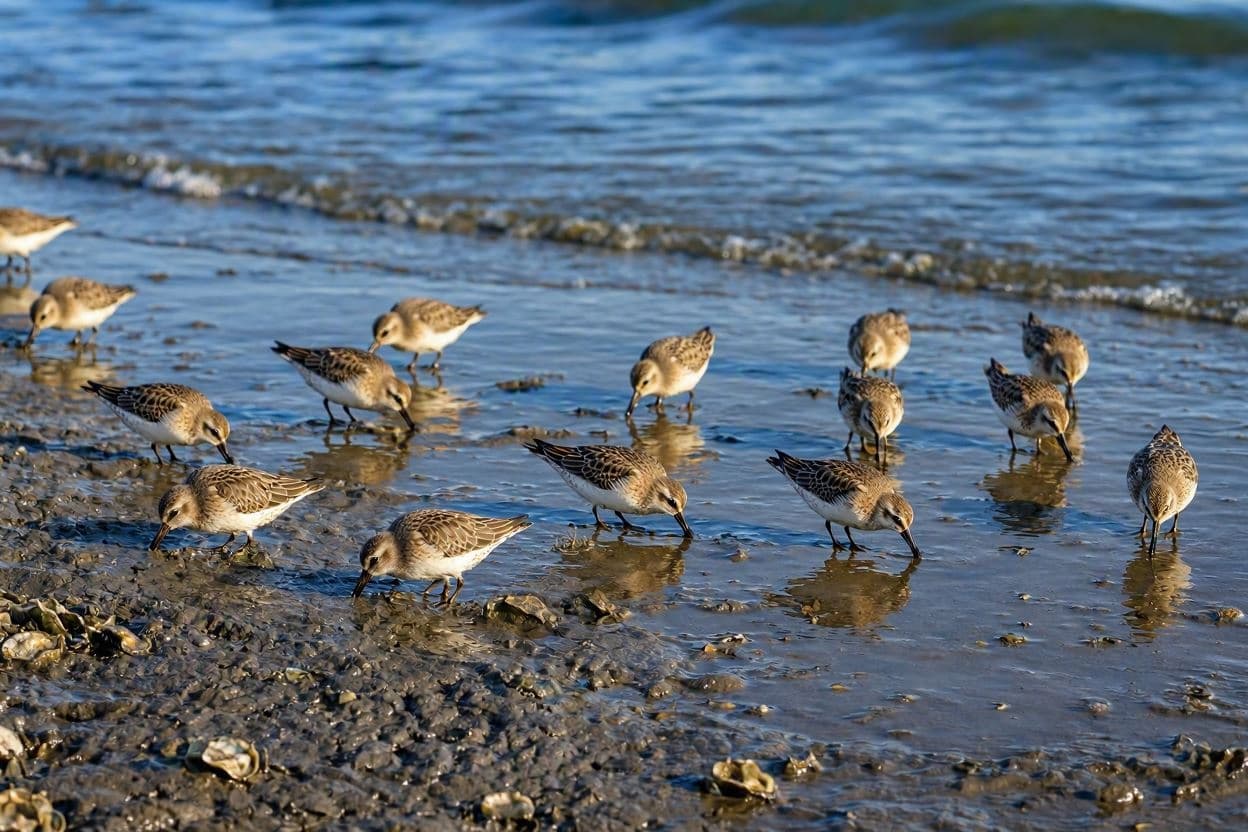
Along the edges where land meets sea, a delicate balance sustains life that has evolved over millennia to thrive in the intertidal zone. For migratory shorebirds, these coastal habitats are not just resting places but vital refueling stations on their epic journeys across continents. However, as global temperatures rise and oceans expand, this narrow band of life is being compressed, threatening the survival of species that depend on the rhythm of the tides.
Researchers have found that sea-level rise is creating a phenomenon known as "coastal squeeze." As waters encroach inland, natural barriers such as seawalls, roads, and urban development prevent habitats like salt marshes and mudflats from migrating upward. This trapping effect reduces the available area for feeding and nesting, leaving shorebirds with fewer options during critical migration periods. The loss of even small patches of habitat can have disproportionate effects on bird populations already stressed by other environmental changes.
The study highlights that 78 percent of reviewed research indicates negative impacts on shorebirds due to rising seas. Species such as the Western Snowy Plover and various sandpipers rely on exposed mudflats to forage for invertebrates. When these areas are submerged for longer periods or disappear entirely, the birds struggle to find enough food to sustain their energy-intensive flights. This nutritional deficit can lead to lower survival rates and reduced reproductive success.
Beyond the immediate loss of space, the quality of remaining habitats may also decline. Increased salinity and erosion can alter the composition of plant and animal communities, making them less suitable for shorebirds. The complexity of these ecosystems means that changes in one component can ripple through the entire food web, affecting everything from microscopic algae to larger predators. Understanding these dynamics is crucial for effective conservation planning.
Conservationists are exploring strategies to mitigate the effects of coastal squeeze. One approach involves "managed retreat," where human infrastructure is moved back to allow natural habitats to migrate inland. Another strategy is the restoration of degraded wetlands to increase their resilience to rising waters. These efforts require collaboration between scientists, policymakers, and local communities to balance ecological needs with human interests.
The urgency of the situation is underscored by the rapid pace of climate change. Projections suggest that sea levels could rise significantly within the next few decades, accelerating the loss of coastal habitats. Without proactive intervention, many shorebird species face an uncertain future. The window for action is narrowing, making it essential to implement adaptive management practices now.
Protecting these coastal zones is not just about saving birds; it is about preserving the health of the entire coastal ecosystem. Shorebirds serve as indicators of environmental quality, and their decline signals broader ecological distress. By safeguarding their habitats, we also protect the services these ecosystems provide, such as carbon sequestration and storm protection. In the end, the fate of the shorebirds is intertwined with our own.
AI Image Disclaimer: The visual elements in this article are AI-generated illustrations designed to represent coastal ecosystems and wildlife conservation.
Sources: EurekAlert!, PubMed, NOAA
Published by Banx Network. This article is part of the Banx decentralized media programme, powered by the BXE token on the XRP Ledger.