Out on the rangelands of Western Australia, where the earth radiates a rusty ochre in the late afternoon sun, ingenuity is moving quietly alongside old patterns of life and land. For generations, the vast pastoral stations that dot this remote landscape have wrestled with nature’s unpredictable rhythms — water shortages, blistering heat, ancient stone plains and the restless energy of feral goats that move across country as though following some unseen compass. Now, in an almost poetic melding of tradition and innovation, a nine-kilometre goat trap has been built at Murchison House Station that marries time-worn pastoral knowledge with modern technology.
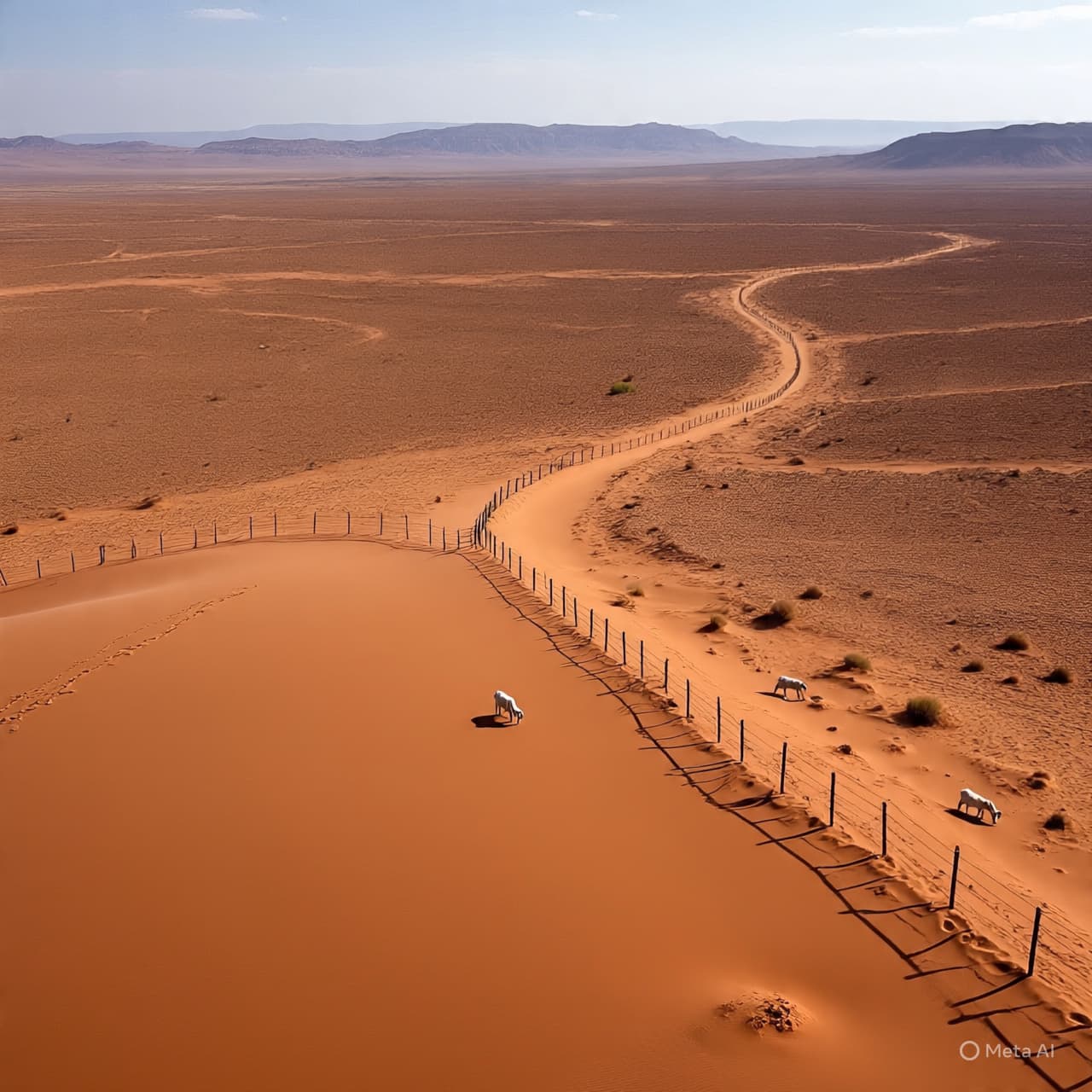
The structure itself is a testament to patient adaptation. A long linear fence of rock and earth, stretching like a silent ribbon across the red soil, it draws on the pastoral instinct to create enclosures where animals can be managed with care and intention. But woven into that age-old approach is an overlay of digital precision: ten entry gates that can be closed remotely via a smartphone connected across the miles, and a network of sensors that offers clues about where thirsty goats are moving on the hottest of days. Once enough animals have entered, the gates swing shut, and the herd is guided toward a holding yard for transport or sale.
The Carruth family, who have run Murchison House Station for more than three decades, speak of the trapyard not just as a tool of management, but as a gentle way of working with the land and its creatures. They recall the earlier days of mustering — the roar of helicopters and the nervous pace of motorbikes driving stock across the plains — and contrast it with the quiet effectiveness of the new yard. For staff and stock alike, the shift has meant lower stress, fewer risks, and a slower rhythm that seems closer to the pace of nature here.
Feral goats are not merely an abstract problem in these parts. Regarded as a pest under Western Australian agricultural law and widely distributed across the rangelands, they can alter fragile ecosystems and overgraze sensitive habitat if left unchecked. Yet in the same breath, they are also valued as livestock; goat meat fetches markets in Asia, the Middle East, and beyond. That duality, of problem and resource, has shaped pastoralists’ approaches for years.
Part of what makes this project stand out is the seamless way that cutting-edge technology has been grafted onto a method that is as old as pastoralism itself: trapping. Solar-powered antennas and a private meshing network transmit signals to open or close gates from the station homestead, reducing the need to chase stock across country and freeing up precious time and labour. It is, as one collaborator described it, familiar radio frequency communication — “like wi-fi on the land,” — but adapted to the unique demands of remote rangeland mustering.
Beyond this station’s boundaries, the Carruths believe that what they have built could offer a template for other remote regions grappling with feral animals such as pigs or camels. There is a quiet optimism in the way they speak of the future — one where technology supports careful stewardship of the wild spaces they call home.
In the Last Light of an outback day, as the low sun turns the fence lines to gold, the goat trap becomes more than a tool: it becomes a symbol of the thoughtful blending of old wisdom and new possibility, a gentle way of shaping coexistence between human hands and the rhythms of the land.
AI Image Disclaimer “Illustrations were produced with AI and serve as conceptual depictions.”
Sources ABC News News Minimalist WA Department of Primary Industries & Regional Development case study
Published by Banx Network. This article is part of the Banx decentralized media programme, powered by the BXE token on the XRP Ledger.