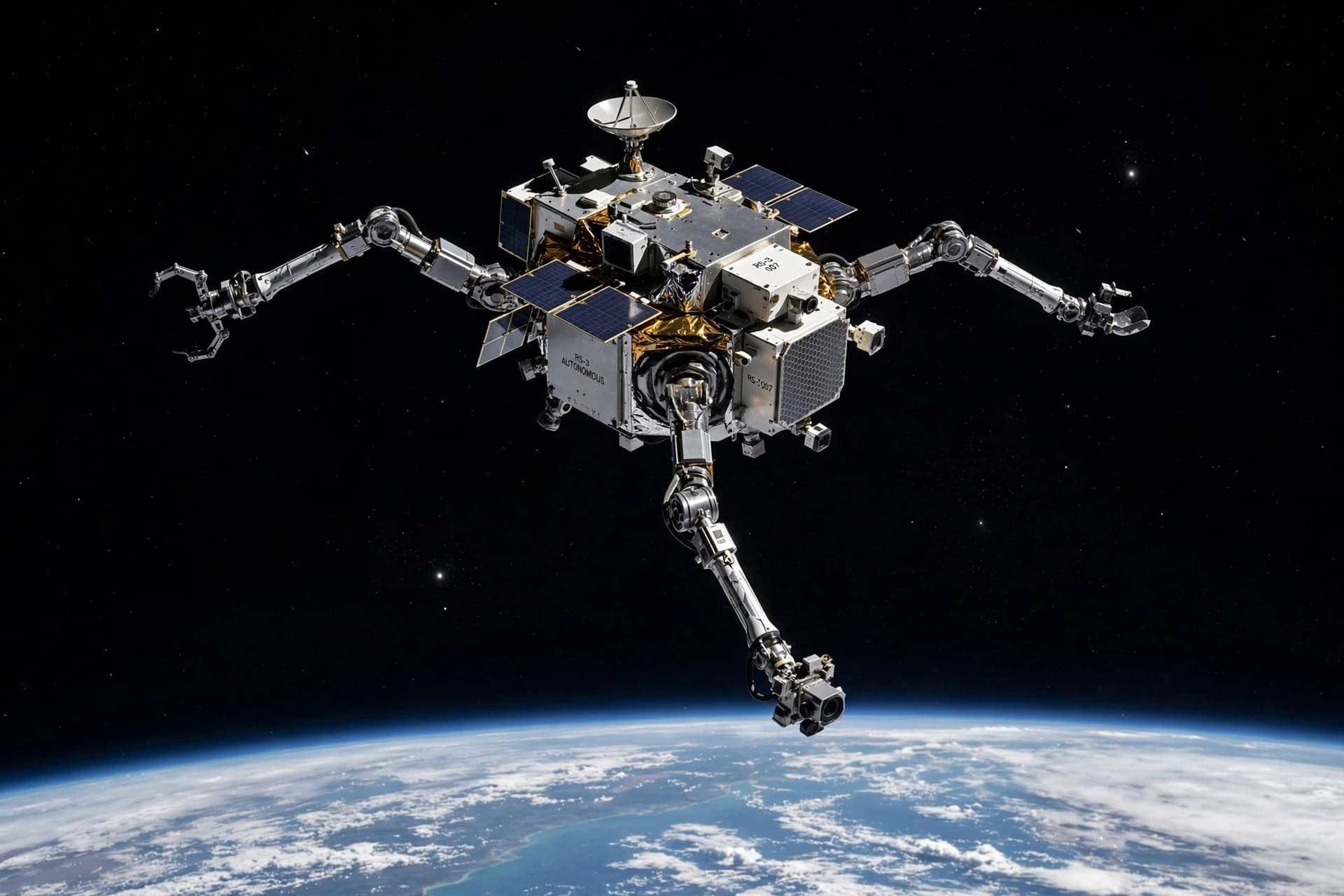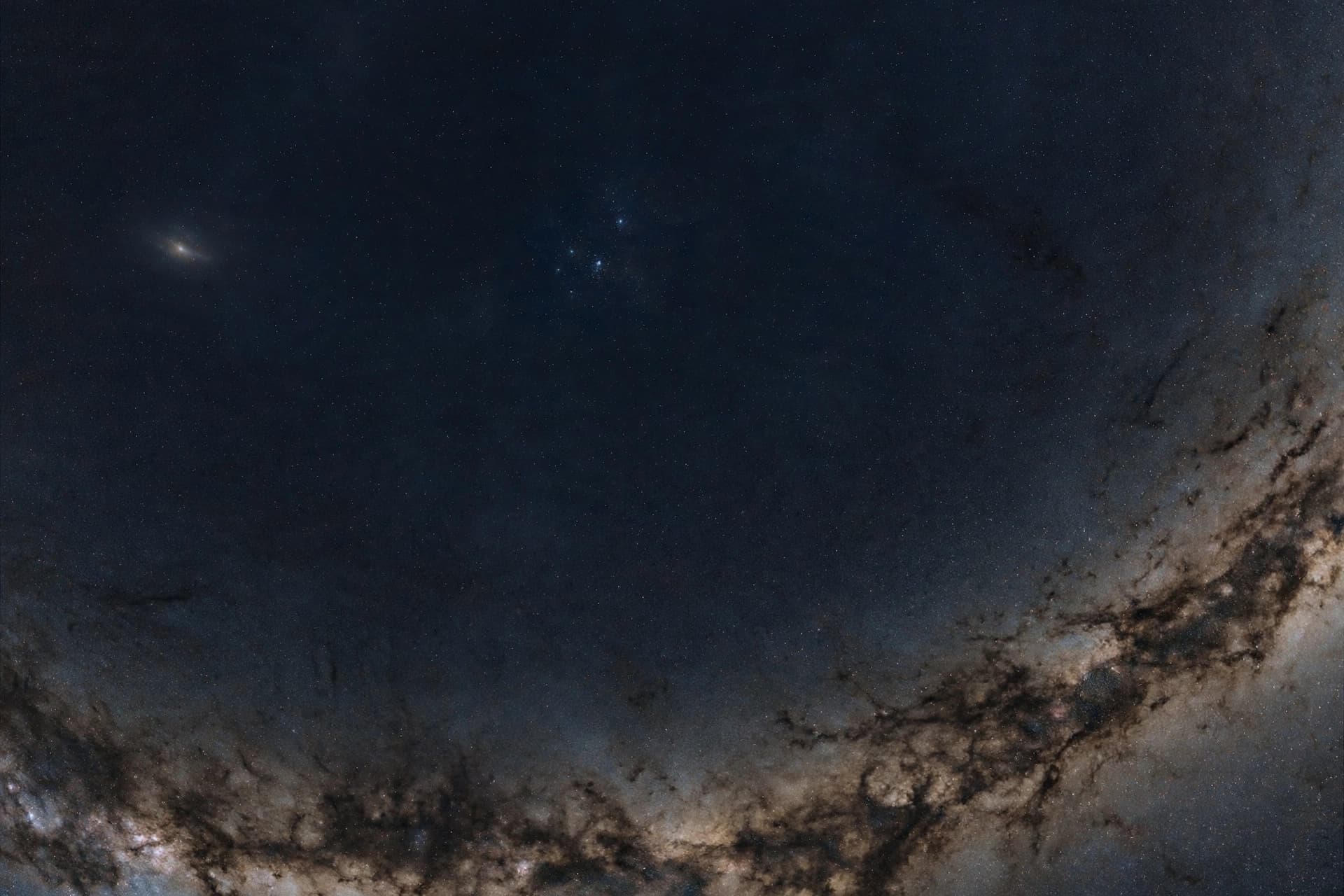
There is a peculiar poetry to the way the universe organizes itself—not as a neat hierarchy of orbits, but as a nested series of dependencies, each one defined by what it circles, each one smaller than the last. Moons orbit planets. Planets orbit stars. Stars orbit galaxies. And sometimes, if the data is right, a galaxy orbits a galaxy that orbits another galaxy, a chain of belonging that stretches across millions of light-years.
Astronomers using the European Space Agency's Euclid space telescope have discovered an exceptionally faint stellar system near the Fornax dwarf galaxy, a small companion to our own Milky Way. The system, called Fornax-7, contains only about 170 suns' worth of stars—a mere whisper of a galaxy, barely visible against the dark . Its proximity to Fornax suggests it may be gravitationally bound to the dwarf galaxy, which itself orbits the Milky Way. If confirmed, Fornax-7 would be a "satellite of a satellite"—a galaxy orbiting a galaxy orbiting a galaxy .
The phrase itself is strange, almost whimsical, but it describes something real. The universe is full of these nested structures, and the faintest among them are the hardest to find. Fornax-7 is what astronomers call an "ultra-faint dwarf"—a system so dim and diffuse that it was likely missed by earlier surveys. Euclid's sensitivity made the discovery possible, peeling back a layer of cosmic obscurity that had hidden this tiny collection of stars.
The discovery is not merely a curiosity. Ultra-faint dwarfs are among the most ancient and chemically primitive galaxies known, relics of a time when the universe was young and the first stars were forming. Because they are so small, they have largely avoided the mergers and interactions that reshape larger galaxies. Their stars preserve a record of the early cosmos, a kind of fossil record written in starlight.
Whether Fornax-7 is truly bound to Fornax remains to be confirmed. Proximity alone does not guarantee gravitational attachment; the two systems could simply be passing near each other on independent orbits. But if the connection holds, it would make Fornax-7 one of the smallest known satellites of a satellite—a designation that carries no small significance for understanding how structure forms on the smallest scales.
There is something quietly moving about this discovery, if one pauses to consider it. We live on a planet orbiting a star, in a galaxy that is itself part of a local group, itself part of a larger structure. To find a galaxy orbiting a galaxy orbiting a galaxy is to see our own situation reflected back at us, smaller and larger at once. The universe is not a flat canvas but a series of boxes within boxes, each one containing something that belongs to something else. Fornax-7 is a reminder that belonging is not about size. It is about gravity, and time, and the quiet pull of things that hold each other in place.
AI Image Disclaimer: All visuals in this article are AI-generated and are for illustrative purposes only.
Sources: Phys.org, Euclid Space Telescope, Flipboard
Published by Banx Network. This article is part of the Banx decentralized media programme, powered by the BXE token on the XRP Ledger.