There are missions that succeed in reaching their destination and missions that succeed in teaching something. The LINK spacecraft, launched in July on a daring attempt to rescue a decaying NASA observatory, did the latter—and on September 25, it returned to Earth in a final, silent descent that marked the end of both the mission and, soon, the telescope it tried to save.
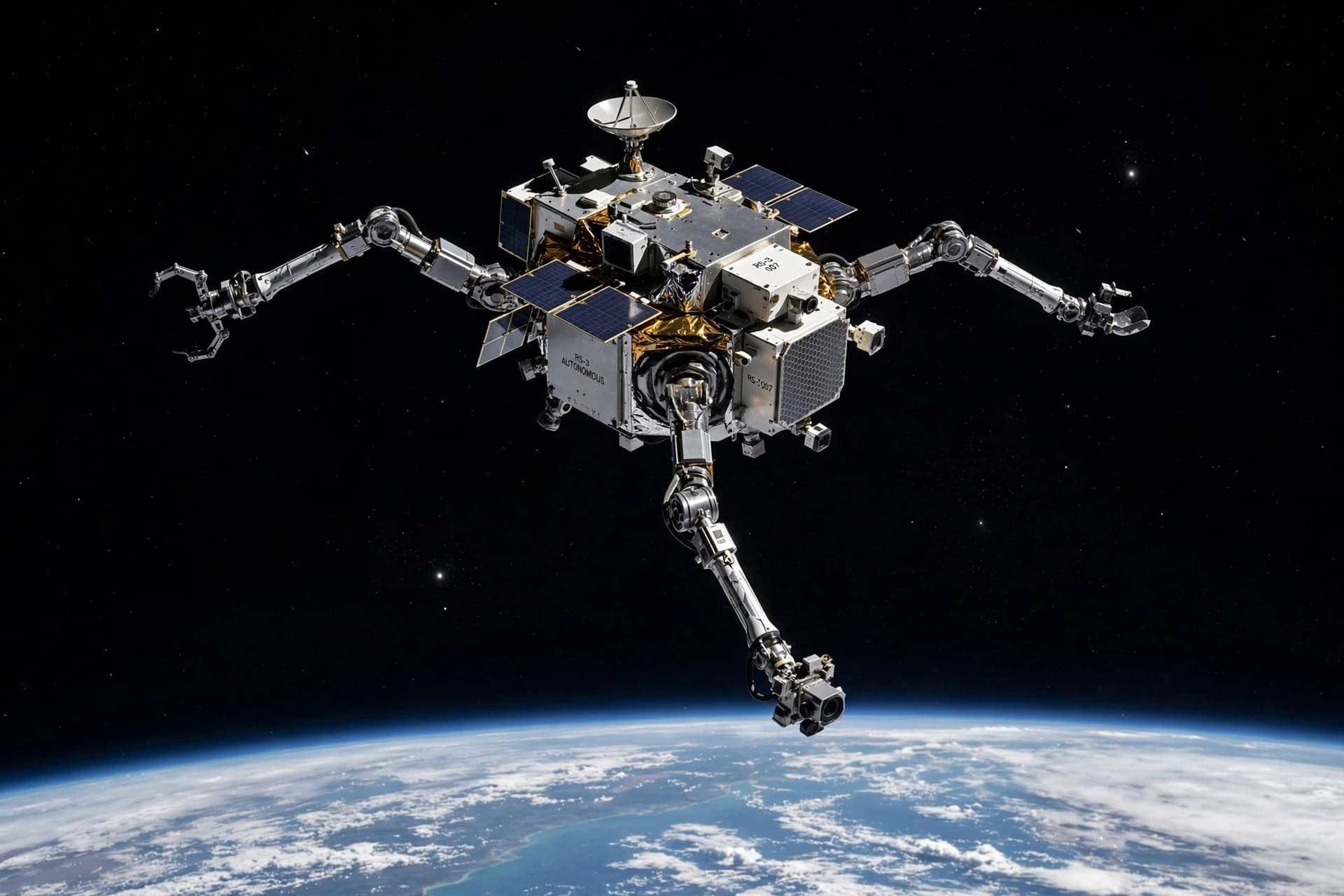
LINK, developed by Katalyst Space Technologies under a $30 million NASA contract, re-entered the atmosphere after 85 days in orbit. It had been built in less than a year to capture the 22-year-old Neil Gehrels Swift Observatory and boost it to a higher orbit, extending its life by years. The rescue craft got as close as 12 to 15 kilometers to Swift and photographed the observatory, but a series of technical failures prevented the capture .
The problems began almost immediately after launch. An electrical fault disabled two of LINK's three reaction wheels, which control orientation. Then a valve malfunction sent the spacecraft into a fast spin that disrupted communications. Engineers regained limited control using thrusters, but the recovery consumed the propellant needed for the capture maneuver. In August, NASA and Katalyst jointly announced the rescue attempt was over .
"We knew this was a high-risk, high-reward mission—a first-of-its-kind attempt, developed on an unprecedented timeline," said Shawn Domagal-Goldman, director of NASA's Astrophysics Division . The urgency came from the sun itself: increased solar activity had expanded Earth's upper atmosphere, accelerating drag on Swift and pushing it toward an earlier-than-expected re-entry .
Swift, launched in 2004 at a cost of approximately $500 million, has studied gamma-ray bursts and other cosmic phenomena for over two decades, far exceeding its planned two-year mission. NASA suspended observations earlier this year and repositioned the telescope to minimize atmospheric drag, buying time for the rescue attempt. After the rescue failed, Swift resumed scientific operations in August and continues scanning the universe with its remaining weeks .
The observatory is expected to re-enter Earth's atmosphere in November. Most of it will burn up on descent. "While we'll be sad to see Swift's mission come to a close, we knew this boost effort would be worthwhile either way," Domagal-Goldman said. It provided valuable practice for future satellite-rescue missions, he added, pushing teams to work against the clock "like never before" .
Katalyst CEO Ghonhee Lee said the company will "draw on all the lessons learned to apply to future satellite recovery efforts" . For a first attempt at commercial satellite servicing, the mission advanced the technology even as it failed its primary objective—a reminder that in space, even the unsuccessful journeys leave something behind.
---
AI Image Disclaimer: The images in this article were created using artificial intelligence and are for illustrative purposes only.
Sources: Science, Reuters, The Guardian, AP News, NASA, Katalyst Space Technologies
Published by Banx Network. This article is part of the Banx decentralized media programme, powered by the BXE token on the XRP Ledger.