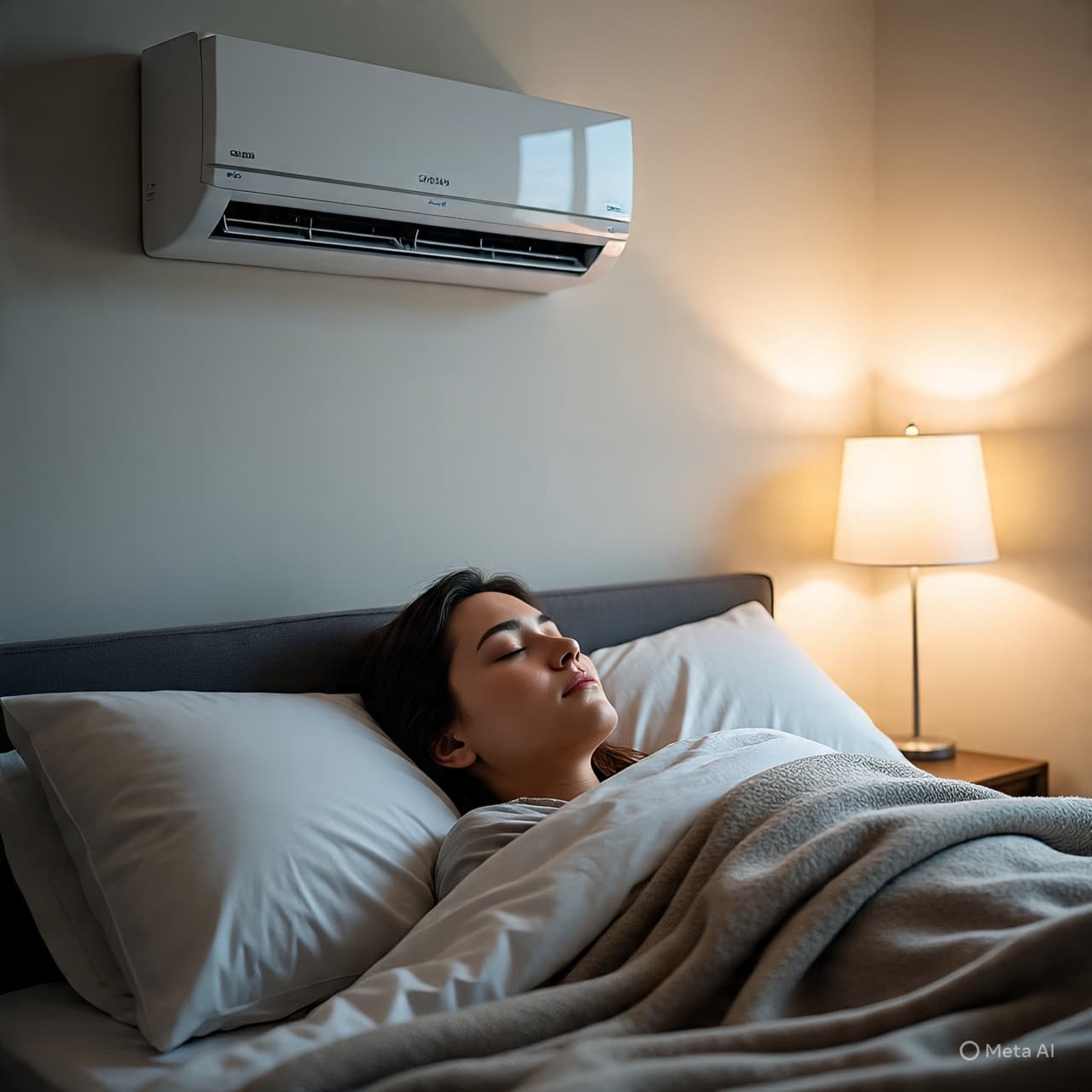
Opening Article: There’s a gentle poetry in how the body works through the night — a quiet choreography of rest and repair that hums beneath the stillness of deep sleep. For many of us, the hum of an air conditioner is part of that night: a soft breeze, a cool refuge from heat and humidity. But on social feeds and in whispered health myths, a new worry has emerged — that this cool air might somehow hinder one of the body’s important overnight tasks: the liver’s recovery and detox. Such ideas carry weight because they nudge at something basic we all care about — the harmony between environment and our inner rhythms. Yet when we look for scientific grounding, the scene begins to resemble more of a calm dawn than a storm of evidence.
Article Body: The claim circulating online suggests that sleeping in a cold, air-conditioned room slows the liver’s detoxification and repair, because the body’s focus, it is said, shifts toward preserving heat. This story was popularized in a viral reel but, when examined closely, it departs from what controlled studies have shown. In fact, there is no human research demonstrating that typical air-conditioned sleep directly impairs liver detox cycles or recovery processes at night.
Scientific evidence about cold exposure and liver stress comes mostly from animal studies, often involving extreme temperatures that do not reflect ordinary bedroom conditions. For example, mice or rats exposed to intense cold for hours show signs of stress in liver cells — things like increased oxidative activity or inflammation — but these settings are far removed from what people experience with a household AC. Those studies do help scientists understand basic physiology, but they do not tell us that a cool sleeping room derails the liver’s nightly work in everyday life.
Health experts such as hepatologists emphasize that the liver functions constantly, around the clock, and its basic tasks — filtering blood, metabolizing nutrients, and processing chemicals — do not “turn off” or slow meaningfully just because the air in a bedroom is cool. Sleep quality, overall nutrition, stress levels, and lifestyle patterns have far greater influence on liver function than ambient room temperature.
That said, sleeping in very cold conditions can influence how comfortable you are at night. Air conditioning removes moisture from the air and can make the skin and airways feel dry, sometimes leading to nasal irritation or stiffness upon waking. Temperatures that are too low may disturb sleep or cause muscle tension — effects tied to comfort, not directly to the liver’s metabolism.
In fact, moderate coolness in the bedroom can improve sleep onset and continuity for many people, helping deepen rest without suggesting any internal organ is failing. Sleep itself — restful, uninterrupted — supports many aspects of body repair, including metabolic regulation that involves the liver in a holistic way.
Closing Article: In straightforward terms, there is no credible evidence that sleeping in a cold, air-conditioned room slows liver detoxification or recovery. The popular idea that cool air at night diverts the body’s energy away from liver repair is not supported by scientific research in humans. What does matter more for liver health is sleep quality, diet, physical activity, and avoidance of toxins like excessive alcohol. Cool air may affect comfort and hydration, but it doesn’t stop the body’s internal rhythms or the liver’s ongoing work through the night.
AI Image Disclaimer
“Graphics are AI-generated and intended for representation, not reality.”
Credible sources found:
1. The Week (fact check health) — clears up the claim scientifically. 2. Times of India — discusses general health effects of overnight AC sleep. 3. India Today / related health features — outlines air conditioning effects. 4. Kompas TV (via reportage on AC sleep and body homeostasis). 5. ANTARA News (benefits and sleep quality with cool rooms).
Published by Banx Network. This article is part of the Banx decentralized media programme, powered by the BXE token on the XRP Ledger.