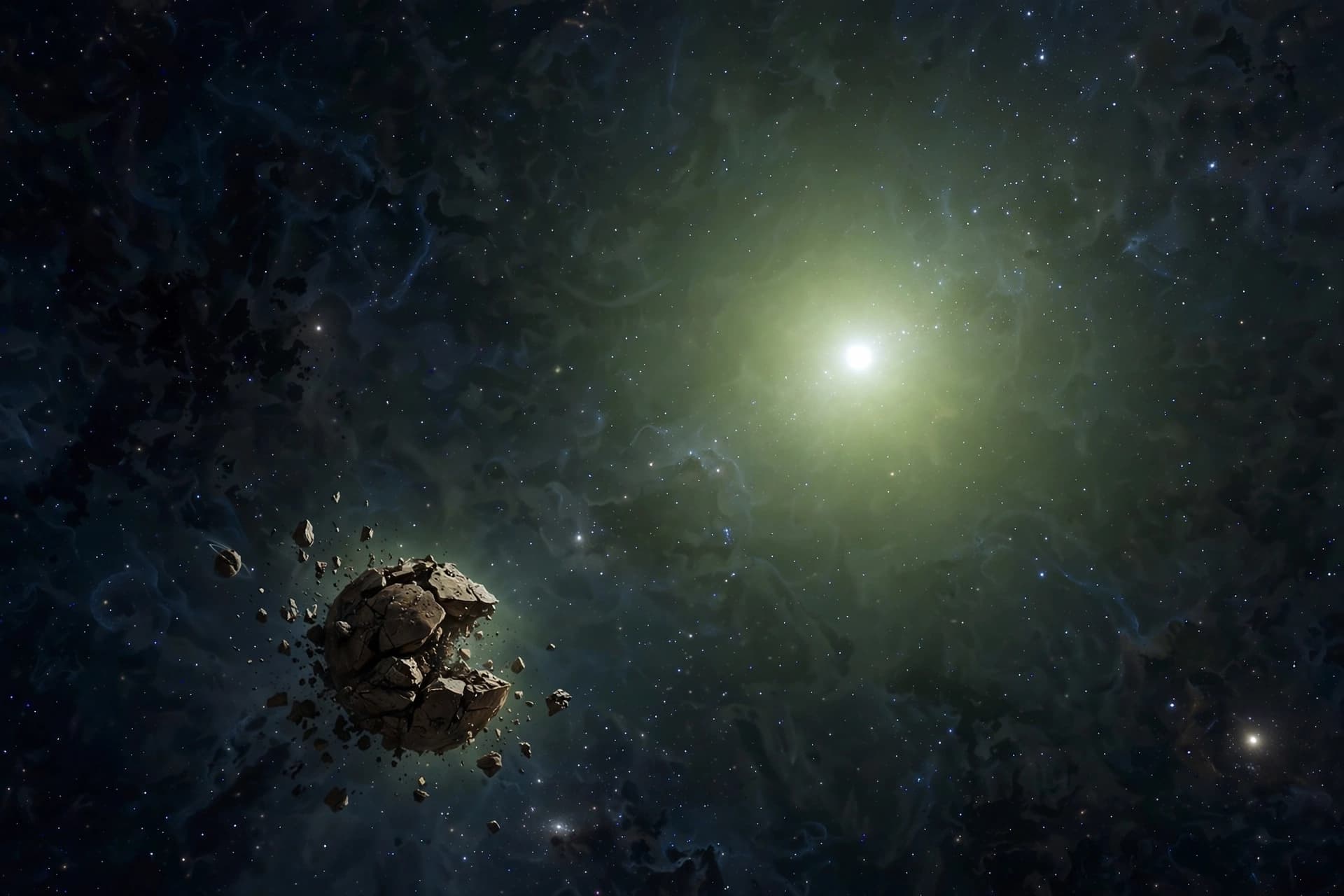
In the long sweep of celestial time, our Moon has often seemed immutable—an unchanging companion in quiet orbit around Earth. Yet beneath its serene surface lies a story of ongoing transformation, subtle but persistent. Recent research reveals that the Moon is still slowly shrinking, a process that could ripple outward in unexpected ways and help explain the lunar tremors known as moonquakes.
Just as a cooling kettle’s metal contracts with falling temperature, the Moon’s interior has gradually shed heat since its fiery birth 4.5 billion years ago. This cooling causes the lunar crust to compress and crack, much like the wrinkling of a drying grape into a raisin. Over immense spans of time, that shrinking has produced faults—cliffs and ridges where one section of crust has been pushed over another.
Scientists have long known that the Moon experienced moonquakes, thanks in part to seismometers left behind by Apollo missions. These tremors come in different types: deep quakes driven by Earth’s tidal pull, impacts from meteoroids, thermal stress from temperature swings, and shallower quakes linked to tectonic stresses as the Moon contracts.
A new global map of subtle geological features in the Moon’s dark plains shows thousands of previously uncharted ridges formed by compressional stresses. These small ridges and larger thrust faults act as potential sites for shallow moonquakes, gently reshaping scientists’ understanding of lunar geology and where future quakes might occur.
Just as fractures form in cooling clay, the Moon’s crust breaks and bends over time. Unlike Earth, whose tectonic plates slide and collide, the Moon’s crust is a single continuous shell. The stress from contraction builds until it is relieved in the form of seismic tremors—moonquakes that can last for minutes and, in some models, reach magnitudes significant enough to shift surface material.
These findings have practical implications. Regions of the Moon that scientists once thought quiescent may be more active than expected. In the lunar south polar areas, where future missions like NASA’s Artemis program aim to explore and perhaps establish longer-term presence, the potential for moonquake shaking and even regolith landslides is now part of planning discussions.
Yet the Moon’s gradual shrinkage does not portend upheaval on human scales. Its contraction is slight—measured in tens of meters over hundreds of millions of years—and its moonquakes, while intriguing, are part of the natural evolution of a cooling body.
In essence, the Moon’s subtle tectonic heartbeat offers both a reminder of its dynamic nature and a prompt for future study—one that will help scientists and explorers alike prepare for what lies beneath the dust and silence of our nearest celestial neighbor.
AI IMAGE DISCLAIMER Visuals are created with AI tools and are not real photographs.
SOURCE CHECK
Credible science reporting exists on this topic from multiple established outlets:
Smithsonian / ScienceDaily (research release) NASA (official planetary science explanation) Washington Post (science coverage) NDTV (science news) The Planetary Society (education and science explanation)
Published by Banx Network. This article is part of the Banx decentralized media programme, powered by the BXE token on the XRP Ledger.