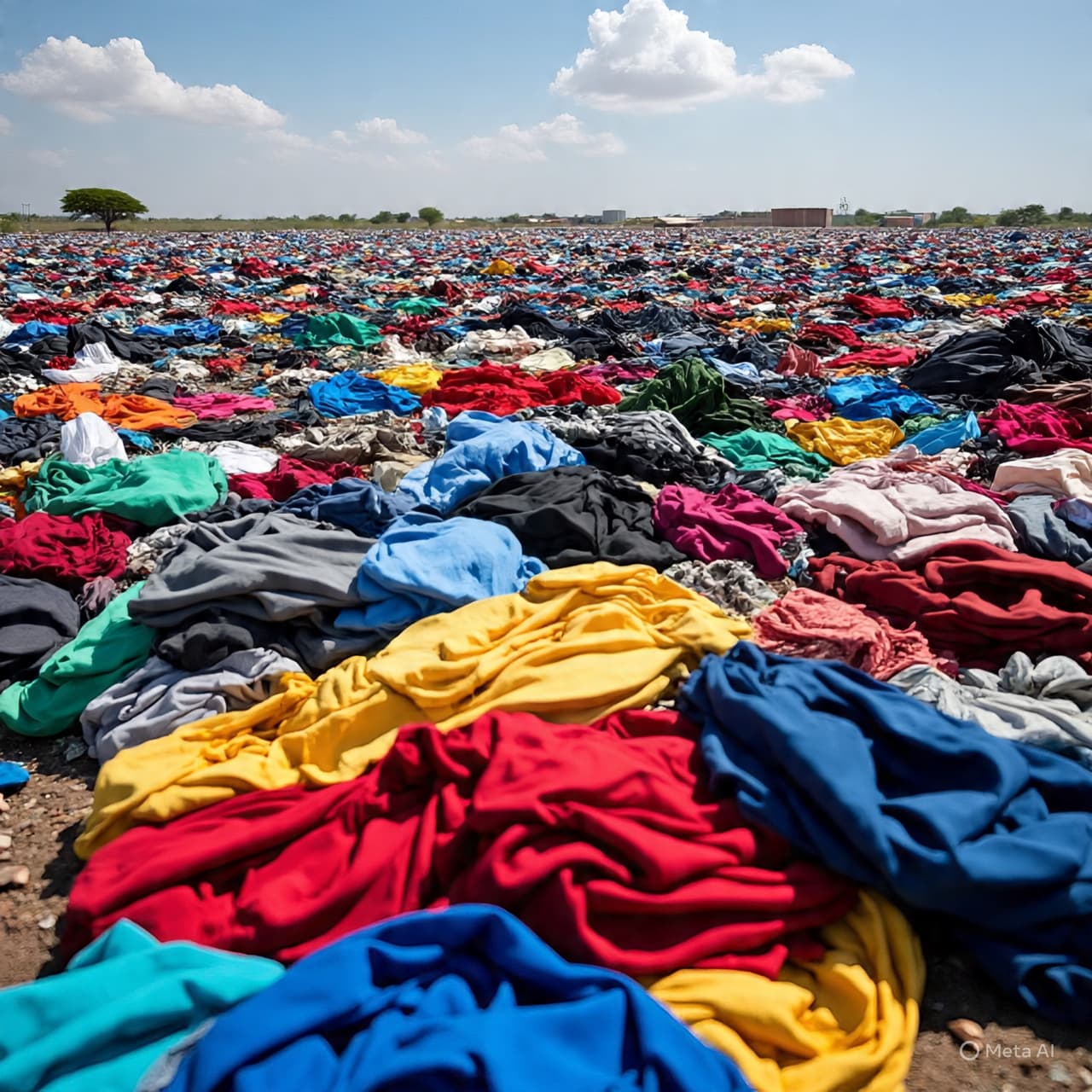
They arrive folded in promise — shirts, jeans, dresses once worn with affection, boxed and shipped with the word “donation” stamped on the side. But when they reach the ports of Mombasa and the open markets of Nairobi, that promise begins to unravel. In Kenya, the goodwill of the Global North has turned into a textile tide that no one can quite stem.
Each year, roughly 185,000 tons of used clothing flow from Europe and the United States into Kenya, much of it under the banner of aid. Yet, up to 40% of these garments — torn, stained, or unsellable — never find a second wearer. Instead, they pile up on riverbanks, burn in open fields, or choke local dumps, turning parts of Nairobi and coastal towns into vast textile graveyards.
To confront this paradox, environmental activists staged a “waste fashion” show — models draped not in couture but in shredded polyester and denim fragments, walking amid heaps of discarded fabric. The event was both a spectacle and a lament, captured in the documentary Wasteland, which reveals the hidden life of global consumer waste.
Organizers said the aim was not to shame generosity but to expose its shadow. Behind every bag of donated clothes is a supply chain of disposal, where fast fashion’s overproduction finds a final resting place far from the boutiques it came from. “What we see here is the cost of cheap compassion,” one activist said. “We receive what the world no longer wants.”
Kenyan traders who once thrived on secondhand imports now struggle to sift the usable from the unusable. For every bale of wearable items, there are mounds of textile garbage that must be burned or buried — often without environmental controls. The smoke and runoff seep into daily life, contaminating air and soil alike.
As calls grow for more responsible fashion cycles, activists and filmmakers alike say the answer lies in accountability. True generosity, they argue, begins not with shipping used clothes abroad, but with slowing down the creation of disposable ones.
Closing Kenya imports about 185,000 tons of used clothing annually, with up to 40% deemed unwearable and ending up as waste. The “waste fashion” show, featured in the film Wasteland, draws attention to how Western textile donations are overwhelming local environments. Environmental advocates are urging reforms in global fashion and donation systems to address the growing crisis.
AI Image Disclaimer Visuals are created with AI tools and are not real photographs.
Sources Reuters BBC News The Guardian Al Jazeera Associated Press
Published by Banx Network. This article is part of the Banx decentralized media programme, powered by the BXE token on the XRP Ledger.