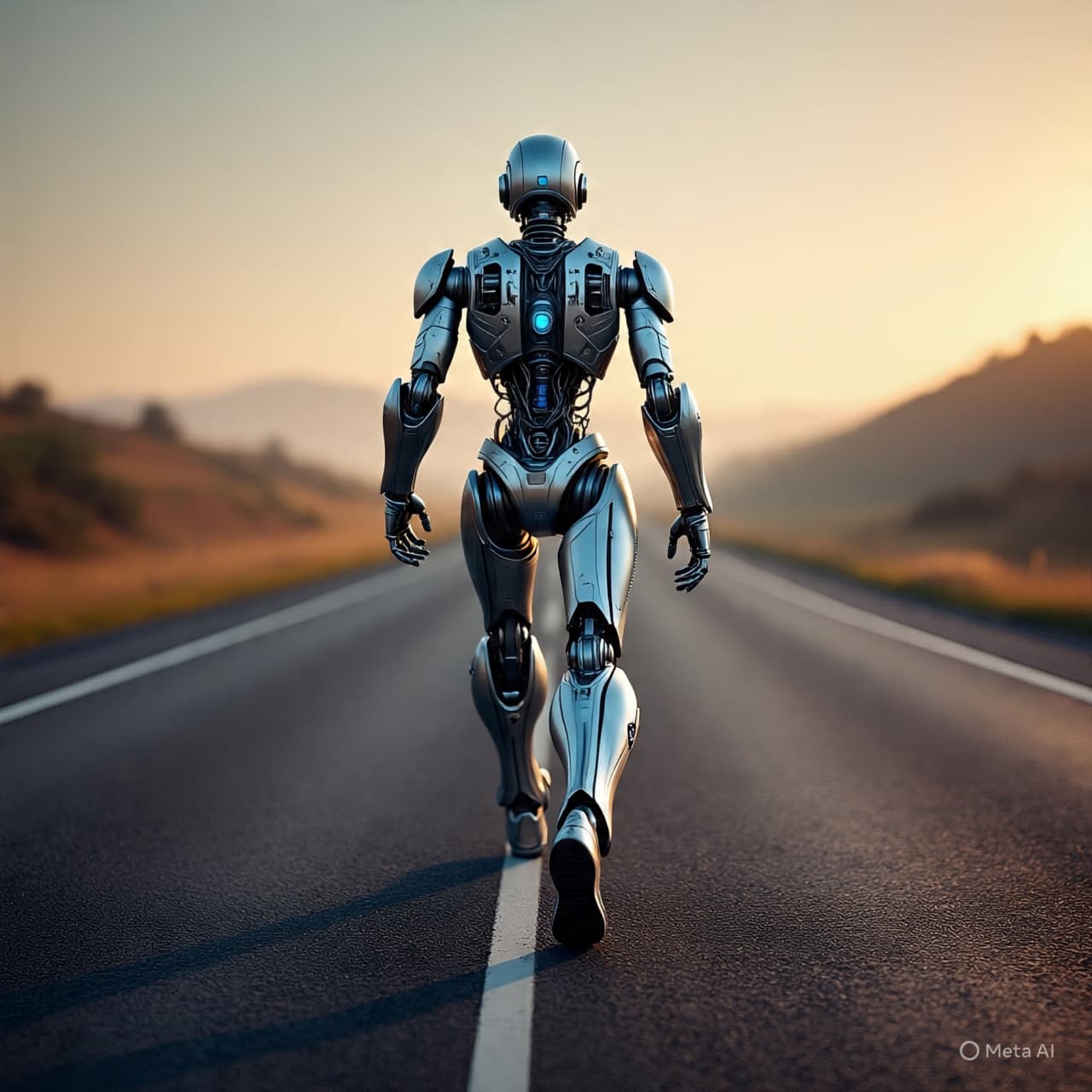
There is something quietly cinematic about a machine taking a journey meant for humans. No crowds, no applause — just steady footsteps tracing a long ribbon of road. That was the quiet drama behind China’s AgiBot A2 humanoid robot, which walked more than 106 kilometers without stopping, setting a new world record for distance traveled by a robot on foot.
The feat unfolded like a patient experiment in endurance. Engineers from AgiBot designed the A2 to mimic the balance and momentum of human walking, but even they seemed surprised by how effortlessly it kept going. Equipped with layered perception systems — cameras, LiDAR, depth sensors — the robot navigated real terrain rather than a closed test track. Streets, slopes, changing ground textures, and shifting light conditions became part of its moving classroom.
The walk was not just about distance; it was a test of resilience. With a hot-swappable battery system, the robot never had to shut down. The process looked almost seamless: a brief pause, a new energy pack, and then the march resumed. No rest, no recalibration, no drama. Just movement.
For years, the robotics industry has spoken about “embodied intelligence” — the idea that machines must learn through navigating the physical world, not just processing simulations. The A2’s journey reflects exactly that shift. It wasn’t a lab-tuned prototype crafted solely for demonstrations. It was a commercial unit, the same kind a customer could order. After more than a hundred kilometers, engineers reported only minor wear on the rubber pads of its feet. The internal systems remained stable, suggesting reliability beyond a headline achievement.
In an era where humanoid robotics is evolving from concept to competition, this walk signals something larger: a maturing confidence in real-world deployment. Endurance is more than a number; it is a prerequisite for usefulness. A robot that can walk without faltering becomes relevant to logistics, inspections, and a host of tasks that require constant mobility.
And yet the story still feels symbolic. A lone robot walking a long road hints at the future we are constructing — one step at a time, metal meeting pavement, quietly reshaping what we believe robots can do.
Published by Banx Network. This article is part of the Banx decentralized media programme, powered by the BXE token on the XRP Ledger.