AI Is Moving Beyond the Screen
The first wave of artificial intelligence was largely digital.
AI learned to analyse information, generate text and images, recognise patterns, write software and interact with humans through computers and smartphones. The next stage is considerably more physical.
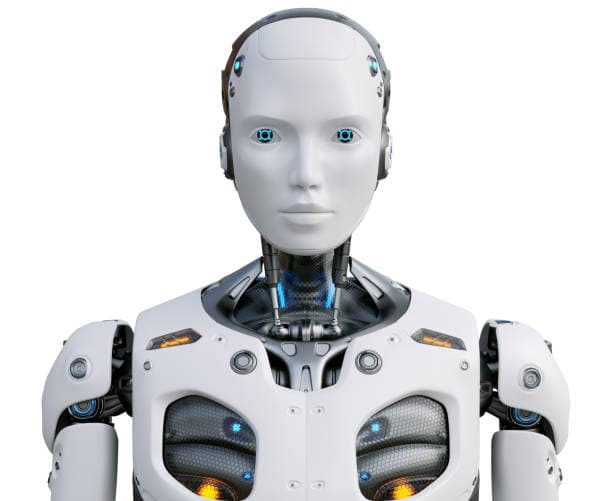
Humanoid robots are designed to bring AI into the real world.
With two arms, two legs, cameras, sensors and increasingly sophisticated software, these machines are being developed to navigate environments originally designed for humans.
That distinction is important.
Factories, warehouses, offices and homes have already been built around the human body. Doors, stairs, shelves, tools and workstations are generally designed for people rather than machines.
Instead of rebuilding entire environments for specialised robots, humanoid developers are attempting to create machines capable of operating within the environments that already exist.
This is one of the reasons the technology has attracted significant attention from manufacturers and technology companies.
But the transition from impressive demonstration to economically viable mass deployment remains a substantial challenge.
Humanoid Robots Are Already Entering Factories
The idea of humanoid robots working alongside people may sound futuristic, but industrial trials are already underway.
BMW has been experimenting with humanoid robots in vehicle production. In a 2025 pilot at its Spartanburg plant in the United States, Figure 02 helped position sheet-metal components used in vehicle production.
According to BMW, the robot operated for approximately 1,250 hours over ten months, moved more than 90,000 components and contributed to production involving more than 30,000 BMW X3 vehicles. BMW has subsequently expanded its humanoid-robot work to its Leipzig plant.
Mercedes-Benz has also been testing humanoid robotics.
The company announced work with Apptronik involving Apollo, a humanoid robot designed for industrial environments. Mercedes-Benz has been investigating potential applications including repetitive manufacturing tasks within its production network.
These examples represent something more significant than demonstrations at technology exhibitions.
They show manufacturers testing whether humanoid machines can perform useful tasks inside real production environments.
Why Build a Robot That Looks Human?
A natural question follows:
Why make robots humanoid at all?
After all, a machine with wheels may be cheaper and more efficient than a machine with two legs.
The answer is flexibility.
A traditional industrial robot can be extremely effective when performing one clearly defined task. Robotic arms can weld, paint, assemble and move components with extraordinary precision.
But they are usually designed around a specific environment.
Humanoid robots are being developed with a different objective: adaptability.
A sufficiently capable humanoid could potentially move between workstations, manipulate different objects, use existing tools and perform several different tasks without requiring an entirely new robotic infrastructure.
That could become particularly valuable in industries where production lines change frequently.
The goal isn't necessarily to create a machine that is better than humans at everything.
It is to create a machine capable of performing a broad range of tasks without requiring an environment to be redesigned specifically for it.
The Real Breakthrough Could Be Physical AI
The most important technology behind humanoid robots isn't necessarily the mechanical body.
It is the AI controlling it.
A modern humanoid needs to understand its surroundings, identify objects, interpret instructions, plan movements and respond to unexpected situations.
This creates a new category of technology sometimes referred to as physical AI.
Instead of an AI system simply answering:
"What should I do?"
A physical AI system needs to answer:
"What should I do, where should I move, what should I pick up, how should I manipulate it and what should I do if something changes?"
That is a much harder problem.
The system has to connect perception, reasoning and physical movement in real time.
Progress in computer vision, machine learning, simulation, sensors and increasingly capable AI models is helping robotics companies tackle that challenge.
If these systems become sufficiently reliable, the implications could extend far beyond factories.
Warehouses Could Become Another Major Market
Logistics is another obvious application.
Modern warehouses contain enormous numbers of repetitive physical tasks.
Workers may repeatedly:
Move boxes Pick products Sort inventory Load and unload goods Transport materials Replenish shelves Inspect products
Many of these tasks are physically demanding and repetitive.
Humanoid robots could potentially perform some of them while operating within facilities designed for people.
However, the economics remain uncertain.
Gartner predicted in January 2026 that fewer than 20 companies would scale humanoid robots into production-stage manufacturing and supply-chain deployments by 2028. The firm also highlighted challenges involving cost, reliability, battery life, dexterity and integration with existing systems.
That provides an important reality check.
The technology may be advancing rapidly, but widespread adoption is not guaranteed simply because the robots look impressive.
The Economics Will Matter More Than the Hype
Ultimately, businesses don't purchase robots because they are futuristic.
They purchase them because the economics make sense.
A company considering a humanoid robot will have to compare the machine's:
Purchase or leasing cost Energy consumption Maintenance requirements Reliability Operating hours Productivity Safety requirements Integration costs Software costs
against the economic value of the work it performs.
A robot that can work continuously but requires frequent repairs may not provide a compelling return.
Likewise, a robot that performs a task slower than a conventional machine may not justify its higher complexity.
This is why the next stage of the robotics industry may be less about spectacular demonstrations and more about measurable productivity.
A New Robotics Business Model
Humanoid robotics could also create entirely new business models.
Instead of purchasing robots outright, businesses could eventually pay for robotic labour as a service.
A factory might effectively purchase a certain number of hours of robotic capacity rather than buying a machine.
That could transform robotics from a capital expenditure into something closer to an operational service.
Software could become another major revenue stream.
As robots become more capable, their behaviour may increasingly depend on software updates, AI models and cloud infrastructure.
The result could be a robotics industry that combines elements of automotive manufacturing, cloud computing and software subscriptions.
The hardware gets the robot into the building.
The software determines what the robot can actually do.
The Manufacturing Industry Is Already Looking Ahead
Some manufacturers are beginning to plan beyond small pilot programmes.
In April 2026, Hexagon and Schaeffler announced plans for at least 1,000 AEON humanoid robots to be deployed across Schaeffler's global factory network by 2032, following a pilot programme.
That does not mean thousands of humanoids will suddenly replace existing manufacturing workforces.
Rather, it demonstrates how the technology is beginning to move from experimentation toward long-term industrial planning.
The distinction is important.
The robotics industry is still determining where humanoids make economic sense.
Humanoids Won't Necessarily Replace Every Robot
There is also a misconception that humanoid robots will eventually replace all other forms of automation.
That is unlikely to be the simplest outcome.
Different machines are suited to different environments.
A wheeled autonomous robot may be much more efficient at transporting goods across a warehouse.
A robotic arm may be superior at repetitive assembly.
A specialised machine may outperform a humanoid at a single high-volume manufacturing task.
Humanoids become particularly interesting when flexibility is more valuable than pure task efficiency.
The future factory could therefore contain multiple types of robots working together rather than millions of identical humanoids.
The Workforce Question
The economic consequences could eventually become significant.
If humanoid robots become capable of performing a growing number of physical tasks, companies could automate activities that currently depend heavily on human labour.
That could affect manufacturing, logistics, construction, retail and eventually parts of the service economy.
But the impact on employment would depend on several factors.
Automation can eliminate certain tasks while simultaneously creating demand for others.
The expansion of robotics could create jobs involving:
Robot maintenance AI development Robotics engineering Fleet management Safety Simulation Robot training Hardware manufacturing Data infrastructure
The key question may therefore not simply be whether robots replace workers.
It may be which tasks become automated, which new tasks emerge and how quickly workers and businesses adapt.
The Home Robot Is the Bigger Prize
Factories may be the first major commercial market.
But the home could ultimately represent a much larger opportunity.
Imagine a robot capable of:
Cleaning rooms Carrying objects Loading a dishwasher Preparing basic food Helping elderly people Moving heavy objects Organising household items
The technical requirements would be significantly higher than those of a controlled factory environment.
A home is unpredictable.
Furniture moves. Children leave objects on the floor. Pets walk around. Rooms have different layouts. People behave unpredictably.
A household robot would need an extraordinary level of perception, reasoning and physical dexterity.
That is why a genuinely capable domestic humanoid remains a longer-term possibility rather than an established mass-market product.
What Could the 2030s Look Like?
If development continues, the 2030s could become an important period for commercial humanoid robotics.
The most plausible early expansion would likely occur in controlled environments.
Factories, distribution centres and other structured workplaces provide predictable conditions where companies can carefully define tasks and safety boundaries.
Over time, increasingly capable systems could potentially move into more complex environments.
The key technological milestone would not simply be making a robot walk.
Robots can already walk.
The breakthrough would be making them reliably useful.
A robot that can safely learn new tasks, understand natural-language instructions and adapt to changing environments would be substantially more valuable than one capable of performing only a fixed sequence of movements.
The Long-Term Possibility: A General-Purpose Workforce
The most ambitious vision is a world where robots become general-purpose machines.
Instead of purchasing one machine for welding and another for transportation, a company could potentially deploy a fleet of adaptable robots capable of performing many different tasks.
That would change the economics of automation.
Human labour is inherently flexible. A person can move from one task to another without replacing their entire body.
The technological challenge is to reproduce some of that flexibility in machines.
If developers succeed, humanoid robots could become a new form of industrial infrastructure.
Factories could theoretically increase production without expanding their physical workforce at the same rate.
Warehouses could operate for longer periods.
Dangerous or physically demanding tasks could increasingly be delegated to machines.
And businesses could potentially scale certain physical operations more rapidly.
But the Hype Needs to Be Kept in Check
The long-term opportunity is enormous, but the technology remains immature.
Gartner's 2026 research highlights the gap between the industry's ambition and current commercial readiness, particularly around cost, reliability, energy consumption and adaptability.
That gap could narrow rapidly.
It could also take much longer than expected.
Robotics has repeatedly experienced periods of intense optimism followed by slower-than-expected adoption.
The difference today is the rapid development of AI.
Modern AI could give robots capabilities that previous generations of machines lacked, particularly in perception, language understanding and decision-making.
Whether that translates into reliable physical autonomy at scale remains one of the major technology questions of the decade.
The Physical AI Economy
The rise of humanoid robots represents something larger than another robotics trend.
It could mark the beginning of a new phase of artificial intelligence.
The first AI revolution happened largely inside computers.
The next one could happen in factories, warehouses, hospitals, construction sites and eventually homes.
If humanoid robots become reliable and economically competitive, the implications could extend across the global economy.
Manufacturing could become more automated.
Logistics could become increasingly autonomous.
Businesses could gain access to flexible robotic labour.
And the relationship between humans, machines and work could change significantly.
But the path from prototype to mass adoption is not guaranteed.
The companies that ultimately succeed may not simply be those that build the most impressive humanoid.
They may be the companies that solve the less glamorous problems: reliability, safety, battery life, manufacturing costs, software, maintenance and return on investment.
The humanoid robot may therefore be one of the most visible symbols of the next AI revolution.
The real story, however, will be what happens when artificial intelligence finally leaves the screen and starts doing physical work in the real world.
References
BMW Group — Humanoid robots in production Mercedes-Benz — AI and humanoid robots in production Apptronik — Apollo and Mercedes-Benz commercial agreement Gartner — Humanoid robots and manufacturing/supply-chain deployment through 2028 Gartner — Intralogistics humanoid working robots Hexagon & Schaeffler — AEON humanoid deployment plans Gartner — Robot-centric warehouses and autonomous facilities
Published by Banx Network. This article is part of the Banx decentralized media programme, powered by the BXE token on the XRP Ledger.