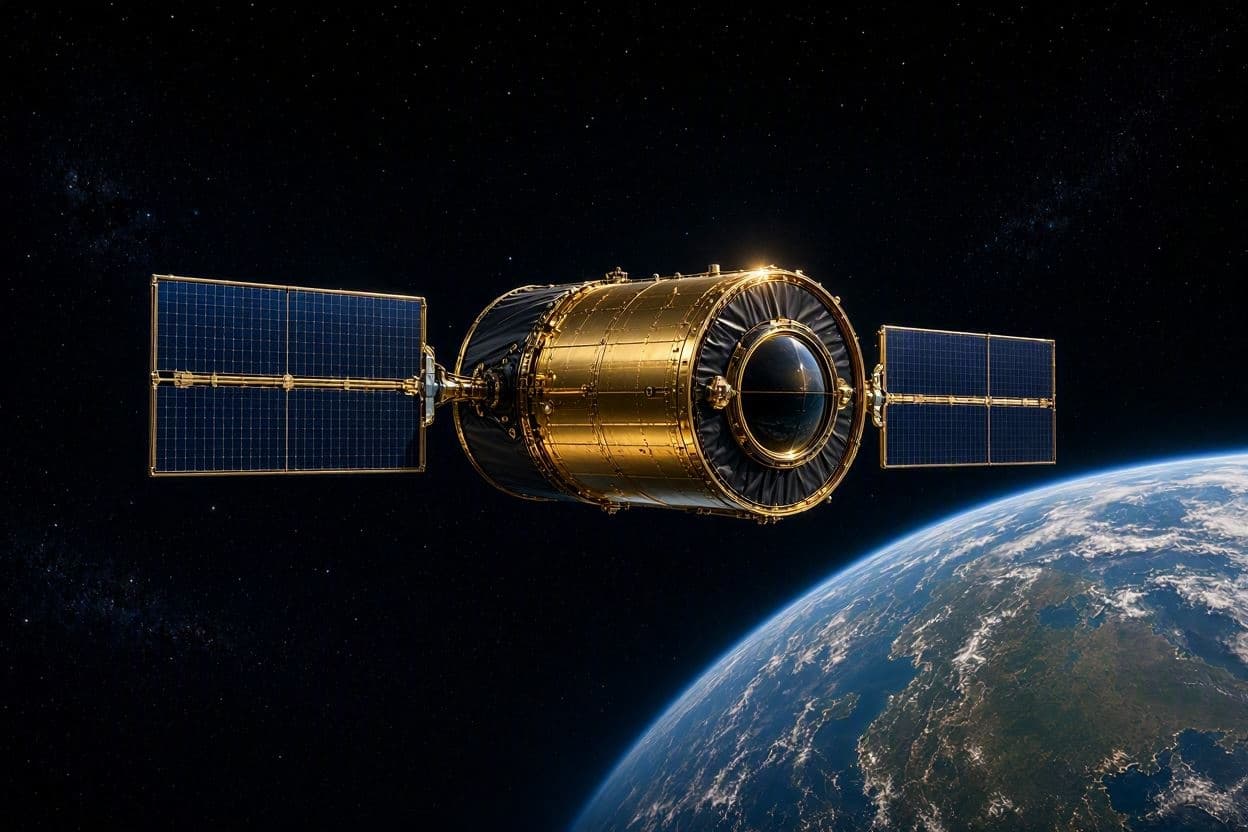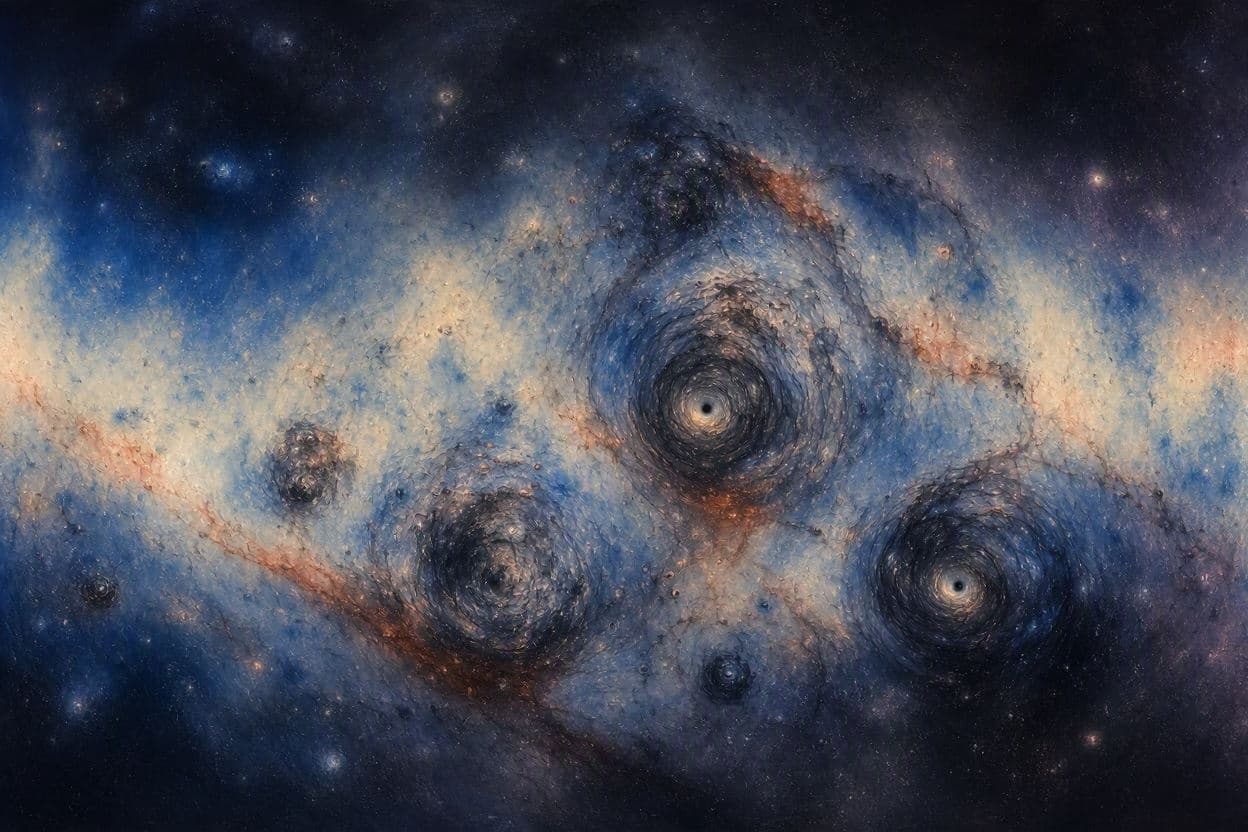
For decades, the mystery of dark matter has haunted cosmology, an invisible scaffold that holds galaxies together yet refuses to reveal its nature. While particles like WIMPs and axions have long been the favored suspects, a quiet revolution is underway in theoretical physics, suggesting that the answer may have been hiding in plain sight all along: in the form of primordial black holes.
Primordial black holes (PBHs) are hypothetical objects that formed in the earliest moments of the universe, long before the first stars ignited. Unlike stellar black holes, which result from the collapse of massive stars, PBHs would have condensed from dense fluctuations in the primordial soup. For years, many scientists dismissed them as viable dark matter candidates, arguing that observational constraints ruled out their existence in sufficient numbers.
However, new mathematical models and simulations are challenging this consensus. Recent studies suggest that PBHs could account for a significant portion, if not all, of the dark matter in the universe. These models indicate that PBHs might be more numerous and varied in mass than previously thought, escaping detection by conventional means while still exerting the gravitational influence observed in galactic rotation curves.
One key advantage of the PBH hypothesis is its simplicity. It does not require the introduction of new, undiscovered particles beyond the Standard Model of physics. Instead, it relies on known gravitational physics and the conditions of the early universe. This elegance appeals to many theorists who are growing weary of the endless search for elusive particle candidates that have yet to materialize in detectors.
Recent observations have also provided indirect support. For instance, gravitational wave detections by LIGO and Virgo have revealed black hole mergers with masses that are difficult to explain through standard stellar evolution. Some researchers argue that these could be primordial in origin, hinting at a hidden population of black holes that has gone unnoticed until now.
Critics remain cautious, pointing out that PBHs must still satisfy strict constraints from microlensing surveys and cosmic microwave background data. Yet, proponents argue that these constraints leave open specific "windows" of mass and abundance where PBHs could thrive. New mathematical techniques are helping to refine these windows, making the hypothesis more robust and testable.
The debate is far from over, but the resurgence of interest in primordial black holes marks a significant shift in the field. It reminds us that in science, even long-held dismissals can be overturned by fresh perspectives and better math. As we look deeper into the cosmos, the possibility that dark matter is made of ancient black holes becomes increasingly compelling.
As theoretical work continues to evolve, the search for dark matter enters a new phase of exploration. Whether the answer lies in tiny particles or ancient black holes, the quest to understand the invisible majority of our universe remains one of science’s greatest adventures.
AI Image Disclaimer: Visuals for this report are AI-generated interpretations designed to convey the themes of theoretical physics and cosmic mysteries.
Sources: Phys.org, UC Santa Cruz News, American Physical Society, Astronomy & Astrophysics
Published by Banx Network. This article is part of the Banx decentralized media programme, powered by the BXE token on the XRP Ledger.