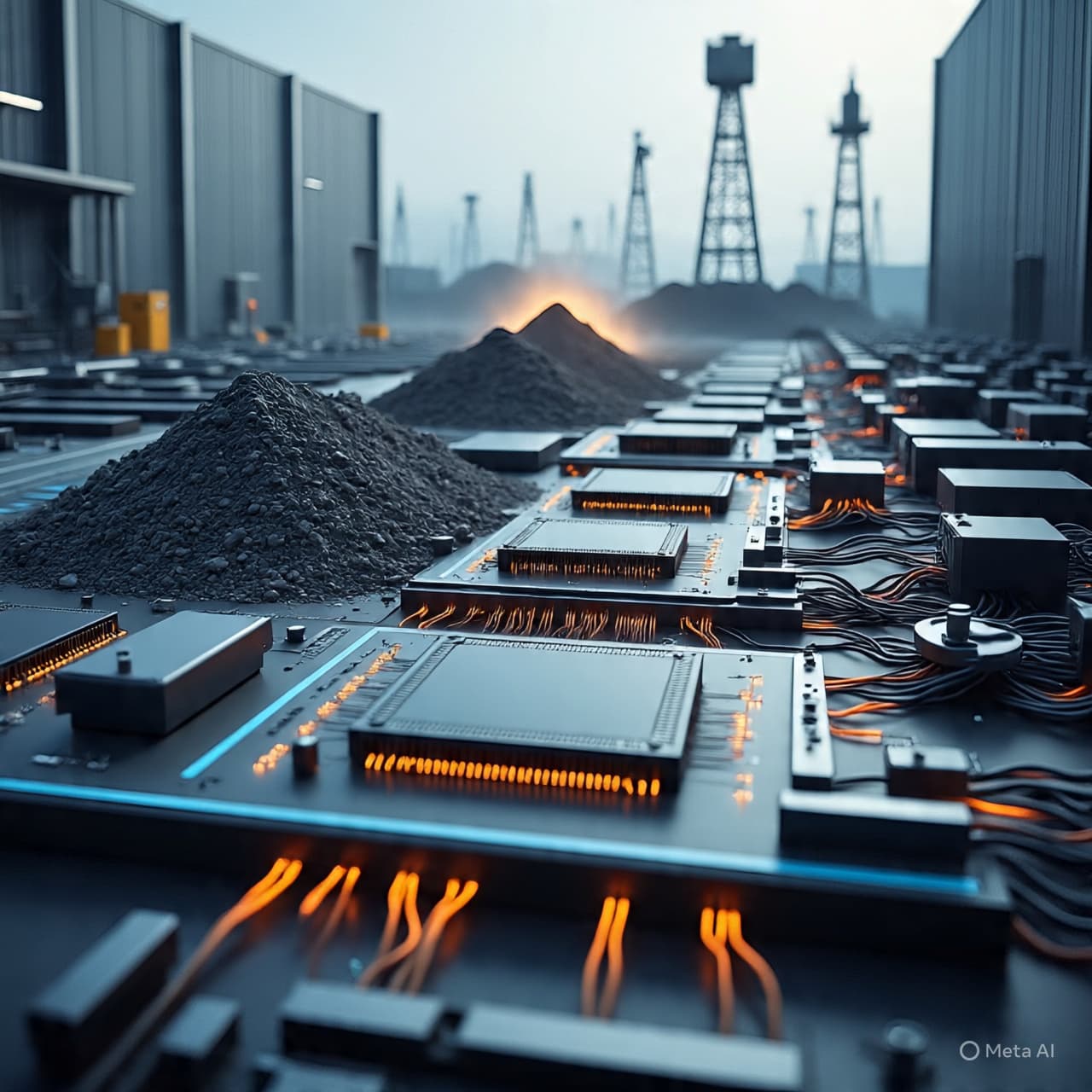
In the vast sweep of 20th‑century geopolitics, oil was king — fueling armies and economies, shaping alliances, and triggering conflicts that shaped the modern world. Today, as nations pivot toward the technologies that will define the next era, a new kind of contest for resources has emerged, one that blends the old energies of oil with the raw materials that power artificial intelligence (AI) and advanced technologies. This multifaceted struggle — for energy, metals, and machine intelligence — is reshaping global power and economic competition in ways that echo, yet transcend, the age of oil.
At its heart lies a race to secure critical minerals — lithium, cobalt, rare earth elements, copper, and other metals essential to electric vehicles, semiconductor chips, data centers, and AI systems. These minerals are indispensable for cutting‑edge technology and defense systems, and demand is growing at unprecedented rates. According to recent analyses, critical minerals are increasingly central to digital innovation and geopolitical competition, with nations vying to ensure stable, ethical, and resilient supply chains for these inputs.
China’s dominance highlights the strategic stakes. Beijing controls a majority of the world’s rare earth production and an even larger share of processing capacity — the stage that adds real value and influence to raw materials. That control gives China not only economic leverage, but a degree of geopolitical influence, especially as export restrictions and supply chain fragmentation intensify global tensions. In response, the United States and other Western governments are pushing initiatives — such as domestic mineral development, strategic alliances, and technology partnerships — aiming to reduce dependence and build alternative supply lines for the minerals that power tomorrow’s AI chips and clean energy industries.
Yet this contest doesn’t unfold in isolation. Oil remains geopolitically significant, both as an energy source and as a strategic asset. Recent conflicts — including operations tied to control over Venezuelan oil reserves — illustrate how energy resources continue to influence military and diplomatic decisions. Despite the world’s shift toward electrification and decarbonization, oil’s economic and political weight endures, especially in regions where petroleum underpins state budgets and global markets.
Overlaying these resource struggles is the AI arms race, a competition between major powers — particularly the United States and China — to lead in artificial intelligence development. Researchers and policymakers warn that whoever dominates AI infrastructure and the associated semiconductor technologies could gain an edge in both economic and military domains. The narrative of an “AI Cold War” captures this dynamic, emphasizing that technological leadership has become as critical as territorial or energy dominance once was.
This convergence of old and new resource imperatives — oil, minerals, and AI — is fundamentally reshaping global geopolitics. Nations are now navigating a complex landscape where access to energy, control of supply chains, and technological prowess are deeply interconnected. Securing oil fields and pipelines remains important, but so too does securing mines and microchips. In this era, power is not just about fueling engines — it’s about powering algorithms, mobilizing data centers, and ensuring that the raw materials of the future remain within strategic grasp.
AI Image Disclaimer Visuals are created with AI tools and are not real photographs.
Sources Council on Foreign Relations analysis on minerals Energy Industry Review on strategic minerals Critical minerals studies on supply chain competition International Energy Agency insights on minerals importance Wikipedia overview on AI geopolitical competition
Published by Banx Network. This article is part of the Banx decentralized media programme, powered by the BXE token on the XRP Ledger.

.jpg&w=3840&q=75 "Flash Mudslide Buries Agricultural Village Houses: Five Killed in Al-Mahwit Governorate")