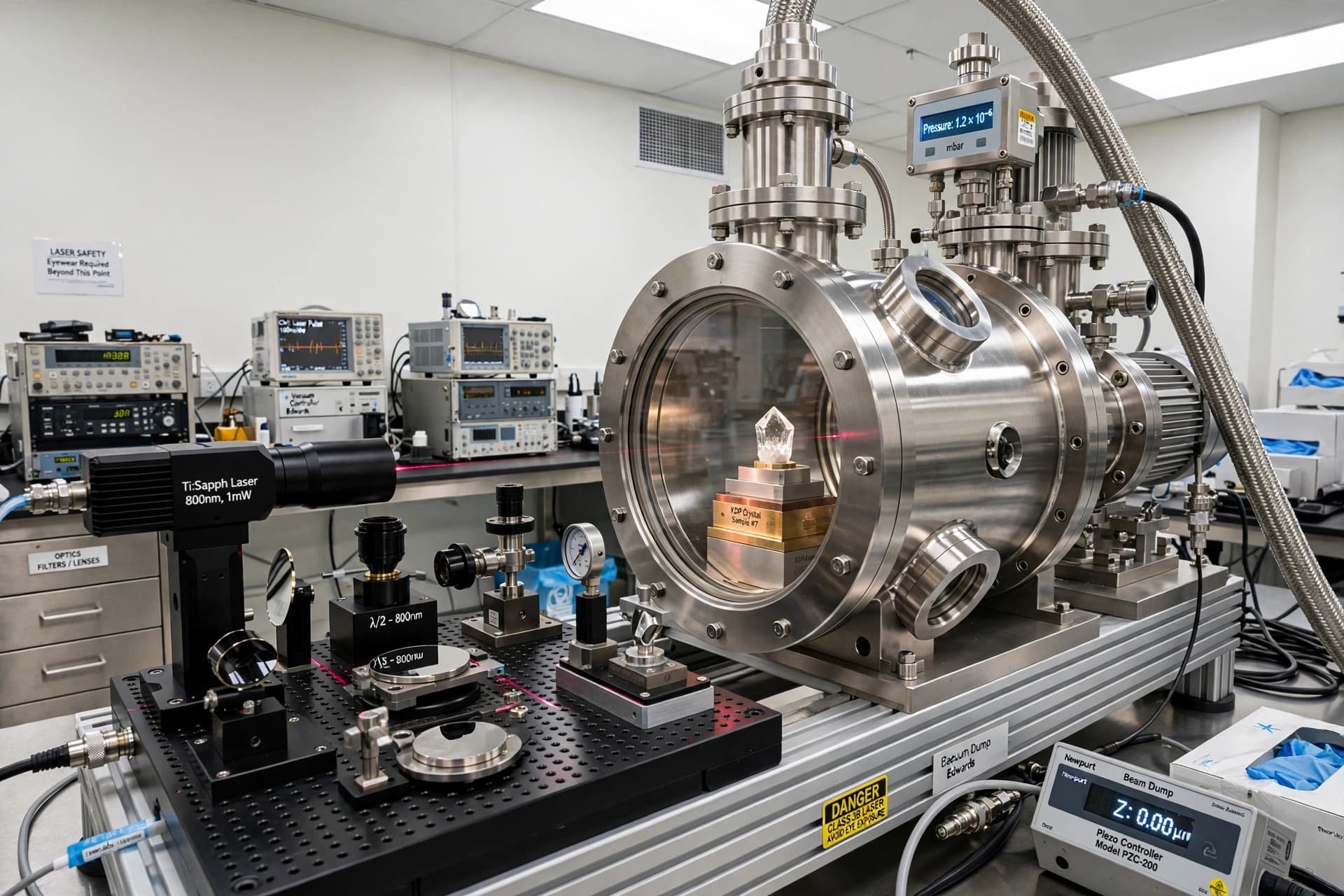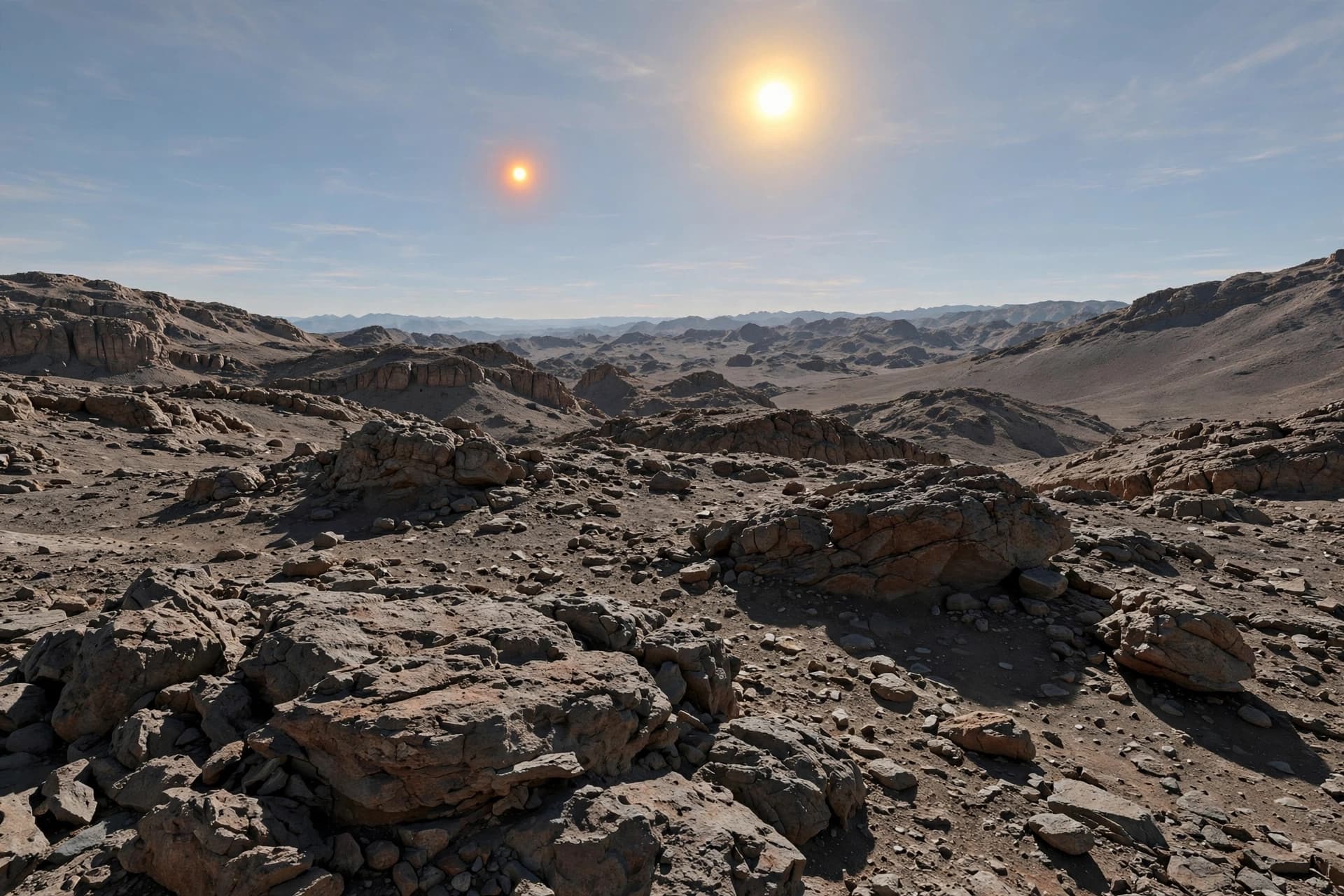
On the dusty plains and rocky rise of the Red Planet, clocks tick a little differently — not because Mars keeps a stranger schedule, but because time itself unfurls at a slightly faster pace there than it does on Earth. This subtle truth, predicted by Albert Einstein’s century-old insights into gravity and motion, is no longer just theory: recent scientific calculations show that time on Mars runs measurably faster than on our home planet, and that finding brings fresh challenges for engineers and planners charting humanity’s next steps among the stars.
Einstein’s general theory of relativity tells us that time is not a universal constant but a malleable thread, stretched and pulled by gravity and motion. A clock sitting deep in a strong gravitational well — like at sea level on Earth — ticks a touch slower than one in a weaker gravitational field. Mars, with roughly one-third the mass of Earth and much gentler surface gravity, exerts less pull on spacetime; as a result, clocks on its surface tick faster than those on Earth when measured from afar.
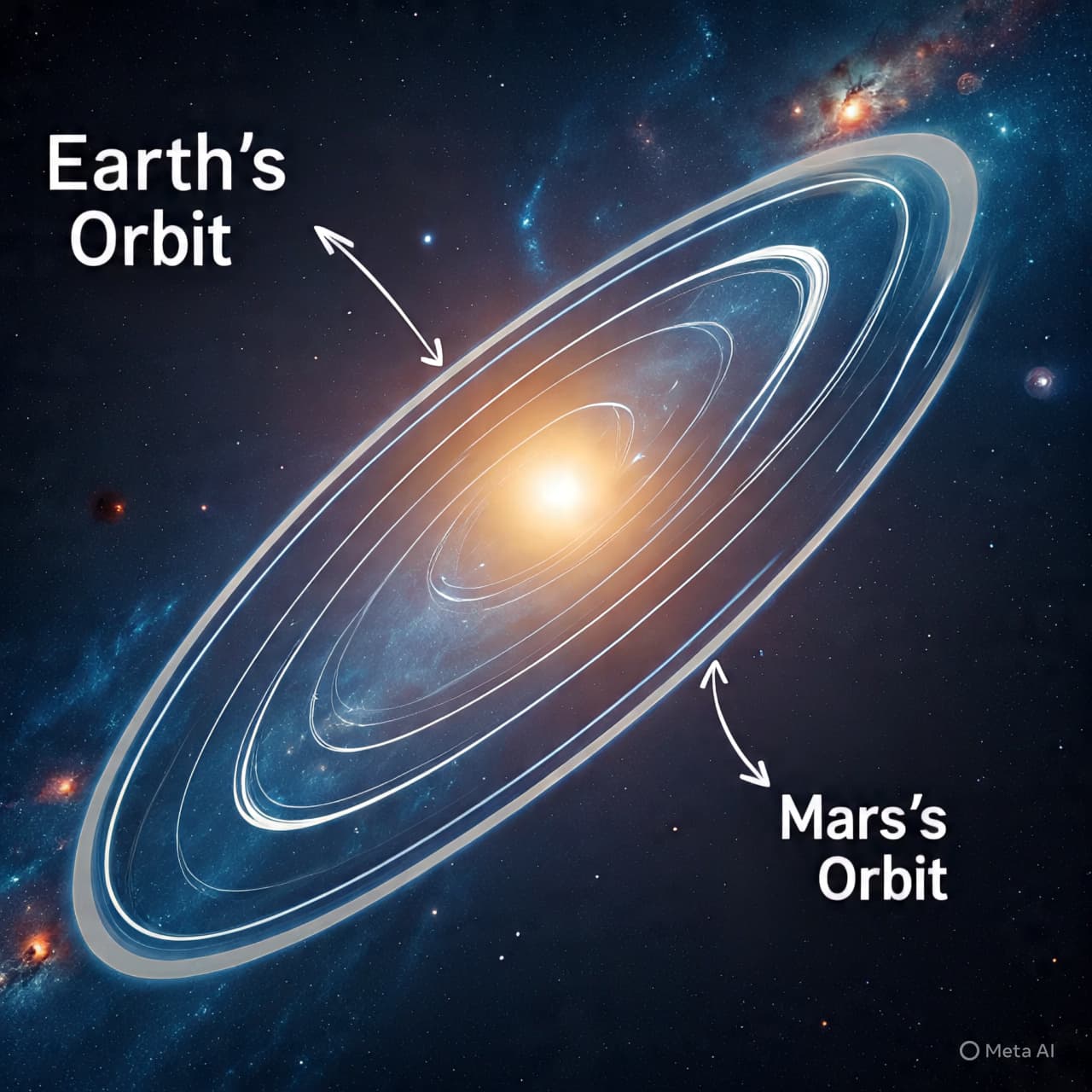
Physicists at the National Institute of Standards and Technology (NIST) have recently taken this principle from the blackboard into precise calculation. By accounting for Mars’s weaker gravity, its slower orbital velocity around the Sun, and even the subtle effects of the Sun’s and Earth’s gravitational influence, they found that a clock on Mars would gain about 477 microseconds per Earth day compared to an identical clock on Earth’s surface — a tiny but real difference. That gap can vary by over 200 microseconds over the course of a Martian year because of Mars’s more elliptical orbit.
These microsecond-level discrepancies may seem negligible in everyday terms, but in the world of spacecraft navigation, communication networks, and future human habitats, precise timekeeping is everything. Navigation systems — whether for rovers traversing sandy valleys or satellites circling the planet — depend on tightly synchronized clocks. Even on Earth, GPS systems routinely account for relativity’s effects to avoid navigation errors; ignoring time dilation on Mars would introduce mismatches that could erode positional accuracy and confound coordinated operations across planetary distances.
Understanding Martian time is not just an academic exercise. As space agencies and private companies prepare for crewed missions and eventual off-Earth settlements, clocks that run at different rates on different worlds will have to be reconciled. Engineers must design systems that can translate and synchronize time across solar system distances, accounting not only for light-travel delays but also for the deeper effects of spacetime’s curvature itself.
On Earth, every modern technology from financial markets to telecommunications hinges on precision timing. Multiply that challenge to the scale of Mars and beyond, and the task grows only more intricate: data relayed from Mars orbiters, surface assets, and crewed habitats will require frameworks that keep time coherent across the chasm of space. “Developing a standard clock for each cosmic locale” may be a literal necessity for the future of interplanetary exploration.
For now, these findings stand as another profound affirmation of Einstein’s theory and a reminder that time is woven into the very fabric of the cosmos. As humanity prepares to stretch its presence deeper into the solar system, the seeming simplicity of “what time it is” will become an essential piece of the interplanetary puzzle.
AI Image Disclaimer “Visuals are AI-generated illustrations and are intended to conceptually depict the topic.”
Sources
• Live Science – Einstein was right: Time ticks faster on Mars, posing new challenges for future missions
• Phys.org – What time is it on Mars?
• EarthSky – What time is it on Mars?
• News Minimalist – Einstein’s theory predicts faster clocks on Mars
• New Atlas – Time runs faster on Mars
Published by Banx Network. This article is part of the Banx decentralized media programme, powered by the BXE token on the XRP Ledger.