There are moments in national life when change feels less like a sudden gust and more like an unseen tide shifting the sands beneath a nation’s feet. In Beijing’s vast corridors of power, a quiet but profound transformation has been underway, echoing through the People’s Liberation Army (PLA) with the gravity of a tolling bell. Like gardeners pruning a sprawling orchard, China’s leadership has been cutting deeply into its own military canopy — removing branches thought corrupt or disloyal — yet also unsettling the fragile balance of experience and command beneath.
At the core of this upheaval is President Xi Jinping’s ongoing anti‑corruption crusade, which in recent years has reached into the uppermost echelons of China’s armed forces. Once seen as a campaign that would cleanse and strengthen, the sweep has extended into territory few anticipated: senior generals and admirals whose careers were central to China’s plans for a modern, capable military. According to defense analysts, more than 100 senior officers — including many chosen by Xi himself — have been purged or are believed to have vanished from official view since 2022.
For a force that has spent years investing in advanced platforms, space capabilities, long‑range missiles, and cyber and joint‑operations networks, leadership experience is as essential as the hardware itself. Yet the scale of removals — spanning the Central Military Commission, regional theater commands, logistics, command planning, and defence academia — has left gaps that cannot be filled overnight. The International Institute for Strategic Studies notes that with key commands understaffed and senior posts vacant, China’s PLA is operating with “serious deficiencies” in its command structure.
Even where positions have been backfilled, many of the replacements are relatively inexperienced or brought in on interim terms. While the institutional machinery of the PLA continues to function, experts suggest that the absence of seasoned commanders may hamper its ability to plan and execute complex operations that rely on cohesive leadership across air, naval, missile, and ground forces. In joint exercises with Russia, for example, it is plausible that such disruptions have contributed to a reduction in the scope or complexity of drills in recent years, reflecting the challenge of coordinating large‑scale planning amid internal turmoil.
The human element of command — the intuition honed through years of service, the trust forged among seasoned officers — cannot be swiftly replicated. In military theory and practice alike, the smooth choreography of battle plans depends on stable, experienced leadership at every level. Frequent purges, restructuring, and uncertainty about career progression may also dampen morale and inject a cautiousness that spreads through the ranks. Officers uncertain about their futures may be less inclined to offer candid counsel or take decisive initiatives, a dynamic that could affect China’s readiness in unforeseen contingencies.
Yet within Beijing’s inner circles, there is belief that eradicating corruption and reinforcing political loyalty are prerequisites for a force that must “fight and win” under the Communist Party’s guiding hand. Domestic narratives emphasize that purges promote discipline and integrity, contributing to a “purer” military that can withstand challenges. This framing resonates with long‑standing Party priorities that place political reliability on par with professional competence.
Still, for analysts watching the Indo‑Pacific and Taiwan Strait, the purge’s immediate effects raise questions about readiness. The PLA’s ability to undertake highly complicated joint campaigns — such as a large amphibious operation or multi‑domain offensive requiring detailed planning — may be constrained, at least temporarily, by the thinning of its leadership ranks and the ongoing reordering of command.
Underneath the veneer of modernization and expanded budgets, China’s armed forces now face an unusual juxtaposition: cutting away what Beijing views as systemic rot, while trying to keep alive the strategic capabilities needed to deter adversaries and project strength. In this interplay of political control and military competence, the coming years may determine whether this internal cleanse ultimately strengthens the PLA or leaves it navigating choppy waters with fewer experienced captains at the helm.
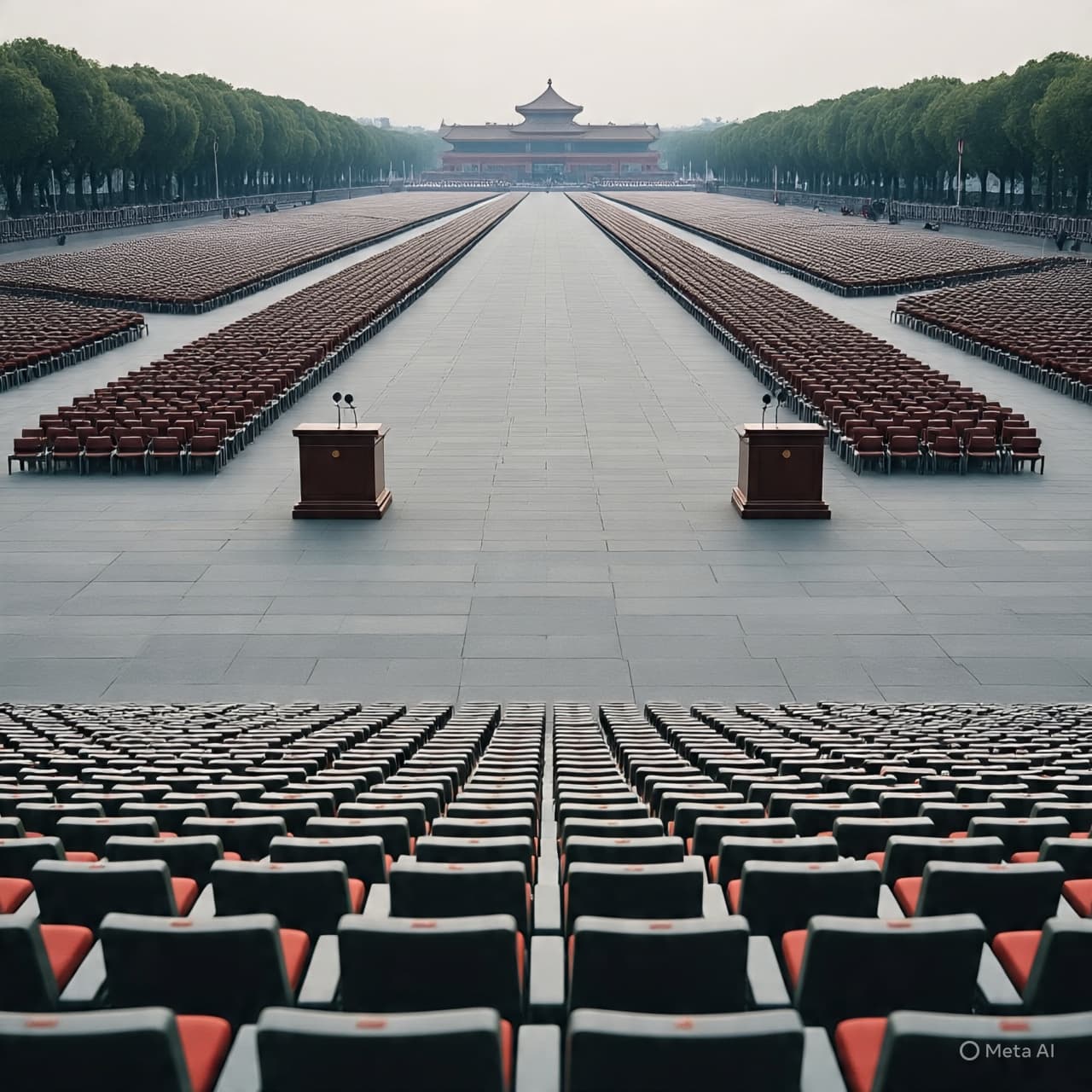
AI Image Disclaimer Graphics are AI‑generated and intended for representation, not reality.
SOURCE CHECK — Credible mainstream & analyst sources exist Major outlets covering this topic include:
Reuters CNN via Yahoo News CSIS China Power Project (policy research) Business Day (news desk) The Economist
Published by Banx Network. This article is part of the Banx decentralized media programme, powered by the BXE token on the XRP Ledger.