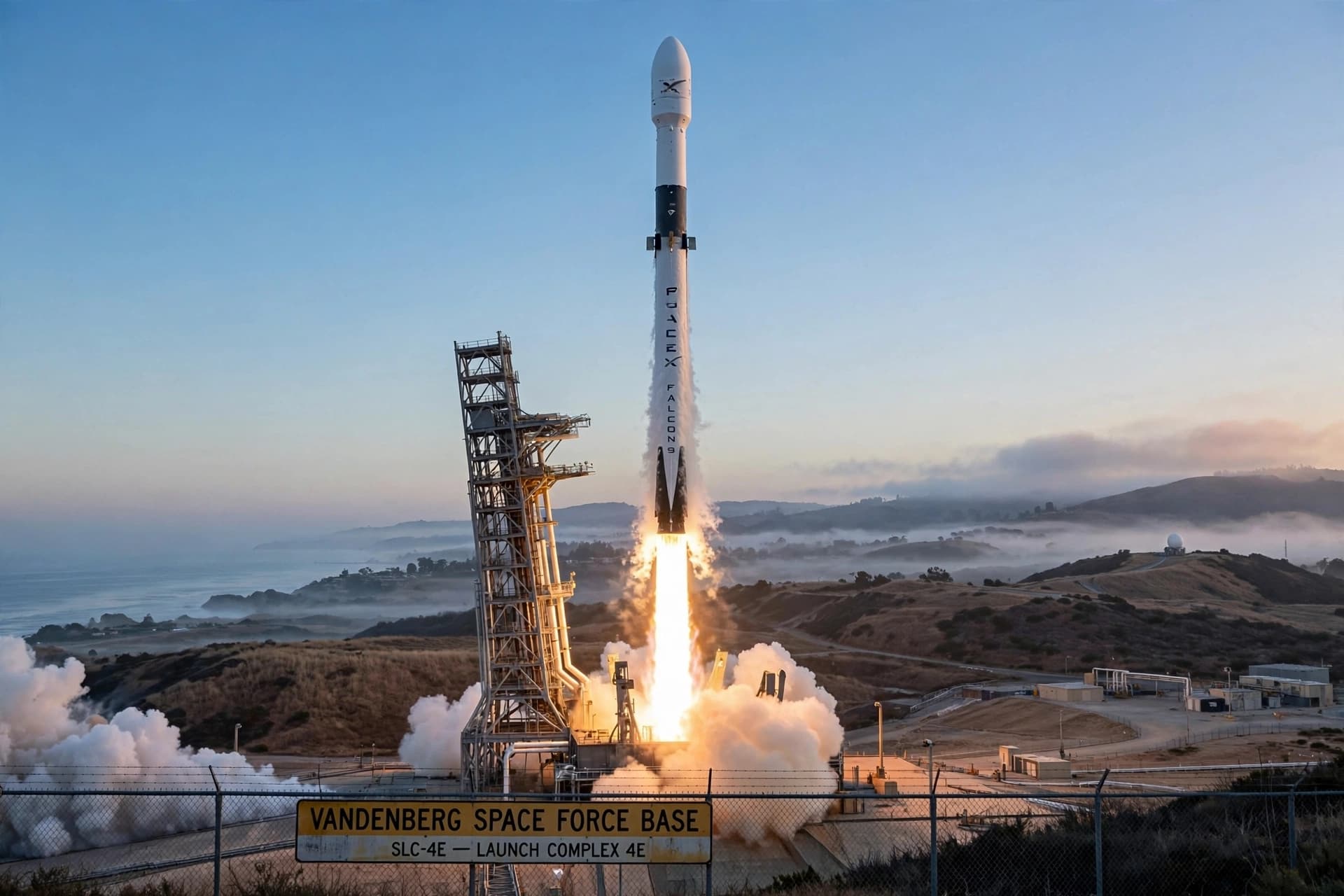
On the central coast of California, where the Pacific Ocean meets the rugged cliffs of Vandenberg Space Force Base, a familiar roar once again echoed through the morning air. The launch of a SpaceX Falcon 9 rocket marked another step in the growing partnership between private industry and national defense. Yet, unlike commercial missions that carry satellites for communication or earth observation, this payload remained shrouded in secrecy, a silent traveler heading into orbit with a purpose known only to a select few.
The mission, designated as part of the U.S. Space Force’s expanding portfolio, lifted off from the West Coast, taking advantage of the polar orbital trajectories accessible from Vandenberg. These orbits are particularly valuable for reconnaissance and surveillance, allowing satellites to cover nearly every part of the globe as the Earth rotates beneath them. The choice of location underscores the strategic importance of California’s coastline in the architecture of modern space security.
While the specific details of the payload remain classified, the frequency of such launches highlights the increasing reliance on commercial providers for national security objectives. SpaceX has become a key partner in this endeavor, offering reliable and cost-effective access to space. This collaboration reflects a broader shift in how governments approach space operations, blending public oversight with private innovation.
For observers on the ground, the launch was a spectacle of light and sound, a reminder of the technological prowess that defines the current era of space exploration. The Falcon 9’s first stage, designed for reuse, performed its customary return, landing smoothly on a drone ship in the Pacific. This routine yet impressive feat demonstrates the maturity of reusable rocket technology, which has transformed the economics of spaceflight.
The secrecy surrounding the mission invites speculation, but it also serves a functional purpose in national defense. Protecting the capabilities and intentions of military assets is crucial for maintaining strategic stability. While transparency is valued in many areas of public life, certain aspects of security require discretion, balancing the public’s right to know with the need for operational safety.
This launch is part of a series of missions contracted by the Space Force, indicating a sustained commitment to building a resilient presence in orbit. As threats in space evolve, so too must the systems that protect national interests. The ability to rapidly deploy and replace assets is becoming increasingly important in a domain that is no longer just a frontier but a critical infrastructure.
The success of the mission adds to the growing list of achievements for both SpaceX and the U.S. Space Force. It reinforces the viability of public-private partnerships in addressing complex challenges. As the space economy expands, these collaborations will likely play an even greater role in shaping the future of orbital activities.
As the rocket disappeared into the sky, it left behind not just a trail of vapor but a question about the nature of our presence in space. The classified mission serves as a quiet testament to the evolving landscape of national security, where innovation and secrecy walk hand in hand toward an uncertain but strategically vital future.
AI Image Disclaimer: The visual representations in this article are AI-generated illustrations designed to evoke the atmosphere of a rocket launch and do not depict actual footage of the specific mission.
Sources: Space.com Reuters AIAA KTLA YouTube
Published by Banx Network. This article is part of the Banx decentralized media programme, powered by the BXE token on the XRP Ledger.